Introduction to Photoelectric Sensors in Modern Industry
Photoelectric sensors are indispensable components in modern industrial automation, utilizing light beams to detect the presence, absence, or distance of objects. These sensors operate based on the principle of light emission and reception, converting optical signals into electrical outputs. In sectors like packaging, automotive, and material handling, they provide non-contact detection, ensuring high-speed and reliable performance. Their robust design allows them to function effectively in harsh environments, including dusty, wet, or high-temperature conditions. Engineers often choose photoelectric sensors for applications where mechanical switches fail, such as detecting transparent objects or in confined spaces. This article explores practical use cases, installation strategies, and maintenance tips, emphasizing their role in enhancing productivity and safety.
Object Detection in Conveyor Systems
In conveyor belt systems, photoelectric sensors are critical for monitoring product flow and preventing jams. For example, through-beam sensors, consisting of separate emitter and receiver units, are used to detect items at high speeds on assembly lines. When a product breaks the light beam, the sensor triggers a control action, such as stopping or diverting the product. This setup is ideal for long-range detection up to 30 meters, making it suitable for large warehouses. Conversely, retro-reflective sensors, which use a reflector to bounce the beam back, simplify installation by housing both components in one unit. Applications include counting packages or verifying the presence of items in cartons. To optimize performance, engineers must align the sensor and reflector precisely, avoiding dust accumulation on optical surfaces.
Level Monitoring in Liquid Tanks
Photoelectric sensors excel in liquid level monitoring for chemical, food, and water treatment industries. By using a transparent material like glass or plastic, these sensors detect when a liquid reaches a certain point. For instance, a diffuse reflection sensor can be mounted on the side of a tank to sense the liquid surface through the transparent wall. This method eliminates the need for direct contact with corrosive liquids. Alternatively, in opaque tanks, a laser-based sensor with a narrow beam is used to penetrate the liquid and reflect back from the surface. Key considerations include selecting the correct wavelength (e.g., infrared for clear water) and adjusting sensitivity to avoid false readings from foam or bubbles. Regular cleaning of the sensor lens is essential for consistent accuracy.
Positioning and Alignment in Robotic Systems
In robotic arms and CNC machines, photoelectric sensors provide precise positioning feedback. For example, a polarizing retro-reflective sensor can detect shiny or metallic surfaces without false triggers from reflections. This is crucial for aligning components during pick-and-place operations. In automated guided vehicles (AGVs), these sensors serve as safety barriers, stopping the machine if an obstacle is detected. Engineers often integrate photoelectric sensors with programmable logic controllers (PLCs) using standard protocols like IO-Link or discrete I/O. A typical application involves using a convergent beam sensor with a focused spot to detect small parts like screws or chips on a production line. To ensure reliability, the sensor should be mounted in a stable housing with vibration dampening.
Quality Control in Packaging Lines
Quality assurance in packaging heavily relies on photoelectric sensors to verify label placement, seal integrity, and product fill levels. For instance, a contrast sensor can distinguish between different colors or shades, ensuring labels are correctly oriented. In shrink-wrapping processes, through-beam sensors confirm that each package passes through the oven. Another common use is detecting missing caps on bottles using a diffuse sensor with a background suppression feature. This technology ignores the background, focusing only on the target. To minimize downtime, engineers should implement a cleaning schedule for the sensor optics and use protective housings against dust and moisture. Calibration checks every 1000 hours of operation are recommended to maintain accuracy.
Safety Applications and Environmental Adaptations
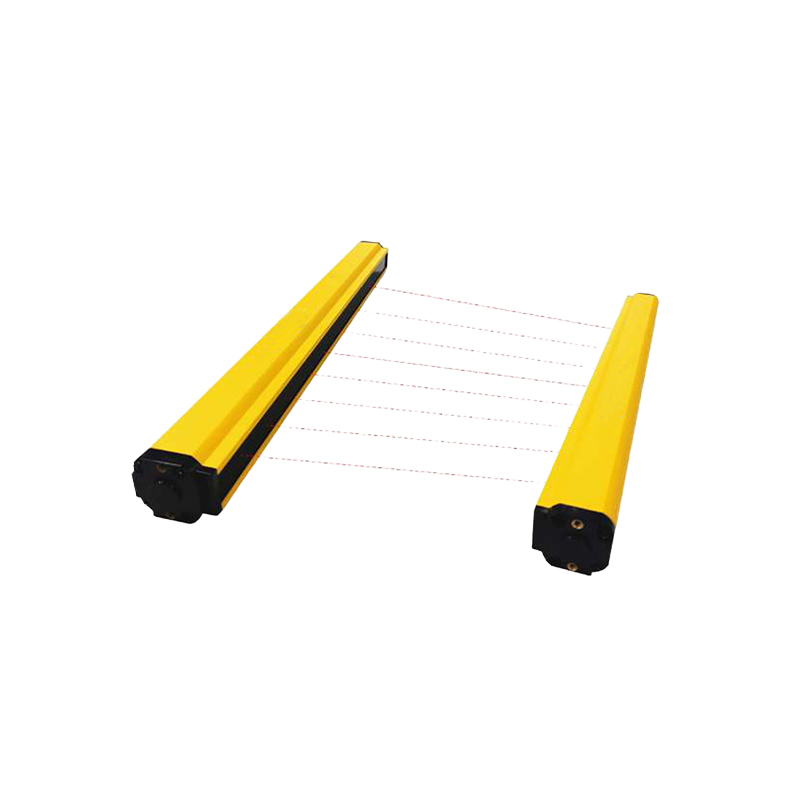
Photoelectric sensors are vital for machine safety, such as in light curtains that create invisible barriers around dangerous machinery. When the beam is interrupted, the sensor sends a stop signal to the machine, protecting operators. These sensors must meet strict standards like IEC 61496 for safety integrity. In outdoor or extreme environments, ruggedized models with IP67 or IP69K ratings resist water jets and high-pressure cleaning. For example, in a mining conveyor system, a photoelectric sensor with a heated lens prevents fogging in humid conditions. Engineers also use fiber optic extensions for remote sensing in high-temperature areas like furnaces. Proper cable management and surge protection are essential to prevent electrical noise interference.
Maintenance and Troubleshooting Best Practices
To maximize sensor lifespan, regular maintenance is key. Common issues include misalignment from vibrations, lens contamination, and cable wear. Engineers should perform daily visual checks and use a clean cloth with isopropyl alcohol for lens cleaning. For troubleshooting, a multimeter can verify the sensor output, and a test piece can simulate the target. Adjusting the sensitivity potentiometer helps in cases of weak signals. In multi-sensor setups, using a common power supply with proper grounding reduces noise. Advanced sensors with diagnostic LEDs indicate fault status, such as low light margin. For critical applications, redundant sensors with voting logic are recommended. Documentation of sensor settings and installation diagrams aids rapid troubleshooting.
Future Trends and Innovations
The evolution of photoelectric sensors moves toward smart, networked devices with integrated IoT capabilities. Sensors now offer fieldbus communication like Profinet or EtherNet/IP, enabling real-time data analytics. For instance, a sensor can predict its own failure by monitoring light intensity degradation over time. Laser-based sensors achieve sub-micrometer accuracy for microelectronics assembly. Additionally, compact designs with multi-beam arrays replace multiple discrete sensors, reducing wiring and space. Engineers should stay updated with new materials like anti-reflective coatings for transparent objects. The adoption of artificial intelligence in sensor algorithms will further enhance object discrimination and error rejection, paving the way for fully automated factories.