Proximity sensors have become indispensable components in modern industrial automation and smart device design. Their ability to detect the presence or absence of an object without physical contact makes them ideal for one of their most common and critical functions: counting. This process, often referred to as proximity sensor counting, involves using the sensor's output signals to tally objects, events, or cycles. The principle is straightforward: each time an object passes within the sensor's detection range, it triggers a signal. This signal is then sent to a counter, programmable logic controller (PLC), or a dedicated microcontroller, which increments a tally. The reliability, speed, and non-contact nature of this method offer significant advantages over mechanical counters or manual counting.
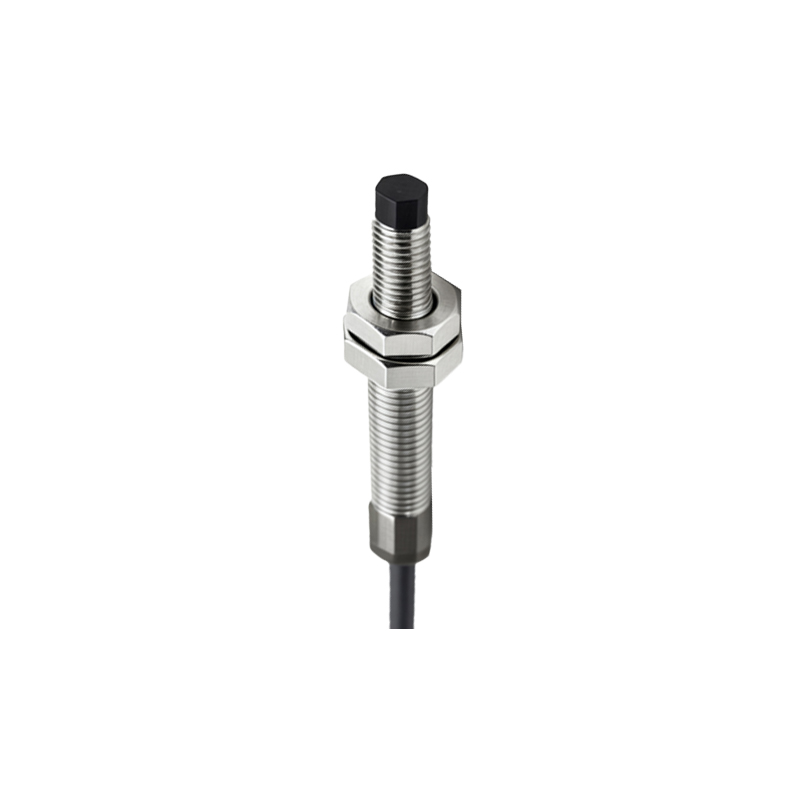
The effectiveness of a proximity sensor for counting duties depends heavily on selecting the right type of sensor for the application. Inductive proximity sensors are the go-to choice for detecting metallic objects. They generate an electromagnetic field and react to disturbances caused by ferrous or non-ferrous metals. For counting metal parts on a conveyor, such as bolts, cans, or machine components, inductive sensors provide high precision and durability in harsh environments. Capacitive proximity sensors, on the other hand, can detect a wider range of materials, including plastics, liquids, wood, and granular substances. They are suitable for counting non-metallic items like bottles, cardboard boxes, or bags of powder. Photoelectric sensors, which use a light beam, are excellent for long-range detection and can count objects on high-speed lines, even if they are transparent or vary in color.
Implementing a robust counting system requires careful consideration of several factors beyond just sensor selection. The mounting position and sensing distance are paramount. The sensor must be placed where it reliably detects every target object but is not accidentally triggered by irrelevant parts of the machinery or passing personnel. Adjusting the sensing distance to a minimal yet consistent range improves accuracy. The object's size, shape, and speed also play a crucial role. Small or fast-moving objects may require sensors with a high switching frequency and a narrow, focused detection field to avoid missed counts or double-counting a single object.
Signal processing is the brain of the counting operation. The raw output from a proximity sensor is typically a digital on/off signal. This signal must be "debounced" or filtered within the controller's software to eliminate noise or vibration-induced false triggers that could lead to count errors. For high-speed applications, ensuring the controller's scan time is faster than the interval between object passes is critical. Advanced systems often employ two sensors in a setup known as a direction-sensing or quadrature count. This configuration can not only count items but also determine their direction of travel, useful in sorting or tracking applications.
Regular maintenance and calibration are essential for sustained accuracy. Proximity sensors are generally robust, but their performance can degrade due to environmental factors like dust accumulation, temperature extremes, or mechanical misalignment over time. Periodically checking the sensor's alignment, cleaning its face, and verifying its output with a known quantity of test objects helps maintain counting integrity. Furthermore, the counting logic in the PLC or controller should include error-checking routines and provide clear data outputs for operators.
From production lines tallying thousands of units per hour to vending machines tracking inventory, proximity sensor counting is a foundational technology. It enables precise production data, inventory control, and process automation. By understanding the sensor types, properly integrating them with control systems, and adhering to best practices for installation and maintenance, engineers can build counting systems that are accurate, reliable, and crucial for efficiency and data-driven decision-making in countless industries.