Laser sensors have become indispensable tools across numerous industries, from manufacturing and robotics to autonomous vehicles and scientific research. At the heart of their functionality lies the critical process of signal acquisition. This process involves capturing, converting, and processing the raw data from a laser sensor into a usable digital format for analysis and control. Understanding this process is key to leveraging the full potential of laser sensing technology.
The fundamental operation begins with the emission of a laser beam towards a target. The sensor then detects the interaction of this beam, which could be reflected light, scattered light, or a change in the beam's properties like phase or frequency. This interaction generates a raw, analog electrical signal at the photodetector. This initial signal is often weak and susceptible to various forms of interference, known as noise. Noise can originate from ambient light, electrical fluctuations in the system, or even the sensor's own components. Therefore, the first stage of acquisition is almost always signal conditioning.
Signal conditioning circuits are designed to prepare the analog signal for accurate digitization. Key conditioning steps include amplification to boost the signal to a measurable level and filtering to remove unwanted noise frequencies. For instance, a band-pass filter might be used to allow only the frequency band corresponding to the modulated laser signal to pass through, effectively blocking constant ambient light (DC noise) and high-frequency electrical interference. Proper conditioning is crucial; a poorly conditioned signal will lead to inaccurate data after digitization.
Once conditioned, the analog signal is fed into an Analog-to-Digital Converter (ADC). The ADC is a core component that samples the continuous analog signal at discrete time intervals and quantizes its amplitude into discrete digital values. Two critical parameters define the ADC's performance: sampling rate and resolution. The sampling rate, measured in samples per second (SPS), must be high enough to accurately capture the fastest changes in the signal, as defined by the Nyquist theorem. A rate that is too low causes aliasing, where high-frequency components appear as erroneous low-frequency data. Resolution, measured in bits (e.g., 12-bit, 16-bit), determines the fineness of the amplitude measurement. Higher resolution allows the system to distinguish smaller changes in the signal, improving sensitivity and dynamic range.
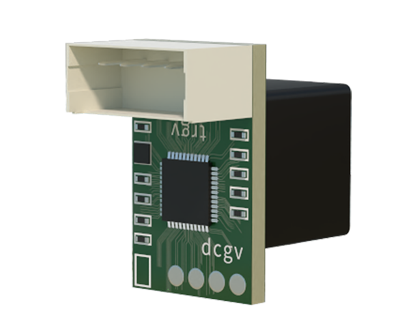
The digitized data stream is then typically handled by a microcontroller (MCU) or a digital signal processor (DSP). These processors manage the data flow, perform initial processing, and implement the core algorithms that interpret the digital values. For a time-of-flight (ToF) laser sensor, the processor calculates distance by measuring the phase shift or time delay between the emitted and received pulses. For a triangulation sensor, it uses the position of the reflected laser spot on a linear sensor array. More advanced processing might involve averaging multiple readings to improve accuracy, applying digital filters, or compensating for environmental factors like temperature.
The choice of hardware components—the photodetector type (e.g., PIN photodiode, avalanche photodiode), the amplifier design, the ADC specifications, and the processing unit—is dictated by the application's requirements. High-speed applications, such as LiDAR in autonomous vehicles, demand very high sampling rates (often in the MHz to GHz range) and fast processors to capture detailed 3D point clouds in real time. In contrast, a slow, high-precision measurement in a laboratory setting might prioritize ultra-high ADC resolution and sophisticated averaging algorithms over raw speed.
Finally, the processed data is transmitted to a host system via standard communication interfaces like I2C, SPI, UART, or Ethernet. For real-time control systems, such as in robotic arms or precision assembly lines, low-latency communication is essential. The acquired signal forms the basis for decision-making, whether it's triggering an alarm, adjusting a machine's position, or mapping an environment.
Successful laser sensor signal acquisition is a multidisciplinary challenge, blending optics, electronics, and software. It requires careful design to balance speed, precision, noise immunity, and cost. As applications push for higher speeds, greater accuracy, and miniaturization, advancements in integrated circuits, high-speed photonics, and processing algorithms continue to drive the evolution of this fundamental technology, enabling new possibilities in automation, measurement, and beyond.