In the realm of industrial automation, reliable and precise object detection is a cornerstone of efficiency, safety, and process control. Honeywell, a global leader in sensing and industrial technologies, offers a comprehensive portfolio of proximity sensors engineered to meet these critical demands. These devices are fundamental components in countless applications, from manufacturing assembly lines and packaging machinery to material handling systems and robotic cells. Unlike basic mechanical switches, proximity sensors perform their task without physical contact, detecting the presence or absence of an object through an electromagnetic field or beam. This non-contact operation eliminates mechanical wear and tear, ensuring a longer operational life and reducing maintenance needs.
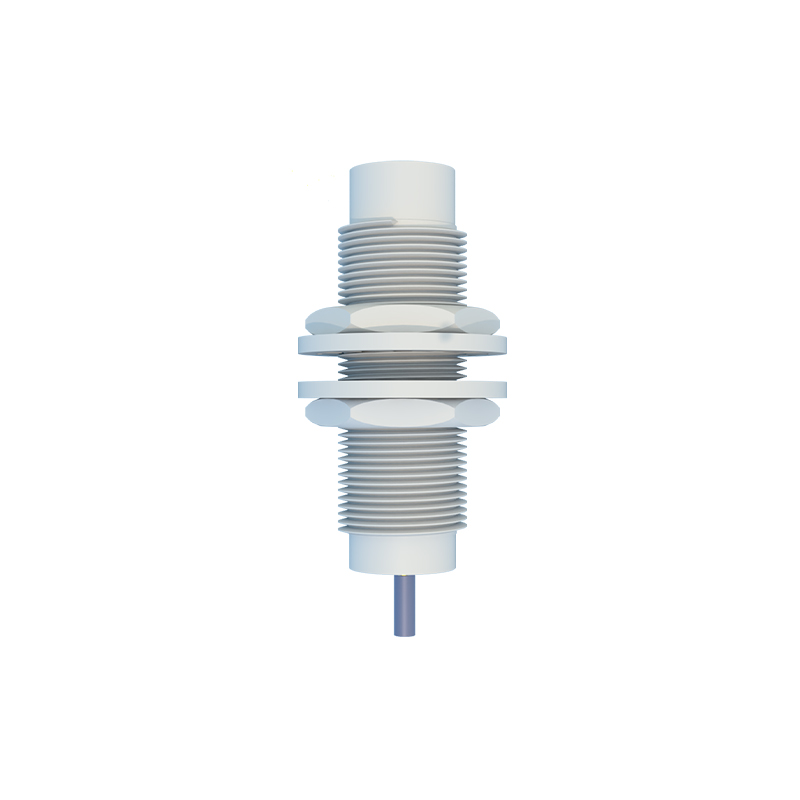
Honeywell proximity sensors are renowned for their robust construction and consistent performance in challenging environments. They are designed to withstand common industrial hazards such as dust, moisture, oil, and vibration. The sensing technology primarily falls into two categories: inductive and photoelectric. Inductive proximity sensors are used to detect metallic objects. They generate an oscillating electromagnetic field; when a metal target enters this field, it causes a change in oscillation, which the sensor detects and converts into an output signal. These sensors are ideal for detecting parts on a conveyor, counting metal components, or confirming the position of a machine tool.
Photoelectric sensors, another key offering from Honeywell, use a light beam to detect objects of various materials, including plastic, wood, glass, and metal. They operate by emitting a beam of light (visible red, infrared, or laser) from a transmitter. A receiver then detects the light. An object is sensed when it interrupts or reflects this beam, depending on the sensor's mode. Common modes include through-beam, where the transmitter and receiver are separate units, and retro-reflective or diffuse reflective, where both elements are housed together. This versatility makes them perfect for applications like detecting transparent bottles on a filling line, monitoring web breaks in paper processing, or ensuring proper box positioning in a palletizer.
Selecting the right Honeywell proximity sensor involves careful consideration of several application-specific factors. The sensing range, or the maximum distance at which the sensor can reliably detect a target, is a primary specification. The target material and size also dictate the choice between inductive and photoelectric types. Environmental conditions are crucial; sensors are available with various ingress protection (IP) ratings to guard against solids and liquids. Output configuration is another key decision, with options including digital outputs like NPN, PNP, or analog outputs for distance-proportional signaling. Furthermore, form factors vary from miniature cylindrical housings for tight spaces to rectangular or slot-style designs for specialized mounting.
The integration of Honeywell proximity sensors into a control system is typically straightforward, contributing to faster machine setup and commissioning. Their reliable signals interface directly with programmable logic controllers (PLCs), motor drives, and other automation controllers. This integration forms the sensory nervous system of an automated process, providing the essential data for logic decisions that control motors, actuators, and alarms. By ensuring accurate detection, these sensors help prevent jams, misalignments, and product defects, directly contributing to increased throughput and reduced waste.
Beyond basic detection, advanced Honeywell sensor models offer enhanced features. Some include built-in diagnostics, such as LED indicators that show signal strength or contamination levels, aiding in quick troubleshooting. Others feature short-circuit and overload protection, enhancing system durability. For demanding positioning tasks, analog-output sensors provide continuous distance measurement, enabling precise control over object placement. The consistent performance and durability of these sensors translate into reduced downtime and lower total cost of ownership for end-users, making them a trusted choice for engineers and system integrators worldwide.
In conclusion, Honeywell proximity sensors represent a critical investment in modern industrial automation. Their non-contact sensing principle, combined with rugged design and technological variety, provides reliable solutions for a vast array of detection challenges. By delivering precise, real-time feedback on object presence, position, or motion, they empower automated systems to operate with higher efficiency, safety, and intelligence. Whether for simple presence detection or complex positioning tasks, specifying the appropriate Honeywell sensor is a decisive step toward optimizing any industrial application.