In the intricate world of industrial automation and advanced manufacturing, precise detection and control are paramount. Among the myriad of sensing technologies, vacuum proximity sensors stand out as critical components, especially in environments where cleanliness, precision, and reliability are non-negotiable. Unlike standard proximity sensors that operate in atmospheric conditions, these specialized devices are engineered to function within vacuum chambers, making them indispensable in sectors like semiconductor fabrication, space simulation, and particle physics research.
The fundamental principle of a vacuum proximity sensor is similar to its atmospheric counterpart: it detects the presence or absence of an object without physical contact. Common technologies employed include inductive, capacitive, and optical sensing. Inductive sensors detect metallic objects through changes in an electromagnetic field, while capacitive sensors respond to changes in capacitance caused by any material. Optical sensors, using infrared or laser light, are favored for their high precision. However, the vacuum environment imposes severe constraints. Standard sensors fail here due to outgassing—the release of trapped gases from internal materials—which contaminates the ultra-clean vacuum. Furthermore, components must withstand extreme temperature variations, lack of convection cooling, and potential exposure to radiation or corrosive processes.
Therefore, vacuum-rated sensors are meticulously designed with specific materials. Housing is typically made from stainless steel, often grades like 316L for low outgassing and high corrosion resistance. Internal seals utilize metal gaskets (like copper or Helicoflex) instead of elastomers, which are prone to degassing. Electrical feedthroughs are hermetically sealed using ceramic-to-metal bonds. The sensing element itself, whether a coil for inductive types or a photodiode for optical types, is selected and potted with vacuum-compatible epoxies. Lubricants are eliminated or replaced with dry lubricants like PTFE. Manufacturers rigorously test these sensors using standards like ASTM E595 to measure total mass loss (TML) and collected volatile condensable materials (CVCM), ensuring they meet the stringent requirements of high and ultra-high vacuum (UHV) systems.
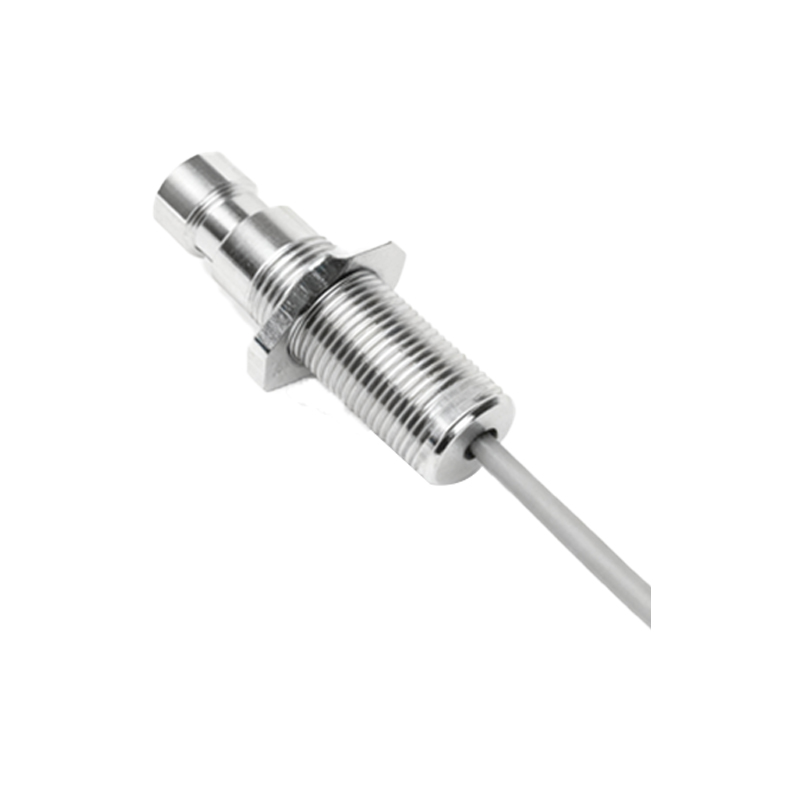
The applications of vacuum proximity sensors are highly specialized. In semiconductor manufacturing, they are ubiquitous inside lithography machines, etching chambers, and chemical vapor deposition (CVD) systems. They perform critical tasks such as wafer presence verification, robotic arm end-effector positioning, and door interlock sensing. A misaligned wafer or a faulty door seal detection could result in multi-million dollar losses. In particle accelerators and fusion research devices like tokamaks, these sensors monitor the position of beamline components, diagnostic tools, and vacuum gate valves. The aerospace industry relies on them for testing satellite components in thermal vacuum chambers, simulating the harsh conditions of space. Even in advanced coating processes like physical vapor deposition (PVD), they ensure precise positioning of substrates.
Selecting the right vacuum proximity sensor requires a careful analysis of several parameters beyond just sensing range and output type. The first and foremost consideration is the vacuum level: rough vacuum, high vacuum (HV), or ultra-high vacuum (UHV). UHV applications demand the most stringent material and construction standards. The required sensing distance and target material will dictate whether an inductive, capacitive, or optical sensor is suitable. For instance, inductive sensors are ideal for detecting metal tooling inside a chamber, while optical sensors can detect wafers or ceramics. The sensor's operating temperature range must align with the chamber's thermal cycles, which can range from cryogenic temperatures to over 200°C during bake-out procedures. Electrical compatibility is crucial; the sensor must function correctly with the available power supply and its output signal (PNP/NPN, analog, IO-Link) must integrate seamlessly with the vacuum chamber's control system. Finally, certifications and compliance with industry-specific standards, along with the manufacturer's proven track record in vacuum applications, are vital for ensuring long-term reliability and minimizing contamination risk.
Installation and maintenance also require special attention. Sensors should be mounted using vacuum-compatible fasteners and seals. Conflat flanges (CF) with copper gaskets are a common mounting solution for UHV. Cable entries must use approved vacuum feedthroughs. During maintenance, only clean, lint-free tools and gloves should be used to prevent particulate contamination. Unlike standard sensors, they cannot be easily cleaned with solvents; often, a gentle bake-out under vacuum is the recommended procedure to remove surface contaminants.
In conclusion, vacuum proximity sensors are not merely adapted standard sensors but purpose-built marvels of engineering. They bridge the gap between the need for automated, precise control and the unforgiving demands of vacuum environments. As industries push the boundaries of miniaturization, material science, and space exploration, the role of these robust and reliable sensors will only grow in significance, acting as the silent, vigilant sentinels within the void.