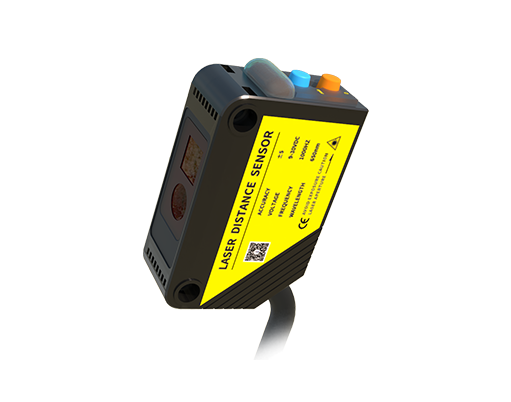
In today's rapidly evolving industrial landscape, laser detection sensor companies stand at the forefront of technological innovation, driving precision, efficiency, and automation across a multitude of sectors. These specialized firms develop and manufacture sensors that utilize laser technology to perform non-contact measurement, detection, and analysis with unparalleled accuracy. The core principle involves emitting a laser beam towards a target and analyzing the reflected light to determine parameters such as distance, displacement, thickness, vibration, and presence. This capability has become indispensable in modern manufacturing and quality control processes.
The primary advantage offered by laser sensors is their exceptional precision and speed. Unlike mechanical probes or other contact-based methods, laser detection eliminates the risk of damaging delicate surfaces or influencing the measurement through physical interaction. This non-contact nature allows for high-speed inspection on moving production lines, such as in automotive assembly, where sensors verify part dimensions, alignments, and gaps in real-time. In electronics manufacturing, laser sensors are crucial for inspecting micro-components on circuit boards, ensuring solder paste height and component placement meet stringent specifications.
Leading laser detection sensor companies continuously invest in research to enhance performance metrics like resolution, repeatability, and environmental robustness. Modern sensors can operate reliably in challenging conditions involving dust, high temperatures, or ambient light interference, thanks to advanced optical designs and signal processing algorithms. Companies are also integrating smart features, such as Industrial Internet of Things (IIoT) connectivity, enabling sensors to transmit data directly to centralized control systems for predictive maintenance and process optimization. This shift towards Industry 4.0 and smart factories is a significant growth driver for the sector.
The applications of laser detection technology are vast and expanding. In the logistics and warehousing industry, laser sensors guide autonomous mobile robots (AMRs), manage inventory levels, and facilitate precise package dimensioning. Within the renewable energy sector, they are used to inspect solar panels and wind turbine blades for microscopic defects. The aerospace industry relies on them for aligning critical components and measuring structural integrity. Furthermore, in scientific research and development, high-precision laser sensors enable breakthroughs in fields like nanotechnology and materials science.

Choosing a reliable laser detection sensor company requires careful consideration of several factors. Prospective users must evaluate the specific application requirements, including measurement range, accuracy needs, response time, and the physical environment. The reputation of the manufacturer for quality, durability, and technical support is paramount. Many top-tier companies offer comprehensive services, from initial application engineering and sensor selection to installation support and after-sales service, ensuring optimal system integration and long-term performance.
As global demand for automation and quality assurance intensifies, the market for laser detection sensors is projected to experience sustained growth. Future trends point towards the development of even smaller, more power-efficient sensors with embedded artificial intelligence for autonomous decision-making. Multi-sensor fusion, combining laser data with information from vision systems or other sensor types, will create more comprehensive inspection solutions. Companies that prioritize innovation, customization, and forming strategic partnerships with automation integrators are best positioned to lead this dynamic and critical industry, shaping the future of precision measurement and industrial automation worldwide.