In the world of industrial automation, precision and reliability are non-negotiable. Among the myriad of sensors that keep production lines humming, the color mark sensor stands out as a specialized yet critical component. Unlike standard photoelectric sensors that detect the presence or absence of an object, a color mark sensor is engineered to recognize specific color contrasts or marks on materials. This capability makes it indispensable for applications requiring precise positioning, sorting, or quality control based on color differentiation.
The core principle behind a color mark sensor's operation is its ability to distinguish between a target color and its background. It achieves this by emitting a beam of light—typically from an LED source—onto the surface of the object. The sensor then measures the intensity of the reflected light. The key differentiator is its sophisticated circuitry, which is tuned to respond only to a specific wavelength or a narrow band of wavelengths corresponding to the color it is programmed to detect. When the sensor identifies the predefined color mark, it sends a signal to the machine's control system, triggering an action such as cutting, labeling, or sorting.
There are primarily two types of color mark sensors: RGB (Red, Green, Blue) sensors and luminescence sensors. RGB sensors work by analyzing the reflected light's RGB components, comparing them to a taught reference value. They are highly effective for detecting color marks that differ in hue or shade from the background material. Luminescence sensors, on the other hand, operate by emitting ultraviolet (UV) light. They detect marks made with fluorescent materials that glow or luminesce when exposed to UV light, even if the mark is invisible under normal white light. This type is particularly useful in applications where visible marks would be aesthetically undesirable.
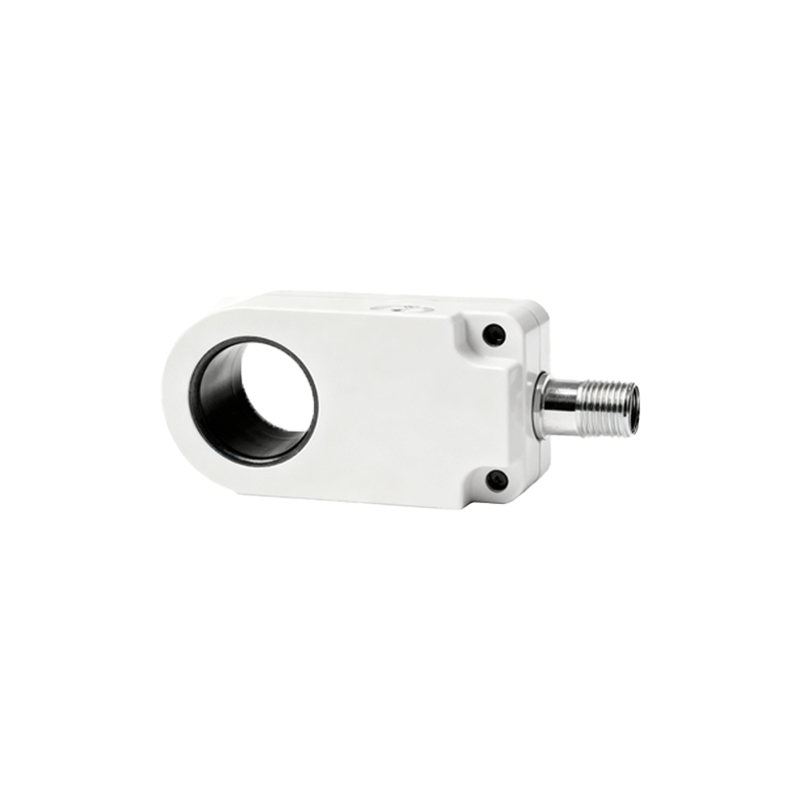
The applications of color mark sensors are vast and span numerous industries. In the packaging industry, they are crucial for ensuring labels are applied at the correct position on bottles or containers by detecting registration marks. In the printing sector, they control cutting and folding machines by detecting color marks printed on paper or cardboard, ensuring perfect alignment. The textile industry uses them to detect color patterns or seams for automated cutting and sewing. Furthermore, in food processing, they can sort products or verify the presence of correct labels on packaging. Their ability to perform high-speed, consistent detection makes them a backbone of modern manufacturing efficiency.
Selecting the right color mark sensor for an application requires careful consideration of several factors. The first is the color contrast between the mark and the background. The sensor must be sensitive enough to reliably detect this difference under varying ambient light conditions. The sensing distance, the size of the mark, and the speed of the moving object are also critical parameters. Modern color mark sensors offer advanced features like teach-in functions, which allow for easy setup by simply presenting the sensor to the target color, and adjustable sensitivity to fine-tune performance. Robust housing with high Ingress Protection (IP) ratings is essential for sensors operating in harsh environments with dust, moisture, or washdown procedures.
Installation and calibration are vital steps to ensure optimal performance. The sensor should be mounted securely to minimize vibration. The angle and distance relative to the target must be set according to the manufacturer's specifications to ensure the light beam is focused correctly. Regular maintenance, such as cleaning the lens to prevent buildup of dust or grime, is necessary to avoid false triggers or missed detections. Troubleshooting common issues often involves checking the alignment, verifying the taught reference value, and ensuring the mark itself is consistent and within the sensor's detection capabilities.
The future of color mark sensor technology is aligned with the broader trends of Industry 4.0. We are seeing the integration of smarter features, such as IO-Link communication, which allows for remote configuration, monitoring, and diagnostics. This connectivity enables predictive maintenance, reducing downtime. Advancements in LED technology and optical design continue to improve sensing distance, resolution, and stability. Furthermore, the line between traditional color mark sensors and compact vision systems is blurring, with some sensors offering multi-color detection and simple pattern recognition in a single, rugged package.
In conclusion, the color mark sensor is a deceptively simple device that performs a complex and vital task. Its role in ensuring accuracy, reducing waste, and maintaining high throughput in automated processes cannot be overstated. From a simple registration mark on a cereal box to a fluorescent thread in a fabric, these sensors provide the "eyes" that guide machines with unwavering precision. Understanding their operation, types, and application requirements is key to leveraging their full potential and building more responsive, efficient, and intelligent automated systems.