When discussing laser sensors, a common question arises: do laser sensors have power? The answer is not a simple yes or no, as the term "power" can refer to different aspects of the sensor's operation. Primarily, it pertains to the optical output power of the laser emitter itself and the electrical power required to operate the entire sensor unit. Understanding these distinctions is crucial for proper selection, safe application, and optimal performance in industrial, commercial, or research settings.
The core component of a laser sensor is its laser diode or emitter. This emitter does indeed have a specific optical output power, measured in milliwatts (mW) or sometimes watts (W) for high-power industrial models. This power rating indicates the intensity of the laser beam. It is a critical parameter that directly influences the sensor's capabilities. For instance, a higher optical power often allows for longer sensing ranges, better performance in challenging environments with dust or low reflectivity surfaces, and potentially higher signal-to-noise ratios, leading to more accurate and stable measurements. Common laser sensors for positioning, distance measurement, or object detection might range from a few milliwatts to several hundred milliwatts. It is vital to note that this optical power is subject to strict safety classifications (Class 1, Class 2, Class 3R, Class 4). Users must always adhere to safety regulations to prevent eye or skin damage.

Separately, the laser sensor as a complete electronic device requires electrical power to function. This is the operational power supplied to the sensor unit. It is typically specified as a voltage range (e.g., 10-30 V DC) and a current consumption or power consumption in watts. This electrical power energizes not only the laser diode but also the photodetector, signal processing circuitry, microcontroller, and output interfaces (like analog or digital outputs). The efficiency and design of the sensor determine how much electrical power is converted into usable optical power and processing capability. When integrating a sensor into a system, ensuring a stable and clean power supply within the specified range is essential for reliability and longevity.

The relationship between optical output power and electrical input power is not linear or 100% efficient. A significant portion of the electrical energy is converted to heat rather than light. Therefore, sensor design includes considerations for heat dissipation. The required optical power for an application depends on several factors. The sensing distance is a primary driver; longer distances require more power to ensure enough light returns to the detector. The target surface's properties also matter—dark, rough, or absorbent surfaces reflect less light than bright, smooth ones, potentially necessitating a more powerful laser. Ambient light conditions can interfere with the sensor's signal; a stronger laser beam can help overcome this noise. Finally, the desired measurement speed and resolution can influence power needs, as faster sampling might require a robust signal.
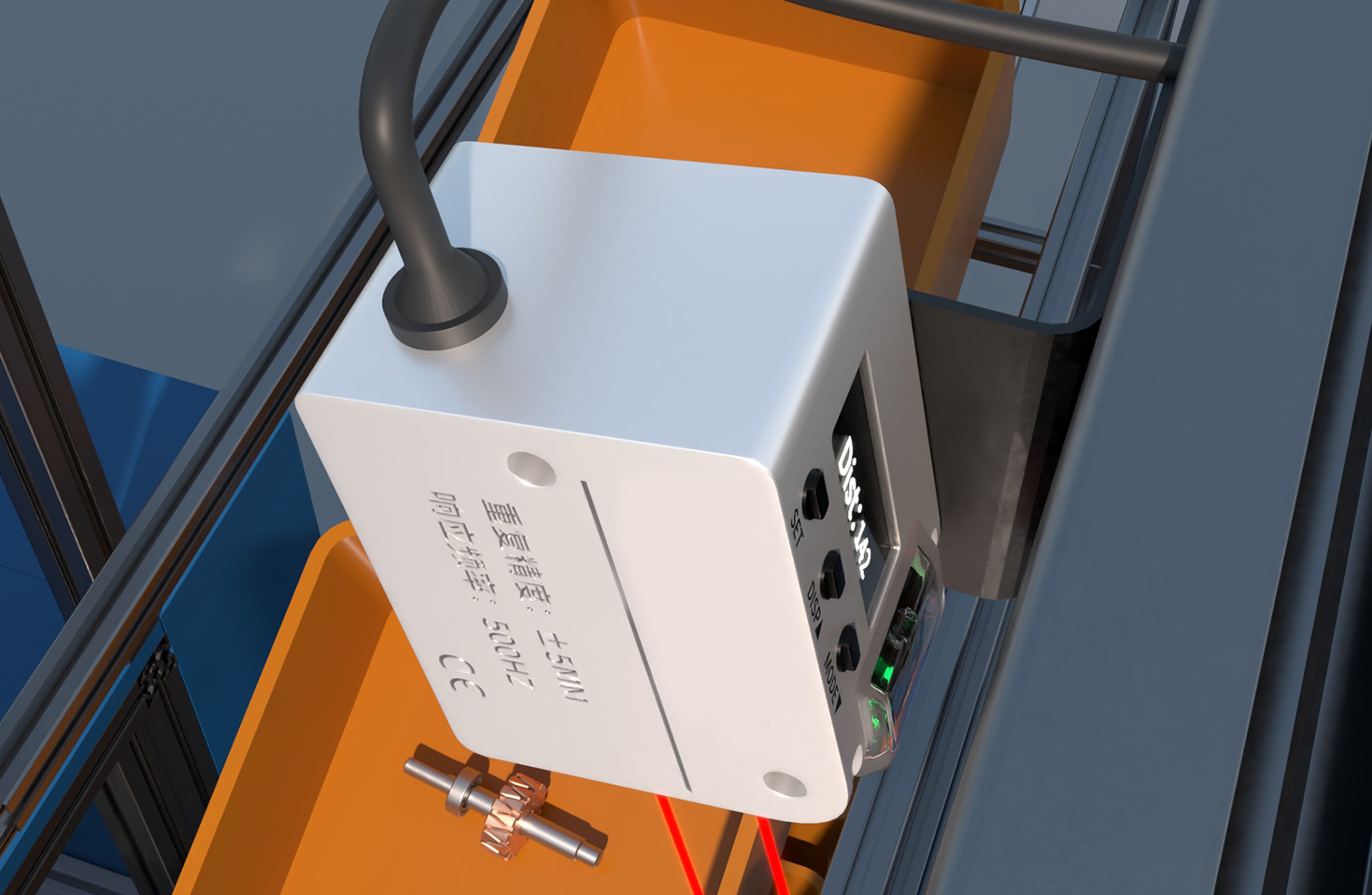
When selecting a laser sensor, engineers must balance power considerations with other requirements. Higher optical power sensors may offer performance benefits but could pose greater safety risks, require more stringent protective measures, and consume more electrical energy. They might also be subject to more regulatory scrutiny. Conversely, lower-power Class 1 or Class 2 laser sensors are inherently safe for incidental viewing but may have limitations in range or ability to handle difficult surfaces. Always consult the sensor's datasheet for key specifications: laser wavelength (e.g., 650nm red, 850nm infrared), optical output power and safety class, required electrical supply, sensing range, and environmental ratings.
In summary, laser sensors unequivocally involve power in two key forms: the optical power of the emitted laser beam and the electrical power needed to run the device. The optical power is a defining performance characteristic, while the electrical power is a practical necessity for integration. A clear understanding of both, guided by manufacturer specifications and application demands, is fundamental to deploying laser sensor technology effectively, safely, and efficiently across countless automation and measurement tasks.