In the realm of modern industrial automation and quality control, achieving micron-level precision is no longer a lofty goal but a fundamental requirement. This relentless pursuit of accuracy has propelled laser 3D profiling sensors to the forefront of measurement technology. Unlike traditional 2D vision systems or tactile probes, these advanced sensors capture the complete topographical essence of an object in a single, non-contact scan, generating a dense cloud of three-dimensional data points that reveal every contour, edge, and surface variation.
At the core of a laser 3D profiling sensor is the principle of optical triangulation. The sensor projects a precise, fan-shaped laser line onto the target object. This line deforms according to the object's surface profile. A high-resolution camera, positioned at a known angle to the laser emitter, captures this deformed line. Sophisticated onboard processors then analyze the displacement of each point along the laser line in the camera's field of view. Using trigonometric calculations, the sensor translates these pixel displacements into real-world X, Y, and Z coordinates, constructing a detailed 3D profile at astonishing speeds, often reaching thousands of profiles per second.
The applications for this technology are vast and transformative. In automotive manufacturing, these sensors perform critical tasks such as verifying gap and flush dimensions between car body panels, inspecting weld seam quality and volume, and ensuring the perfect placement of adhesives. A single sensor can replace multiple fixed gauges, offering unparalleled flexibility. In electronics, they measure the coplanarity of Ball Grid Array (BGA) solder balls, inspect component height and placement on PCBs, and verify the thickness of coatings and deposits with sub-micron repeatability.
The logistics and packaging industry leverages laser profilers for volumetric dimensioning (DIM) of parcels, enabling optimal truck loading and accurate shipping costs. They guide robotic arms to pick randomly oriented items from bins—a challenge known as random bin picking—by providing the precise 3D location and orientation of each part. In metal fabrication, sensors inspect machined parts for tolerances, detect defects like dents or burrs, and guide cutting or welding robots along complex 3D paths.

Several key advantages define laser 3D profiling sensors. First is speed and density: they capture millions of data points per second, enabling 100% inline inspection without becoming a production bottleneck. Second is robustness: being non-contact, they avoid wear and tear and can inspect delicate, soft, or hot surfaces without damage. Third is versatility: with varying laser classes, field-of-view options, and mounting configurations, they can be adapted for tasks ranging from inspecting tiny medical device components to scanning large tire treads. Finally, the richness of data goes beyond simple measurements; users can extract cross-sections, perform shape comparisons against CAD models, and analyze surface texture.
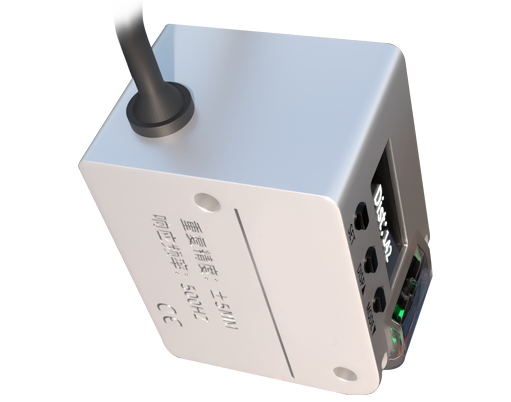
Implementing this technology does require consideration of certain environmental and target factors. Highly reflective, transparent, or dark, light-absorbing surfaces can pose challenges, though modern sensors employ advanced techniques like multiple exposure modes and specialized laser wavelengths to mitigate these issues. Ambient light interference is typically minimized through optical filters that only allow the sensor's specific laser wavelength to pass. The choice between a blue laser (often better for organic materials) and a red laser, as well as the selection of resolution versus field of view, depends heavily on the specific application.
Looking ahead, the integration of laser profiling sensors with artificial intelligence and machine learning represents the next evolutionary leap. AI algorithms can be trained on 3D point cloud data to identify complex defects, classify objects, and make adaptive decisions in real-time, moving beyond pre-programmed measurements to true cognitive inspection. Furthermore, the miniaturization of components is making these sensors more compact and affordable, opening doors for use in smaller robotics and consumer electronics assembly lines.
From the factory floor to the research lab, laser 3D profiling sensors have established themselves as indispensable tools. They bridge the gap between the physical world and digital control systems, providing the eyes for autonomous robots and the definitive data for quality assurance. By delivering fast, accurate, and rich three-dimensional data, they empower engineers to build better products, optimize processes, and drive the future of smart manufacturing and beyond. Their role is not merely to measure but to enable a new standard of precision and intelligence in an increasingly automated world.