In the world of automation and smart technology, proximity sensors are the silent, unseen guardians. They detect the presence or absence of nearby objects without any physical contact, triggering actions in countless devices and systems. From the smartphone that dims its screen when held to your ear to the complex safety systems on factory assembly lines, these sensors are fundamental. But how do they actually work? The principle hinges on the disturbance of an electromagnetic field or a beam of radiation, and the specific method varies by type.
The most common categories are inductive, capacitive, and photoelectric proximity sensors. Each operates on a distinct physical principle, making them suitable for different materials and environments.
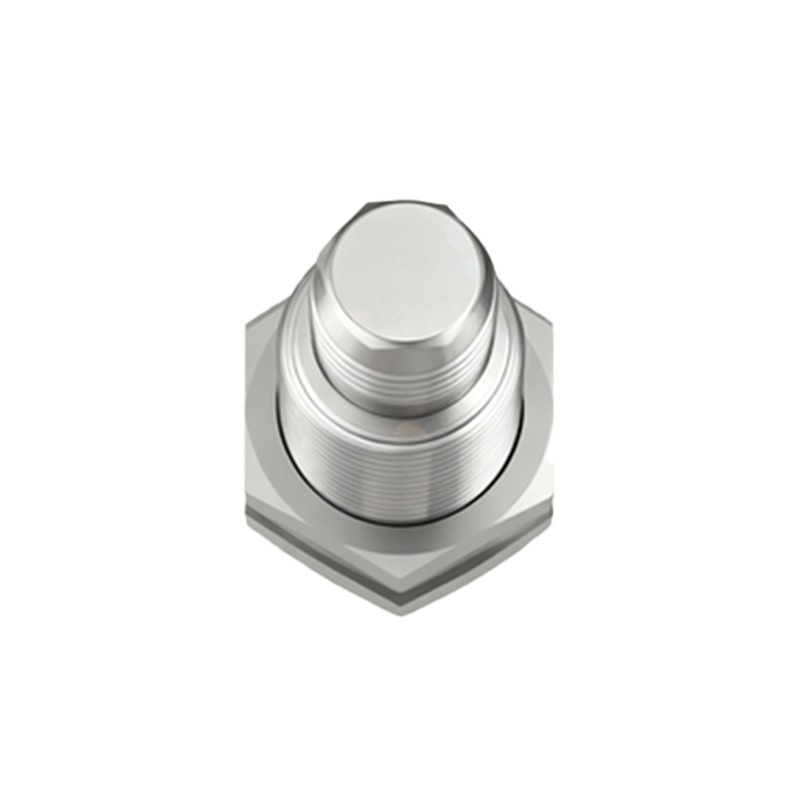
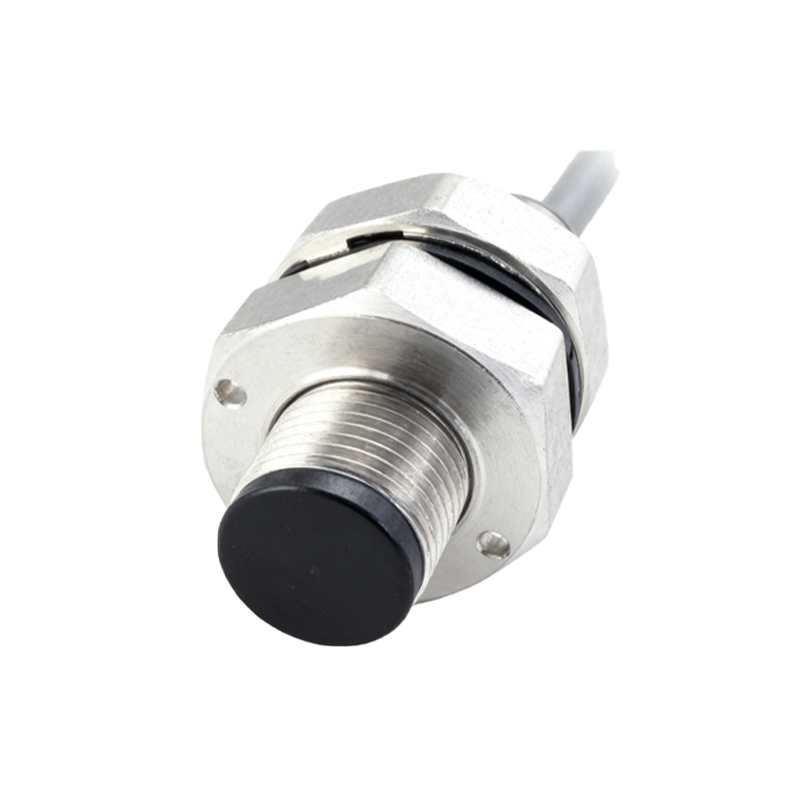
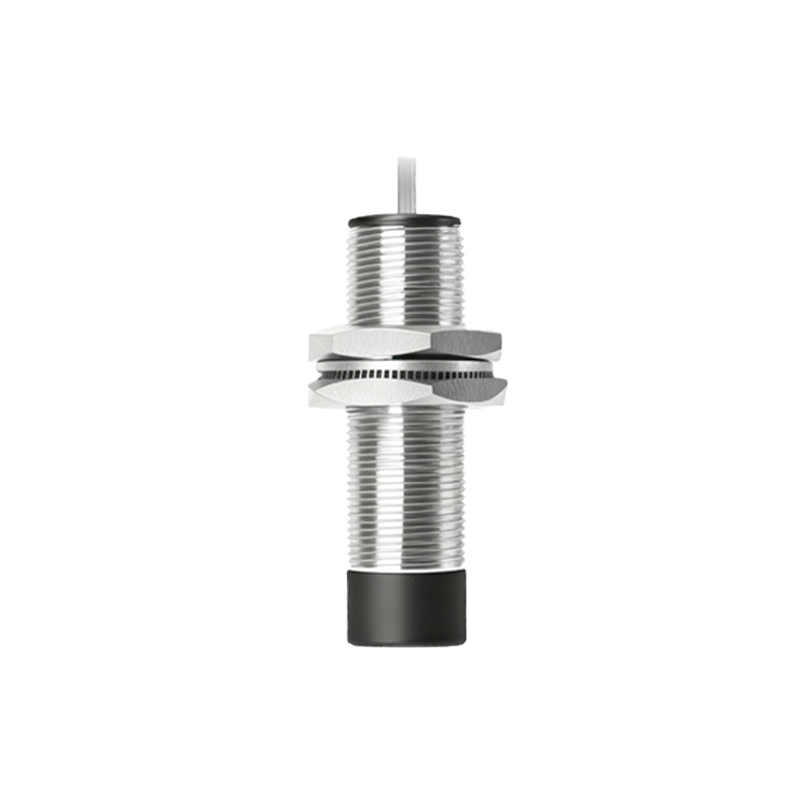
An inductive proximity sensor is the workhorse for detecting metallic objects. Its core component is a coil wound around a ferrite core, which forms part of an oscillator circuit. When powered, this coil generates a high-frequency oscillating electromagnetic field at its sensing face. When a conductive metal object enters this field, eddy currents are induced on the surface of the object. These eddy currents draw energy from the sensor's oscillator, causing a drop in the amplitude of oscillation. An internal circuit monitors this amplitude change. Once the drop reaches a predetermined threshold, the sensor's output state switches—for instance, from 'off' to 'on'—sending a signal to the connected controller. This type is robust, unaffected by dust or dirt, and ideal for industrial settings with metals like iron, steel, aluminum, and copper, though with varying sensing distances.
In contrast, a capacitive proximity sensor can detect both metallic and non-metallic materials, including liquids, plastics, wood, and granules. It functions similarly to an open capacitor. The sensor's active surface comprises two metallic electrodes arranged as an open capacitor, often with the sensor housing acting as one electrode and the target object as the other. The oscillator circuit is adjusted so that it does not oscillate when no target is present. When any object enters the electrostatic field, it changes the dielectric constant and the capacitance of the system. This change allows current to flow, triggering the oscillation. The subsequent circuit detects this activity and changes the output state. This sensitivity to a wide range of materials makes capacitive sensors perfect for level detection in tanks, touch-sensitive interfaces, and detecting non-metallic objects.
Photoelectric sensors operate on a completely different principle: light. They consist of a light emitter (usually an LED) and a receiver. There are three main sub-types. The through-beam type has separate emitter and receiver units placed opposite each other. Detection occurs when the target object interrupts the light beam. The retro-reflective type uses a single unit that emits light towards a reflector; the object is detected when it blocks the reflected beam. The diffuse-reflection type, often called proximity mode, has the emitter and receiver in the same housing. It detects the target by receiving the light scattered back from the object itself. The receiver, typically a phototransistor, converts the received light intensity into an electrical signal, which is then processed to control the output.
Beyond these, other types include ultrasonic sensors, which use sound waves, and magnetic sensors (Reed switches or Hall effect sensors), which detect permanent magnets. The choice depends entirely on the application: required sensing distance, material of the target object, environmental conditions (like dust, moisture, or temperature), and required response speed and accuracy.
The output from these sensors is typically a simple digital signal—either a switching signal (PNP or NPN for DC sensors) or a relay contact. This signal is fed into a Programmable Logic Controller (PLC), microcontroller, or other control system to initiate actions like stopping a motor, counting items, or activating a safety door. Their non-contact nature ensures no wear and tear, leading to exceptional longevity and reliability.
Understanding the working principle of proximity sensors is key to selecting the right one. It demystifies why an inductive sensor ignores a plastic bottle, why a capacitive sensor can detect a liquid through a glass wall, and how your phone knows to turn off the display. By harnessing fundamental physics—electromagnetism, capacitance, and optics—these tiny components form the essential sensory layer of our automated world, enabling precise, reliable, and maintenance-free detection.