The evolution of autonomous systems, from self-driving cars to advanced robotics, hinges on one critical component: perception. At the forefront of this sensory revolution are LiDAR (Light Detection and Ranging) sensors, which create precise, three-dimensional maps of the environment by emitting laser pulses and measuring their return time. This technology's accuracy and reliability in various lighting conditions have made it indispensable. Consequently, the landscape of LiDAR sensor manufacturers is both dynamic and competitive, featuring established giants and innovative startups all vying to shape the future.
A key player in this field is Velodyne Lidar, often credited with pioneering modern automotive LiDAR. Their rotating mechanical sensors became the early benchmark for the industry. While facing intense competition, Velodyne has diversified its portfolio, offering solid-state and hybrid solutions for automotive, industrial, and mapping applications. Their focus on long-range, high-resolution perception continues to make them a formidable force.

Another titan, Luminar Technologies, has taken a different path by developing its proprietary 1550nm laser technology. This wavelength allows for higher power output, enabling longer detection ranges and improved safety for human eyes. Luminar's Iris sensor is designed specifically for series production passenger vehicles, securing major partnerships with automakers like Volvo and Mercedes-Benz. Their integrated approach, combining hardware and perception software, aims to deliver a complete autonomy solution.
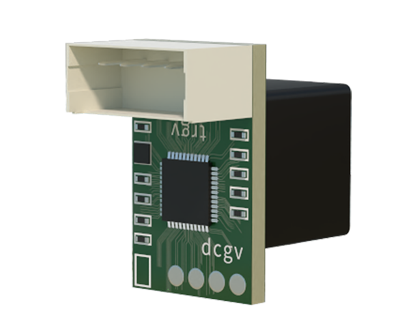
The rise of solid-state LiDAR represents a significant industry shift, and companies like Innoviz are leading this charge. Solid-state designs, with no moving parts, promise greater durability, smaller form factors, and lower costs—essential for mass-market automotive adoption. Innoviz's high-performance solid-state LiDAR sensors, coupled with robust perception software, have garnered design wins with BMW and other OEMs, highlighting the commercial viability of this technology path.
Beyond the automotive sector, companies like Ouster have embraced a digital LiDAR architecture. Their sensors use a single laser and a customized CMOS detector array, aiming for scalability and cost reduction. Ouster serves a broad market, including robotics, industrial automation, and smart infrastructure, demonstrating LiDAR's versatility. Their ability to offer a range of resolutions and fields of view in a single platform appeals to diverse application needs.
Meanwhile, Aeva is innovating with a unique approach known as Frequency Modulated Continuous Wave (FMCW) LiDAR. Unlike traditional time-of-flight LiDAR, FMCW technology can instantly measure velocity for every point, in addition to distance. This "4D" perception provides a crucial advantage in tracking objects and predicting trajectories. Aeva's chip-based design aims to miniaturize the technology further, targeting integration into consumer electronics and advanced driver-assistance systems.
The competitive landscape also features specialized manufacturers. Hesai Technology, a leader based in China, produces a wide array of mechanical, hybrid, and solid-state LiDARs. They have achieved significant scale, supplying sensors for autonomous driving, robotaxis, and delivery robots globally. Similarly, Continental, a traditional automotive supplier, has developed scalable, automotive-grade LiDAR solutions, emphasizing integration into the vehicle's overall sensor suite and safety architecture.
The choice of a LiDAR manufacturer depends heavily on the application's specific requirements. Key considerations include range, resolution, field of view, frame rate, power consumption, environmental robustness (against weather, vibration, and temperature), and, critically, cost. For autonomous vehicles, long-range, high-resolution data is paramount for highway driving. For last-mile delivery robots navigating complex urban sidewalks, a wider field of view and superior near-field perception might be prioritized.
Looking ahead, the trajectory for LiDAR sensor manufacturers points toward further miniaturization, cost reduction, and performance enhancement. The integration of LiDAR with other sensors like cameras and radar in sensor fusion systems is becoming standard practice. Furthermore, the development of true software-defined sensors, where performance can be updated over-the-air, is on the horizon. As the demand for perception grows across industries—from agriculture and construction to security and logistics—the innovators and leaders in LiDAR manufacturing will continue to be the silent enablers of a more automated and intelligent world.