Introduction to the QS18 Photoelectric Sensor
The QS18 series, manufactured by Banner Engineering, represents a robust and versatile photoelectric sensor solution for a wide range of industrial automation applications. Designed to operate in harsh environments, this sensor family offers multiple sensing modes including retroreflective, diffuse, and opposed-beam configurations. Its compact, cylindrical housing is rated IP67, ensuring reliable performance in dusty, wet, or vibration-prone conditions. The QS18 is particularly favored for its ease of installation and straightforward alignment, making it a practical choice for engineers seeking cost-effective presence detection.
Key Technical Specifications
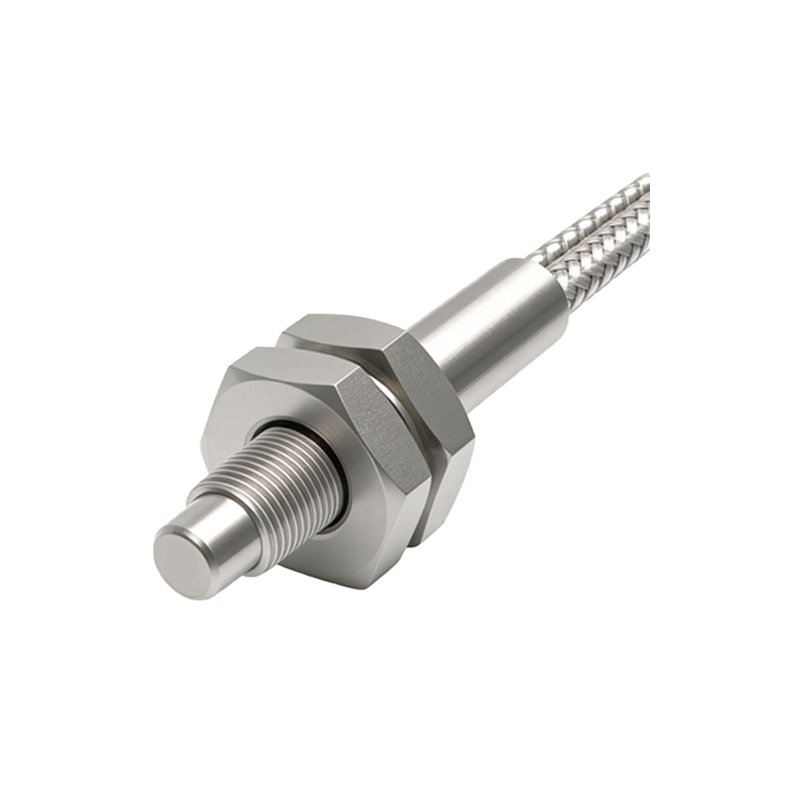
Critical technical parameters include an operating voltage range of 10 to 30 V DC, with a maximum current consumption typically under 20 mA. The sensor provides a binary NPN or PNP output, depending on the model, with a response time as fast as 1 ms. Sensing distances vary by mode: opposed-beam models can reach up to 20 meters, retroreflective models up to 4 meters, and diffuse models up to 300 mm. The infrared LED emitter, with a wavelength of 880 nm, is modulated to reject ambient light interference. Additionally, the QS18 features a visible red LED alignment indicator, simplifying setup during commissioning.
Common Application Scenarios
In manufacturing environments, the QS18 is extensively used for object detection on conveyor systems, packaging machinery, and material handling equipment. For example, in a bottling plant, a retroreflective QS18 can reliably detect clear glass or plastic bottles passing through a fill station. In automotive assembly, opposed-beam models are deployed to verify the presence of components on a moving line, even in the presence of oil mist or water spray. The sensor's ability to operate at high speed makes it suitable for counting applications in high-throughput production lines.
Installation and Maintenance Best Practices
Proper installation begins with selecting the correct mounting bracket—Banner offers a range of adjustable brackets for the QS18. Ensure the sensor face is free of debris and aligned perpendicular to the reflector or target. For retroreflective sensing, maintain a minimum distance of 100 mm between the sensor and reflector to avoid false triggering from stray reflections. During maintenance, clean the lens with a lint-free cloth and isopropyl alcohol to remove oil, dust, or condensation. Routine checks of the output indicator and alignment beam can prevent unexpected downtime.
Troubleshooting Common Issues
Common problems include no output signal, which may indicate misalignment or a blown fuse. Check the power supply voltage with a multimeter; if within spec, inspect the reflector or target for damage. Intermittent triggering often results from electrical noise—installing a ferrite bead on the cable near the sensor can mitigate this. For diffuse mode sensors, false detections may occur due to high ambient light; adjusting the sensitivity potentiometer (if present) or switching to a modulation-based model resolves this. Always consult the datasheet for specific error codes and wiring diagrams.