How scattered photoelectric sensors work, diffuse reflective sensor principle, industrial photoelectric sensor guide, background suppression sensor, photoelectric sensor calibration
Core Operation Principle: Light Scattering and Detection
The core operation of a scattered photoelectric sensor relies on the physics of diffuse reflection. The sensor's emitter uses a focused lens to project a narrow beam onto a target. When the beam strikes a rough or non-mirror-like surface, it scatters in all directions according to Lambert's cosine law. The receiver, positioned adjacent to the emitter, collects a fraction of this scattered light. To minimize interference from ambient light, the emitter is modulated at a specific frequency (e.g., 1 kHz to 10 kHz), and the receiver electronics are tuned to detect only that frequency. Advanced sensors use synchronous demodulation to filter out noise from fluorescent lights, sunlight, or nearby machinery. The detection threshold is set based on the background reflectance; for example, a white surface at 200 mm distance provides a stronger signal than a black surface at the same distance.
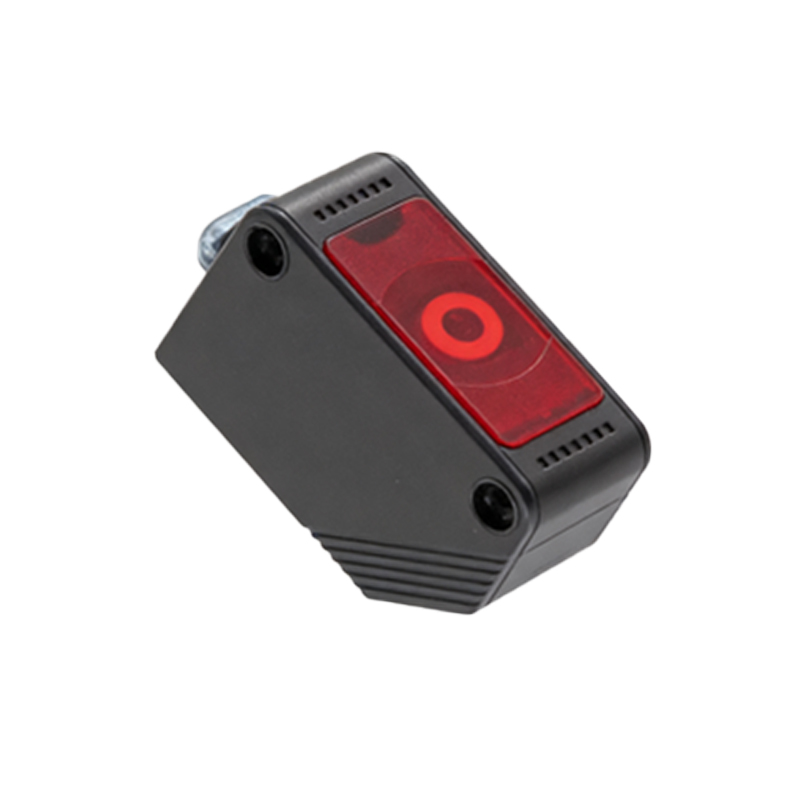
Key Technical Parameters and Performance Factors
Several parameters define the performance of a scattered photoelectric sensor. First, the sensing range varies from a few centimeters for background suppression models to over 1 meter for high-power emitters. Second, the beam angle, typically between 3 degrees for focused models and 15 degrees for wide-angle sensors, affects the detection zone size. Third, the response time, often in the range of 0.5 to 5 milliseconds, determines suitability for high-speed applications like conveyor belt counting. A critical factor is the excess gain, which is the ratio of received light power to the minimum required for detection. A sensor with high excess gain can reliably detect dark, matte, or irregularly shaped objects. Environmental conditions such as dust, fog, or steam can attenuate the beam, reducing the effective range by up to 50%.
Types of Scattered Photoelectric Sensors
Industrial scattered photoelectric sensors are categorized into several subtypes based on their design and application. Standard diffuse sensors are the simplest, with a fixed background suppression level. Background suppression models use a triangulation method to detect objects only within a defined distance, ignoring reflective backgrounds like shiny metal or mirrors. Foreground suppression sensors operate in reverse, ignoring objects close to the sensor while detecting those farther away. For harsh environments, fiber-optic scattered sensors use flexible glass or plastic fibers to separate the electronics from the sensing head, enabling operation in high-temperature, corrosive, or confined spaces. Each type offers distinct advantages for specific tasks, such as detecting transparent objects, small parts, or uneven surfaces.
Common Industrial Applications
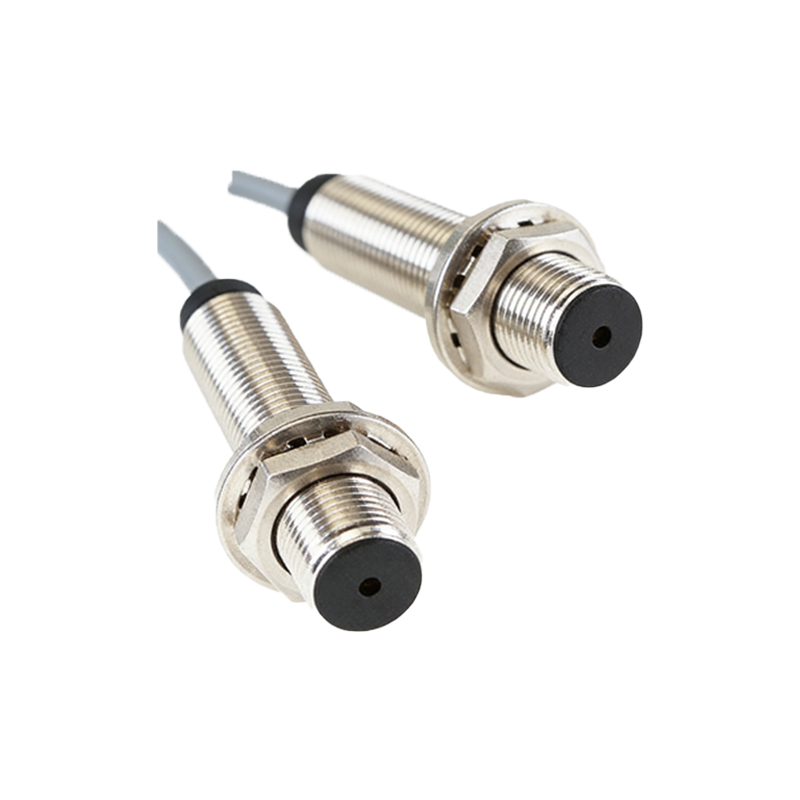
Scattered photoelectric sensors are widely used in manufacturing, packaging, and logistics. In conveyor systems, they detect the presence of boxes, bottles, or parts for counting and sorting. In automated assembly lines, they verify component placement, such as ensuring a screw is correctly seated. For level detection in transparent or opaque containers, sensors can monitor liquid or granular material heights. They also serve in safety applications, such as detecting operator presence near a robotic arm. Background suppression models excel in detecting specular or highly reflective targets, while standard diffuse sensors are cost-effective for general-purpose object detection.
Installation and Calibration Best Practices
Proper installation ensures reliable operation. The sensor should be mounted perpendicular to the expected object path to maximize light return. Avoid placing it near highly reflective surfaces that can cause false triggering. Calibration involves adjusting the sensitivity potentiometer or using a teach-in button to set the detection threshold. For background suppression models, the cutoff distance must be set precisely to ignore background objects. It is recommended to test the sensor with the worst-case target (e.g., the darkest, smallest, or most irregular object) to confirm consistent detection. Regular cleaning of the sensor lens and monitoring of the signal strength indicator can prevent failures in dusty or humid environments.
Troubleshooting Common Issues
Common issues include intermittent detection due to misalignment or vibration. Check the sensor's mounting bracket for stability. False triggers often result from ambient light flicker or reflections from nearby surfaces; using a sensor with a narrower beam angle or adjusting the sensitivity can help. If a sensor fails to detect dark objects, consider upgrading to a model with higher excess gain or using a red LED instead of infrared. For background suppression sensors, ensure the cutoff distance is correctly set and that the background surface is not too reflective. In high-speed applications, verify that the response time matches the object's passing speed; a slow response can lead to missed detections.
Future Trends in Scattered Sensor Technology
Advances in semiconductor technology are driving the evolution of scattered photoelectric sensors. The integration of microcontrollers allows for smart sensors with self-diagnostics, IO-Link communication, and adaptive sensitivity. New emitter materials, such as vertical-cavity surface-emitting lasers (VCSELs), offer higher power efficiency and narrower beam divergence, extending sensing ranges. AI-based algorithms are being developed to classify objects based on their scattering patterns, enabling defect detection in quality control. Additionally, the trend toward miniaturization and lower power consumption supports deployment in Internet of Things (IoT) networks for predictive maintenance and remote monitoring. These innovations promise to enhance reliability and versatility in the coming decade.