Understanding Photoelectric Sensor Detection Distance
Photoelectric sensors are critical components in automation, packaging, and material handling systems. Their detection distance determines the maximum range at which a sensor can reliably detect an object. This distance depends on several factors, including sensor type (through-beam, retro-reflective, or diffuse), ambient light conditions, target reflectivity, and environmental contaminants. For optimal performance, engineers must carefully match sensor specifications to application requirements, as distance ratings are often reduced by up to 50% in real-world conditions due to dust, misalignment, or background interference.
Key Factors Affecting Detection Range
Three primary factors influence photoelectric sensor range:
1) Emitter power and receiver sensitivity, which vary by model and technology.
2) Target surface properties, where high-reflectivity materials (e.g., white paper) allow longer distances than dark or matte surfaces.
3) Optical interference from ambient light, fog, or smoke. For example, through-beam sensors achieve the longest distances (up to 100 meters) since the receiver directly sees the emitter, while diffuse sensors have the shortest range (often less than 2 meters) because they rely on reflected light.
Selecting Sensor Type for Maximum Distance
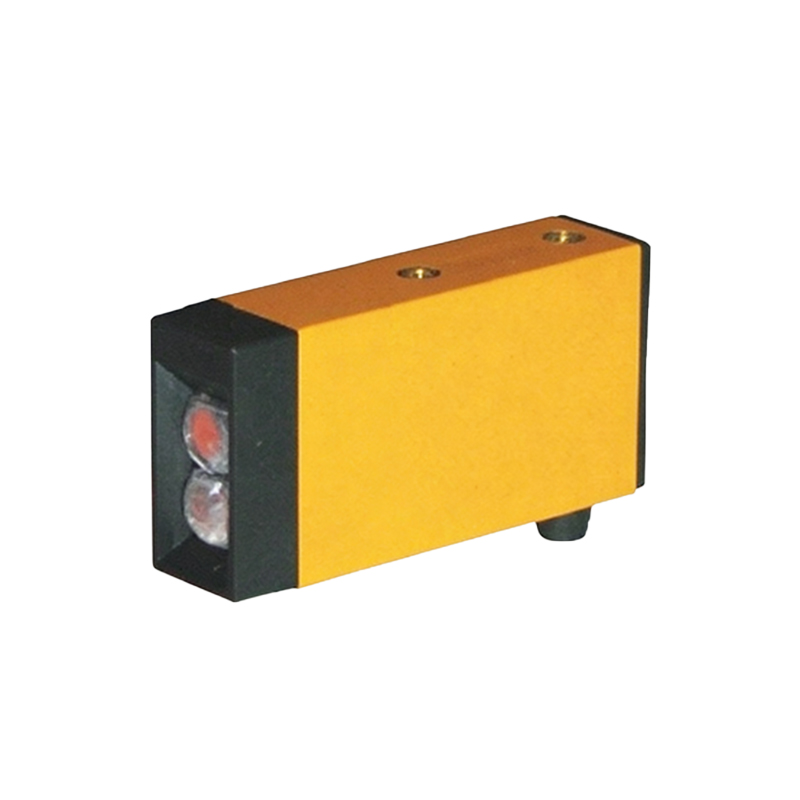
Through-beam sensors are ideal for long-range detection in clean environments, such as conveyor belt alignment or door control. Retro-reflective sensors offer a balanced solution, using a reflector to achieve ranges up to 50 meters, but require careful alignment and a clean reflector surface. Diffuse sensors are best for short-range applications (under 1 meter) where object presence is detected by diffused reflection. For extreme distances, laser-based photoelectric sensors can extend range to several hundred meters with narrow beams, though they demand precise mounting and cost more.
Practical Tips to Extend Detection Distance
To maximize sensor performance:
1) Clean optical surfaces regularly to avoid attenuation.
2) Use shields or sun shades to block direct sunlight or strong artificial light.
3) Adjust sensitivity and threshold settings via potentiometers or digital interfaces.
4) Choose sensors with background suppression or polarized filters to reduce false triggers from shiny backgrounds.
5) For through-beam sensors, ensure emitter and receiver are perfectly aligned within 1 degree of angle.
Common Pitfalls and Troubleshooting
Frequent issues include reduced distance due to accumulated dust on lenses, misalignment from vibration, and interference from nearby reflective surfaces. To troubleshoot:
- Measure actual output power with a calibrated meter.
- Check for condensation on optics in humid conditions.
- Verify that power supply voltage stays within rated range (e.g., 10-30 VDC).
- Use a test target with known reflectivity to validate sensor response. In noisy environments, shielded cables and ferrite cores can minimize electromagnetic interference.