Introduction to Miniature Photoelectric Sensors
Miniature photoelectric sensors are compact, high-performance devices designed for precise object detection in space-constrained industrial applications. These sensors utilize light beams, typically infrared, visible red, or laser, to detect the presence, absence, or position of targets without physical contact. Their small form factor, often with housing dimensions under 20 mm, makes them ideal for integration into tight machinery, robotic arms, and conveyor systems. Key advantages include fast response times (as low as 0.1 ms), high repeatability, and immunity to electromagnetic interference. Common types include through-beam, retro-reflective, and diffuse reflective sensors, each suited for specific environments like dusty factories or clean labs. Understanding the available options helps engineers select the optimal sensor for tasks such as part counting, edge detection, or positioning in high-speed assembly lines.
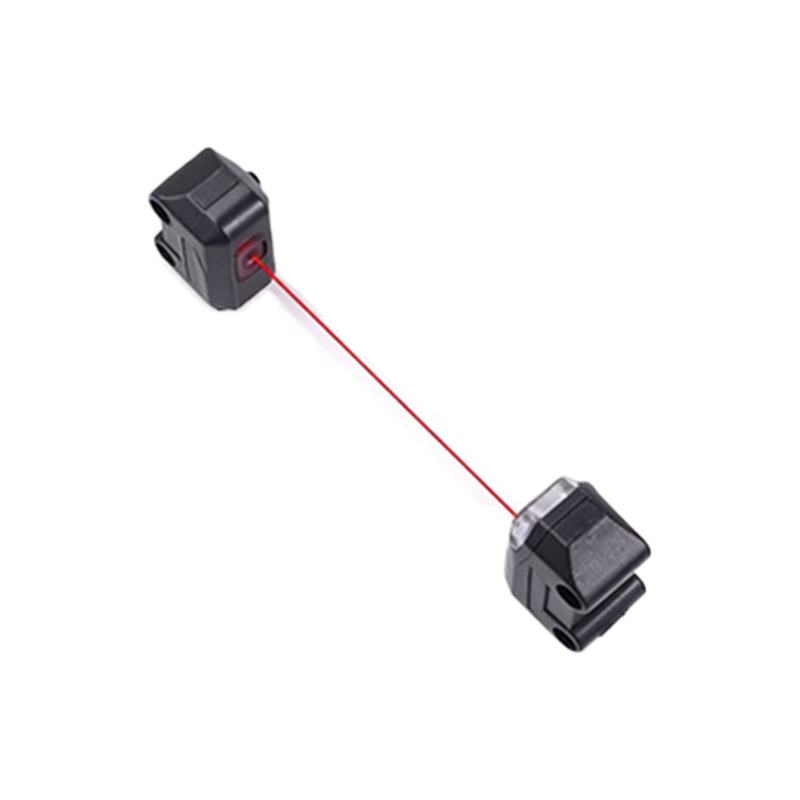
Through-Beam Miniature Photoelectric Sensors
Through-beam sensors consist of a separate emitter and receiver, aligned with each other to form a continuous light path. When an object interrupts the beam, the sensor triggers an output. These sensors offer the longest sensing range (up to 15 meters for miniature versions) and the highest reliability in harsh conditions, such as heavy dirt, fog, or opaque materials. For example, the SICK WL4S-3 series provides a sensing range of 0-10 meters with a red LED light source, housed in a 20 x 10 x 5 mm package. Applications include detecting small parts on fast-moving conveyors or monitoring door positions in automated guided vehicles (AGVs). The main drawback is the need for wiring both components, requiring additional installation space.
Retro-Reflective Miniature Photoelectric Sensors
Retro-reflective sensors integrate the emitter and receiver in one housing, using a reflector to bounce the light beam back. When an object breaks the reflected beam, the sensor detects it. These sensors offer a medium sensing range (up to 5 meters) and are easier to install than through-beam types, as only one device needs wiring. The Panasonic EX-14A series, measuring just 12 x 8 x 4 mm, features a polarization filter to avoid false detections from shiny surfaces. This makes them suitable for detecting transparent or glossy objects, like glass vials or aluminum cans. They are commonly used in packaging machines and label verification systems. However, they may struggle with highly reflective or absorptive targets.
Diffuse Reflective Miniature Photoelectric Sensors
Diffuse reflective sensors combine the emitter and receiver in one unit, detecting objects by the light reflected directly off the target surface. They require no separate reflector, simplifying installation and reducing cost. These sensors have a shorter sensing range (typically up to 0.5 to 2 meters) and are sensitive to target color, surface finish, and angle. The Banner Q4X series offers a range of 50-300 mm with a visible red laser for pinpoint accuracy. Applications include detecting small components on pick-and-place machines or verifying presence in automated assembly. Advanced models incorporate background suppression to ignore objects beyond a set distance, enhancing reliability.
Laser-Based Miniature Photoelectric Sensors
Laser-based sensors use a focused laser diode (e.g., Class 1 or 2) to achieve extremely precise detection with spot sizes as small as 0.1 mm. These sensors are ideal for high-speed, high-accuracy tasks like aligning semiconductor wafers or detecting fine features on electronic boards. The Omron E3X-HD series provides a sensing range of 0-300 mm with a red laser, housed in a 15 x 10 x 6 mm package. They offer fast response times (down to 0.05 ms) and can detect objects with high contrast, such as marks on glossy surfaces. However, they are more expensive and require careful alignment, especially in vibrating environments.
Fiber Optic Miniature Photoelectric Sensors
Fiber optic sensors consist of a remote amplifier and a small fiber optic cable (plastic or glass) that serves as the sensing head. The cable can be bent into tight spaces, allowing detection in areas inaccessible to standard sensors. The Keyence FS-N40 series features a miniature fiber head of only 2.5 mm diameter, with sensing ranges up to 1 meter. These sensors excel in high-temperature or corrosive environments, as the electronic components are located away from the hazardous zone. Common applications include detecting small holes in metal parts or counting tiny pills in pharmaceutical production. They offer high sensitivity but require periodic cleaning of the fiber tip.
Selection Considerations and Industry Standards
When choosing a miniature photoelectric sensor, engineers must evaluate factors like sensing range, response time, ambient light immunity, and mechanical durability (e.g., IP67 rating for washdown environments). For example, in food processing, sensors with stainless steel housings and flush-mountable designs are preferred. Additionally, consider output types (NPN/PNP, analog, IO-Link) for compatibility with PLCs and industrial networks. Leading manufacturers include SICK, Banner, Panasonic, Omron, and Keyence, each offering specific models optimized for different applications. Always verify the sensor's operating wavelength (e.g., 650 nm red light) to match target material reflectivity. Proper selection ensures reliable performance, reduced downtime, and lower total cost of ownership.