Introduction to Photoelectric Sensors
Photoelectric sensors are essential components in modern industrial automation, widely used for detecting the presence, absence, or distance of objects. These sensors utilize light beams, typically infrared or visible light, to sense changes in the environment. As an electrical engineer, I have found that their reliability, speed, and non-contact operation make them ideal for harsh manufacturing environments, such as assembly lines, packaging machines, and material handling systems.
Working Principle and Types
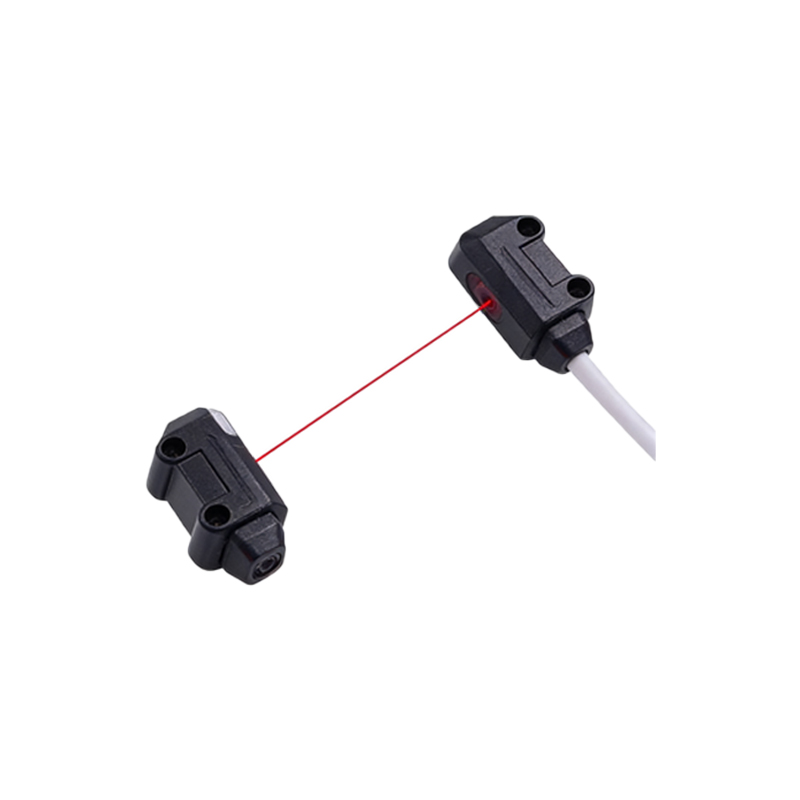
The core principle of a photoelectric sensor involves an emitter that sends a light beam to a receiver. The object interrupts or reflects this beam, triggering a signal. There are three main types: through-beam sensors, retro-reflective sensors, and diffuse-reflective sensors. Through-beam sensors offer the longest detection range and highest accuracy by placing the emitter and receiver opposite each other. Retro-reflective sensors use a reflector to bounce the beam back, providing a compact solution. Diffuse sensors detect objects by the light reflected directly from the object itself, making them suitable for short-range applications.
Key Selection Criteria
When selecting photoelectric sensors for your application, consider factors like detection range, ambient light interference, object color, and surface texture. For example, through-beam sensors excel in dusty or dirty environments, while diffuse sensors are affected by object reflectivity. Additionally, check the response time, output type (NPN or PNP), and housing material, which should be resistant to water, oil, and vibration. I recommend consulting the sensor datasheet for precise operating conditions, especially for high-speed automation lines.
Installation and Calibration Best Practices
Proper installation ensures optimal sensor performance. Align the emitter and receiver accurately for through-beam types, and avoid mounting sensors near bright light sources or reflective surfaces that may cause false triggers. Calibration involves adjusting the sensitivity threshold to match the target object's characteristics. For instance, when detecting transparent objects like glass bottles, use a polarized retro-reflective sensor to avoid beam interference. Always perform a test run under actual operating conditions to confirm reliability.
Common Troubleshooting Tips
In my field experience, common issues include sensor misalignment, contamination on the lens, or electrical noise. Regular cleaning of the lens with a soft cloth and checking for loose connections can resolve many problems. If a sensor fails to respond, verify the power supply voltage and output wiring. For intermittent faults, use an oscilloscope to monitor the signal waveform. Remember, many modern sensors have built-in diagnostic LEDs that indicate alignment status or fault conditions.
Future Trends in Photoelectric Sensing
The industry is moving towards smart sensors with IO-Link communication, enabling remote configuration and real-time diagnostics. Additionally, laser-based photoelectric sensors are gaining popularity for their ability to detect tiny objects with high precision. As automation evolves with Industry 4.0, photoelectric sensors will integrate more closely with cloud-based monitoring systems, reducing downtime and improving predictive maintenance. Understanding these trends helps engineers stay ahead in designing efficient systems.