Fundamentals of Photoelectric Sensor Measurement
Photoelectric sensors rely on the interaction between light and an object to measure distance, presence, or position. The core principle involves a transmitter emitting a beam of light (typically infrared, visible red, or laser) and a receiver detecting the light after it reflects off or is blocked by the target. In industrial measurement, time-of-flight (TOF) or triangulation methods are used. For TOF, the sensor calculates the time it takes for a light pulse to travel to the target and back, converting this into a precise distance measurement. This is common in long-range applications, such as warehouse automation or vehicle detection.
Key Components and Their Roles
A typical photoelectric sensor consists of an LED or laser diode as the light source, a photodiode or phototransistor as the receiver, and a lens system to focus the beam. The choice of light source affects measurement accuracy: laser diodes provide a narrow, coherent beam ideal for high-precision tasks like thickness gauging, while LEDs offer wider beams for presence detection in conveyor systems. The receiver’s sensitivity and response time are critical. For example, in packaging lines, a high-speed photodiode can detect fast-moving objects at microsecond intervals, ensuring accurate count and positioning.
Measurement Modes: Through-Beam, Retro-Reflective, and Diffuse
Each mode has distinct characteristics for different measurement scenarios. Through-beam sensors have separate transmitter and receiver units, offering the longest range and highest immunity to contamination, making them suitable for measuring opaque objects in dusty environments. Retro-reflective sensors combine transmitter and receiver in one housing, using a reflector to bounce the beam back. They are ideal for measuring clear objects like glass bottles, as the polarized light minimizes false triggers. Diffuse sensors use the target’s surface to reflect light directly back to the receiver. They are compact and cost-effective for short-range measurement, such as detecting part presence on an assembly line.
Factors Affecting Measurement Accuracy
Several environmental and target-related factors can degrade measurement accuracy. Surface reflectivity is paramount: a shiny metal surface may cause over-ranging, while a matte black surface can absorb light, reducing detection range. Ambient light interference, especially from sunlight or welding arcs, can saturate the receiver. To combat this, many industrial sensors use modulated light (pulsed at a specific frequency) to filter out background illumination. Temperature drift also affects laser diodes and photodiodes; precision sensors often include temperature compensation circuits. For example, in steel mill applications, sensors must maintain accuracy despite ambient temperatures exceeding 70°C.
Calibration and Signal Processing Techniques
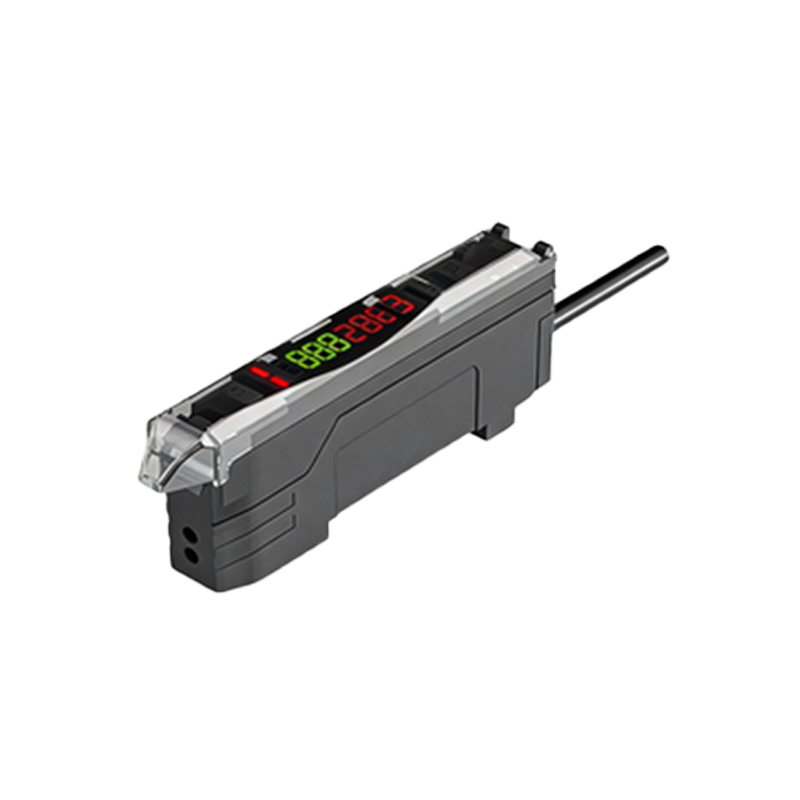
Calibration is essential for high-accuracy measurement. Many advanced sensors feature automatic gain control (AGC) to adjust the receiver’s sensitivity based on the signal strength. For laser-based sensors, a teaching process allows the user to set a reference distance, after which the sensor outputs an analog voltage or digital signal proportional to the deviation. Signal processing algorithms, such as noise filtering and hysteresis, reduce false triggers caused by vibrations or transient objects. In robotics, the sensor’s output is often integrated with a PLC or vision system to trigger precise actions, like stopping a conveyor when a product reaches a specific location.
Real-World Applications and Performance Metrics
In automotive manufacturing, photoelectric sensors measure the thickness of paint layers on car bodies using laser triangulation, achieving micron-level accuracy. In food processing, they count items on high-speed lines at rates exceeding 10,000 units per minute, with a repeatability of ±0.1 mm. Key performance metrics include response time (e.g.,<1 ms for high-speed applications), resolution (down to 1 µm), and operating range (from 10 mm to over 100 m for through-beam models). Understanding these metrics helps engineers select the right sensor for specific tasks, such as detecting wafer alignment in semiconductor fabrication, where precision is critical.
Advancements in Smart Photoelectric Sensors
Modern sensors incorporate IO-Link communication, allowing real-time data transmission of measurement values, status, and diagnostics to a central control system. This enables predictive maintenance, where the sensor can alert operators to developing issues like lens contamination. Additionally, multi-point measurement sensors use an array of photodiodes to capture detailed profile data of an object, enabling 3D shape recognition. As Industry 4.0 evolves, photoelectric sensors are becoming smarter, smaller, and more energy-efficient, integrating directly with edge computing devices for on-board data analysis.