Area scan photoelectric sensors represent a significant leap in industrial sensing technology. Unlike traditional point-based sensors that detect single objects or edges, area scan sensors capture a two-dimensional field of view, enabling comprehensive monitoring of a defined zone. This capability is critical in modern automation where precision, speed, and reliability are paramount. By emitting a broad light beam and analyzing the reflected pattern, these sensors detect object presence, shape, position, and even surface defects across a wide area. This article explores the technical principles, key applications, and installation considerations for area scan sensors in industrial environments.
Working Principle and Technical Advantages
Area scan photoelectric sensors operate on the principle of time-of-flight or triangulation, using an array of photodiodes or a CMOS/CCD imager. The sensor emits a modulated light pattern, such as infrared or visible laser, over a rectangular area. The receiver captures the reflected light, and an internal processor calculates distance, intensity, and spatial distribution. This allows for simultaneous detection of multiple objects, even in complex backgrounds. Key advantages include immunity to ambient light interference, high resolution down to millimeter levels, and the ability to handle moving targets without mechanical scanning. For example, in conveyor systems, an area scan sensor can detect misaligned packages or missing components in real time.
Key Applications in Manufacturing and Logistics
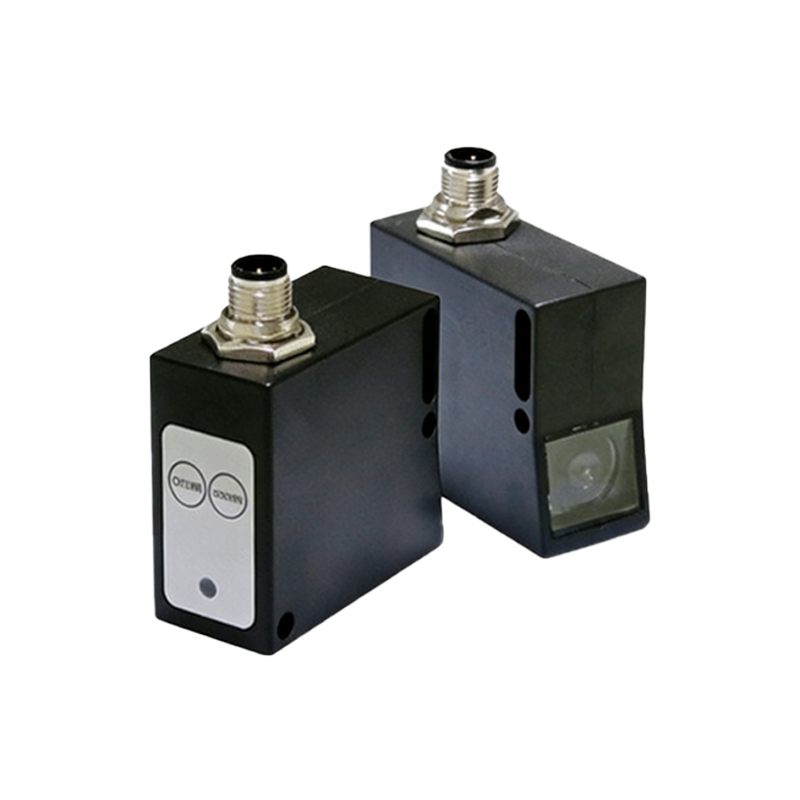
In manufacturing, area scan sensors are widely used for quality inspection, such as verifying the presence of screws, labels, or welds on automotive parts. They excel in pick-and-place robotics, where precise object orientation and location are required. In logistics, these sensors monitor parcel dimensions and positions on sorting conveyors, ensuring accurate routing. Another critical application is safety, such as guarding hazardous machinery zones with light curtains that form a virtual scanning area. The sensor can also count items in bulk, like bottles in a crate, without physical contact. These use cases demonstrate how area scan sensors reduce downtime and improve throughput.
Installation, Calibration, and Maintenance Considerations
Proper installation is crucial for optimal performance. Mount the sensor at a height and angle that covers the entire target area, avoiding reflective surfaces that cause false readings. Use a stable mounting bracket to minimize vibration. Calibration involves setting the sensing range (typically 0.1 to 10 meters) and adjusting the sensitivity to filter out background noise. Many modern sensors offer auto-calibration via software. For maintenance, regularly clean the optical window with a lint-free cloth and check for dust or condensation. Environmental factors like temperature extremes or high humidity may require IP67-rated housings. Signal interference from other light sources should be mitigated by using synchronized modulation.
Future Trends and Integration with Industry 4.0
The evolution of area scan sensors is closely tied to Industry 4.0. Emerging models incorporate built-in Ethernet/IP or Profinet interfaces for direct data exchange with PLCs and cloud systems. Machine learning algorithms are being integrated to classify defects or predict maintenance needs. Additionally, 3D area scan sensors are gaining traction, offering depth maps for automated guided vehicles (AGVs) and bin-picking robots. As costs decrease, these sensors will replace multiple discrete sensors, simplifying wiring and reducing system complexity. The shift toward smart factories will drive demand for sensors that provide actionable data, not just binary outputs.
Introduction to Area Scan Photoelectric Sensors
Area scan photoelectric sensors represent a significant leap in industrial sensing technology. Unlike traditional point-based sensors that detect single objects or edges, area scan sensors capture a two-dimensional field of view, enabling comprehensive monitoring of a defined zone. This capability is critical in modern automation where precision, speed, and reliability are paramount. By emitting a broad light beam and analyzing the reflected pattern, these sensors detect object presence, shape, position, and even surface defects across a wide area. This article explores the technical principles, key applications, and installation considerations for area scan sensors in industrial environments.
Working Principle and Technical Advantages
Area scan photoelectric sensors operate on the principle of time-of-flight or triangulation, using an array of photodiodes or a CMOS/CCD imager. The sensor emits a modulated light pattern, such as infrared or visible laser, over a rectangular area. The receiver captures the reflected light, and an internal processor calculates distance, intensity, and spatial distribution. This allows for simultaneous detection of multiple objects, even in complex backgrounds. Key advantages include immunity to ambient light interference, high resolution down to millimeter levels, and the ability to handle moving targets without mechanical scanning. For example, in conveyor systems, an area scan sensor can detect misaligned packages or missing components in real time.
Key Applications in Manufacturing and Logistics
In manufacturing, area scan sensors are widely used for quality inspection, such as verifying the presence of screws, labels, or welds on automotive parts. They excel in pick-and-place robotics, where precise object orientation and location are required. In logistics, these sensors monitor parcel dimensions and positions on sorting conveyors, ensuring accurate routing. Another critical application is safety, such as guarding hazardous machinery zones with light curtains that form a virtual scanning area. The sensor can also count items in bulk, like bottles in a crate, without physical contact. These use cases demonstrate how area scan sensors reduce downtime and improve throughput.
Installation, Calibration, and Maintenance Considerations
Proper installation is crucial for optimal performance. Mount the sensor at a height and angle that covers the entire target area, avoiding reflective surfaces that cause false readings. Use a stable mounting bracket to minimize vibration. Calibration involves setting the sensing range (typically 0.1 to 10 meters) and adjusting the sensitivity to filter out background noise. Many modern sensors offer auto-calibration via software. For maintenance, regularly clean the optical window with a lint-free cloth and check for dust or condensation. Environmental factors like temperature extremes or high humidity may require IP67-rated housings. Signal interference from other light sources should be mitigated by using synchronized modulation.
Future Trends and Integration with Industry 4.0
The evolution of area scan sensors is closely tied to Industry 4.0. Emerging models incorporate built-in Ethernet/IP or Profinet interfaces for direct data exchange with PLCs and cloud systems. Machine learning algorithms are being integrated to classify defects or predict maintenance needs. Additionally, 3D area scan sensors are gaining traction, offering depth maps for automated guided vehicles (AGVs) and bin-picking robots. As costs decrease, these sensors will replace multiple discrete sensors, simplifying wiring and reducing system complexity. The shift toward smart factories will drive demand for sensors that provide actionable data, not just binary outputs.