Introduction to Sensor Types in Industrial Automation
In the field of industrial automation, sensors are critical components for detecting objects, positions, and environmental changes. Among the most common types are photoelectric sensors and inductive sensors. While both serve detection purposes, they operate on fundamentally different principles. This article addresses a frequent question among engineers: "Is a photoelectric sensor considered an inductive sensor?" The short answer is no. However, understanding why requires a deep dive into their working mechanisms, applications, and key differences.
What Is an Inductive Sensor?
Inductive sensors are non-contact proximity sensors that detect metallic objects. They work based on the principle of electromagnetic induction. An inductive sensor generates a high-frequency oscillating electromagnetic field from a coil inside its sensing face. When a conductive (metal) target enters this field, eddy currents are induced in the target, causing energy loss and a change in the oscillation amplitude. This change is detected by the sensor’s circuit, which then triggers an output signal. Inductive sensors are robust, reliable, and ideal for harsh environments, but they are limited to detecting only metal objects. Common applications include detecting the presence of metal parts on conveyor belts, positioning machine tools, and monitoring hydraulic cylinders.
What Is a Photoelectric Sensor?
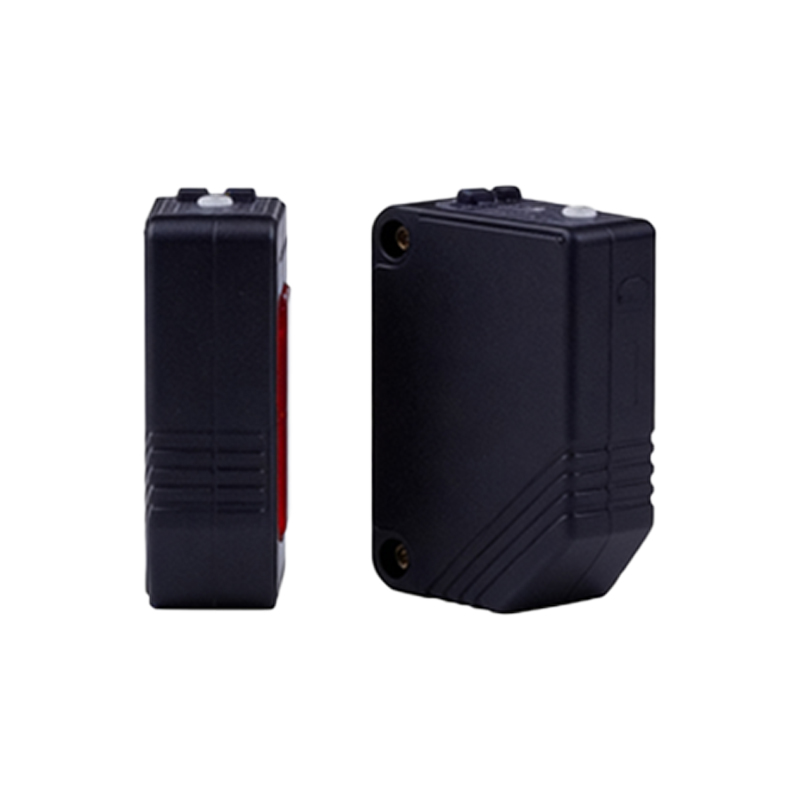
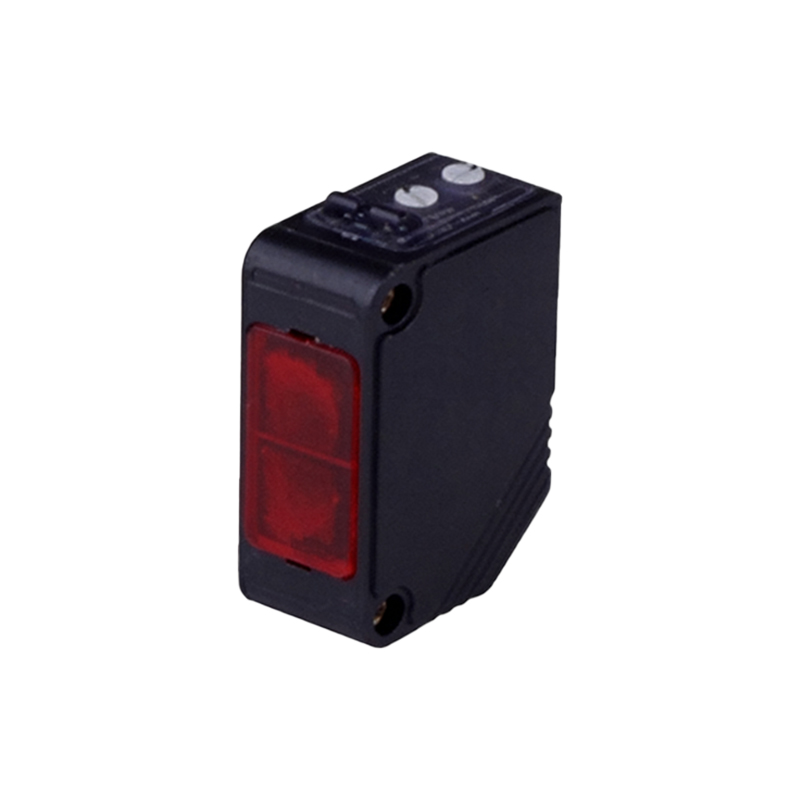
Photoelectric sensors use light to detect objects. They consist of an emitter (light source, typically LED or laser) and a receiver (photodiode or phototransistor). The emitter sends a beam of light, and the receiver detects changes in light intensity or presence. Photoelectric sensors come in several modes: through-beam (emitter and receiver separate), retro-reflective (light reflected from a reflector), and diffuse (light reflected directly from the target object). Unlike inductive sensors, photoelectric sensors can detect a wide range of materials, including metals, plastics, wood, glass, paper, and liquids. Their sensing distance can be very long (up to several dozen meters) depending on the model. However, they are sensitive to dust, moisture, and ambient light conditions.
Key Differences Between Photoelectric and Inductive Sensors
The core difference lies in their detection principles. Inductive sensors rely on electromagnetic fields and are limited to metallic targets. Photoelectric sensors rely on light and can detect any object that interrupts or reflects the beam. Other differences include sensing range (inductive: typically up to 40-60 mm; photoelectric: up to 100 m or more), response speed (both are fast, but inductive sensors often have better frequency response for high-speed metal detection), and environmental tolerance (inductive sensors are generally more resistant to dirt, oil, and vibration). Cost-wise, simple inductive sensors are often cheaper, but special photoelectric models (like laser-based) can be more expensive.
Can They Be Used Interchangeably?
No, they cannot be used interchangeably in most cases. If the target is metal and the environment is harsh (e.g., metal chips, coolant), an inductive sensor is usually the better choice. If the target is non-metal (e.g., clear glass, plastic, wood) or requires long-range detection, a photoelectric sensor is required. However, in some hybrid applications, engineers may use both types together for redundancy or different detection tasks within the same machine. For example, an inductive sensor might detect the presence of a metal bracket, while a photoelectric sensor checks for a transparent film on the same line.
Conclusion: Photoelectric Sensors Are Not Inductive
To summarize, photoelectric sensors and inductive sensors are distinct technologies optimized for different tasks. A photoelectric sensor is not an inductive sensor, nor does it include inductive sensing capabilities. Understanding the fundamental differences—based on the use of light versus electromagnetic fields—helps engineers select the right sensor for each application, ensuring efficiency, reliability, and cost-effectiveness in industrial automation systems.