2026-04-25
Tech Hub
By 创始人
How Photoelectric Sensors Distinguish Colors in Industrial Applications
Understanding the Principle of Color Detection
Photoelectric sensors designed for color differentiation rely on the reflection of light from a target surface. Unlike standard sensors that detect presence or absence, color sensors analyze the spectrum of reflected light. They emit white light (combining red, green, and blue wavelengths) onto the object. The sensor then captures the reflected light with a photodetector, which measures the intensity of each primary color component. By comparing these values to pre-programmed reference thresholds, the sensor identifies specific colors. This method is effective for consistent, non-metallic surfaces with matte finishes. For glossy or transparent materials, additional calibration is required to minimize false readings caused by specular reflections.
Key Components and Their Roles
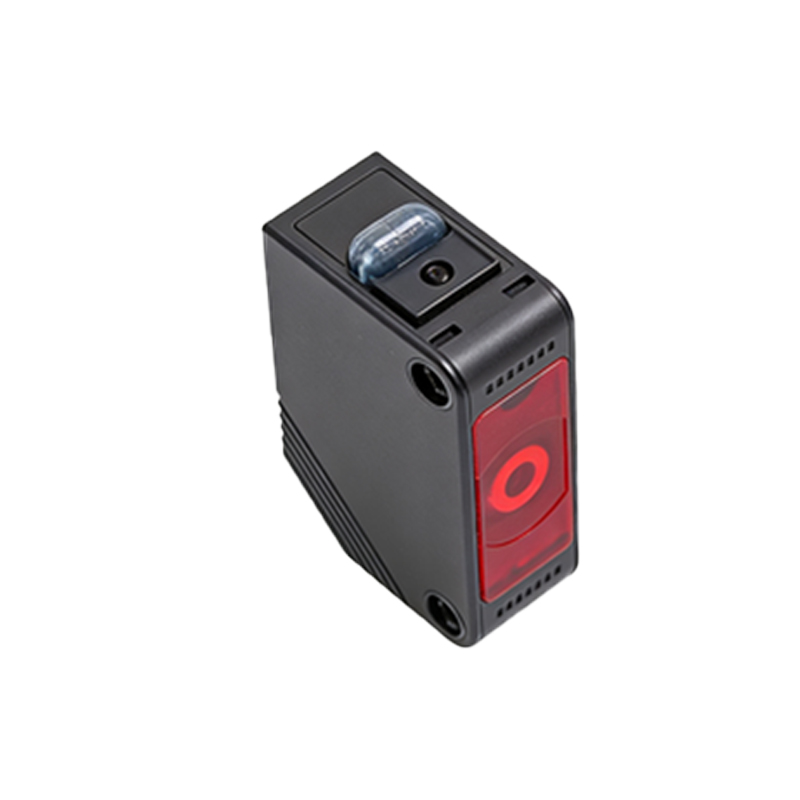
A typical color photoelectric sensor includes three essential elements: a white LED light source, a multi-element photodiode array, and a microcontroller. The LED ensures stable, broadband illumination. The photodiode array, often with red, green, and blue filters, converts light into electrical signals. The microcontroller processes these signals through algorithms that account for ambient light variations and surface texture. Some advanced sensors also incorporate a fourth channel for infrared light to improve accuracy on dark or highly reflective surfaces. The sensor's lens and housing are designed to minimize environmental interference, such as dust or moisture.
Calibration and Setup for Reliable Color Differentiation
To achieve reliable color discrimination, proper calibration is crucial. First, the sensor is taught to recognize target colors by exposing it to reference samples. During this process, the sensor records the RGB intensity values for each color. For example, a red target would show high red intensity and low blue and green levels. These values are stored as "teach-in" parameters. Next, a tolerance range must be set to accommodate minor variations in lighting, surface angle, or color fading. Most industrial sensors allow adjustment of this range via a software interface or DIP switches. It is recommended to calibrate under actual operating conditions, including expected ambient light levels and conveyor speeds.
Common Applications and Limitations
Color photoelectric sensors are widely used in industries like food processing, packaging, and automotive manufacturing. For instance, they sort fruits by ripeness, verify correct label placement on bottles, or detect color-coded components on assembly lines. However, these sensors have limitations. They struggle with very similar colors, such as different shades of blue, especially under inconsistent lighting. Furthermore, they cannot differentiate patterns or textures—only solid colors. For these cases, vision systems with cameras are more suitable. Maintenance is also critical; dust or oil on the lens can skew readings, so regular cleaning is necessary.
Advanced Techniques for Enhanced Accuracy
Recent advancements include the use of multi-spectral sensors that analyze light across a wider wavelength range, beyond just RGB. Some models employ time-of-flight (ToF) technology to separate color from distance, reducing errors from tilted surfaces. Additionally, machine learning algorithms can now improve color recognition by learning from multiple samples and adapting to environmental changes. For challenging applications, such as detecting black on black, combining a color sensor with a contrast sensor can provide redundancy. These innovations make modern photoelectric sensors more robust, but they still require careful installation to avoid interference from adjacent machines or reflective backgrounds.