Understanding the Basics of Photoelectric Sensing
Photoelectric sensors are essential components in modern industrial automation, widely used for detecting objects, including metals, in manufacturing environments. Unlike inductive sensors, which rely on electromagnetic fields, photoelectric sensors use light beams—typically infrared, visible red, or laser—to identify the presence or absence of targets. For metal detection, these sensors operate on principles such as through-beam, retro-reflective, and diffuse sensing modes. In through-beam setups, a transmitter and receiver are aligned; when a metal object interrupts the light path, a signal is triggered. This method offers high reliability and long sensing ranges, making it suitable for harsh conditions where metal parts need precise detection.
Key Challenges in Detecting Metal with Light
Detecting metal surfaces presents unique challenges due to their reflective properties. Shiny metals like aluminum or stainless steel can cause light scattering or specular reflections, leading to false triggers or missed detections. To address this, engineers often select sensors with polarizing filters or specialized optics. For instance, retro-reflective sensors with polarized filters minimize interference from reflective backgrounds, ensuring accurate detection of metal objects even in glossy environments. Additionally, laser-based sensors provide focused beams that can pinpoint small metal targets, though they require careful alignment to avoid misreads.
Selecting the Right Sensor for Metal Applications
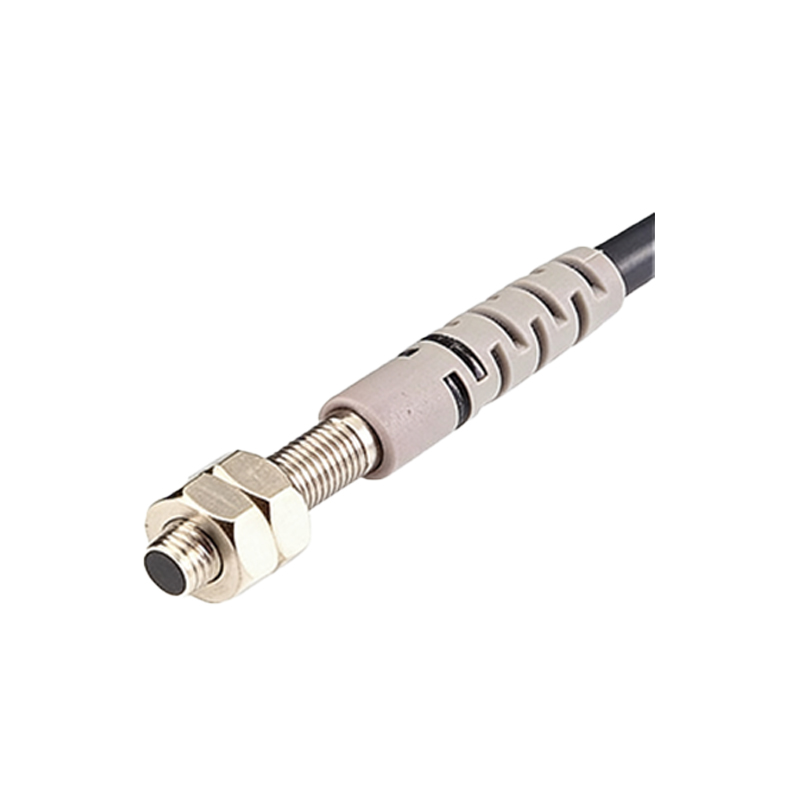
Choosing the correct photoelectric sensor depends on the metal’s characteristics—such as size, surface finish, and color. For dark or matte metals, diffuse sensors with high sensitivity can detect changes in reflected light intensity. However, for bright metals, background suppression sensors are recommended, as they ignore reflective surfaces beyond a set threshold. In automated assembly lines, color-marked metal parts may benefit from contrast sensors, which differentiate shades. Always consider environmental factors like dust, moisture, or vibration, which might necessitate housed sensors with IP67 ratings for durability in metalworking plants.
Installation and Calibration Best Practices
Proper installation ensures optimal performance. Position the sensor to avoid ambient light interference, such as direct sunlight or welding arcs. For through-beam setups, align the emitter and receiver accurately, using mounting brackets to secure them. Calibration involves setting the sensitivity threshold to the metal’s reflectivity, often through teach-in functions or potentiometers. Test with actual metal samples to verify repeatability. In conveyor systems, use retro-reflective sensors with reflectors placed opposite the sensor; adjust the angle to prevent false signals from metallic dust or oil films.
Maintenance and Troubleshooting Tips
Regular maintenance extends sensor life. Clean lenses weekly with a lint-free cloth to remove debris or oil residue, common in metal fabrication. Check cable connections for wear from vibration. If the sensor triggers erratically, inspect for misalignment or contamination. For metal detection failures, verify that the sensor’s wavelength matches the metal’s absorption spectrum—for example, infrared sensors work well on steel but may struggle with copper’s high reflectivity. Replace aging LED or laser modules to maintain detection accuracy, and document calibration settings for quick recovery during shifts.