Introduction to Photoelectric Sensors in Smart Vehicles
In the evolving landscape of smart vehicles, photoelectric sensors play a critical role in enabling autonomous driving and advanced driver-assistance systems (ADAS). As an electrical engineer specializing in automotive sensor systems, I often emphasize how these sensors convert light signals into electrical signals to detect obstacles, measure distances, and identify lane markings. They operate based on the principle of light emission and reception, utilizing components like LEDs or laser diodes for transmission and photodiodes for detection. Common types include through-beam, retro-reflective, and diffuse sensors, each tailored for specific applications such as parking assistance or collision avoidance. Understanding their operational theory is essential for designing robust and reliable vehicle systems.
Fundamental Working Principle: Light Modulation and Detection
The core mechanism of a photoelectric sensor involves emitting a modulated light beam from the transmitter and analyzing its interaction with the environment. In smart vehicles, high-frequency modulation (e.g., 1-10 kHz) is used to filter out ambient light interference, such as sunlight or headlights. The emitted light, often in the infrared or visible spectrum, strikes an object and reflects back to the receiver. The receiver's photodiode generates a current proportional to the received light intensity, which is then amplified and processed by a microcontroller. This signal processing determines parameters like distance, presence, or reflectivity. For instance, in retro-reflective sensors, a reflector is placed opposite the sensor to create a closed loop, ensuring reliable detection even in dusty conditions.
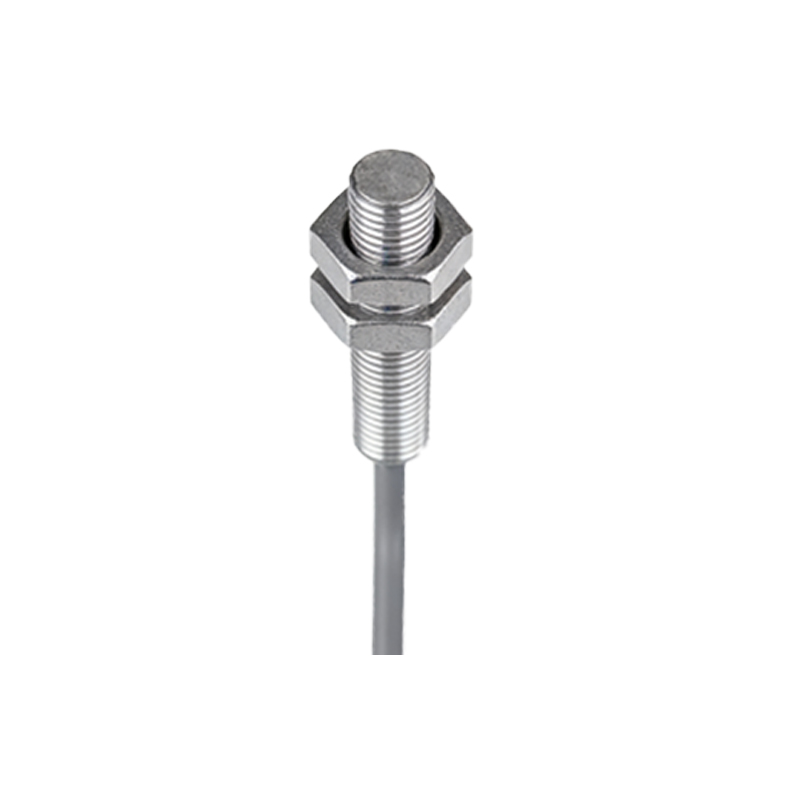
Types of Photoelectric Sensors Used in Smart Vehicles
Smart vehicles employ three primary photoelectric sensor types:
- Through-beam sensors feature separate transmitter and receiver units, offering high accuracy for long-range detection (up to 30 meters) in applications like adaptive cruise control.
- Retro-reflective sensors combine transmitter and receiver in one housing, using a reflector to bounce the light beam back, ideal for detecting transparent objects like windshields.
- Diffuse sensors rely on the object's surface to reflect light directly to the receiver, making them suitable for short-range tasks like blind-spot monitoring. Each type has distinct advantages in terms of range, environmental resilience, and cost, and engineers must select based on specific vehicle requirements.
Key Technical Parameters and Performance Metrics
When specifying photoelectric sensors for smart vehicles, several parameters are crucial:
- Detection range: Typically from 0.1 to 30 meters, depending on sensor type and output power.
- Response time: Often less than 1 millisecond to ensure real-time ADAS performance.
- Wavelength: Common choices include 850 nm (infrared) and 650 nm (visible red), with infrared favored for low ambient light interference.
- Environmental tolerance: Sensors must withstand temperature extremes (-40°C to +125°C), vibration (up to 10 G), and humidity. For example, through-beam sensors excel in outdoor conditions but may require alignment precision, while diffuse sensors are more tolerant of misalignment but have limited range.
Signal Processing and Integration with Vehicle Systems
The electrical signal from the photodiode undergoes analog-to-digital conversion (ADC) and digital filtering to extract meaningful data. In smart vehicles, these sensors are integrated via Controller Area Network (CAN) bus protocols, transmitting detection status or distance measurements to central processors. Advanced algorithms, such as time-of-flight (ToF) calculations, enhance accuracy by measuring light travel time. For instance, in LiDAR systems, multiple photoelectric sensors are arranged in arrays to create 3D environmental maps. Engineers must optimize signal gain and noise reduction to ensure reliable performance under varying road conditions, such as rain or fog.
Challenges and Solutions in Real-World Applications
Deploying photoelectric sensors in smart vehicles presents challenges like optical interference from sunlight, dust buildup on sensor lenses, and sensor crosstalk in multi-unit configurations. Solutions include using optical filters tuned to the sensor's wavelength, implementing self-cleaning mechanisms (e.g., air jets or wipers), and employing time-division multiplexing to prevent interference. Additionally, redundancy is critical: combining photoelectric sensors with ultrasonic or radar units ensures fail-safe operation in critical scenarios like emergency braking. As an engineer, I recommend rigorous testing under simulated environmental conditions to validate sensor performance before vehicle integration.
Future Trends and Innovations in Photoelectric Sensor Technology
The future of photoelectric sensors in smart vehicles points toward miniaturization, higher resolution, and integration with artificial intelligence (AI). Emerging technologies like solid-state LiDAR use photonic integrated circuits to reduce size and cost while improving angular resolution. Additionally, multispectral sensors that combine visible and infrared light can better distinguish objects in challenging lighting conditions. AI-driven processing can enhance object recognition, enabling vehicles to identify pedestrians or traffic signs with greater accuracy. These advancements will drive the next generation of autonomous vehicles, making photoelectric sensors even more indispensable.