Introduction to Photoelectric Sensor Plastic Bases
Photoelectric sensors are critical components in industrial automation, relying on robust mechanical structures to ensure reliable operation. The plastic base, often overlooked, plays a fundamental role in sensor performance. Its design must accommodate optical alignment, electrical connections, and environmental protection. In industrial settings, materials like polycarbonate or ABS are chosen for their dielectric strength, impact resistance, and dimensional stability. These bases are engineered to minimize signal interference while maximizing durability under vibration, dust, and moisture exposure. Understanding the underlying principles of their construction is essential for optimizing system reliability.
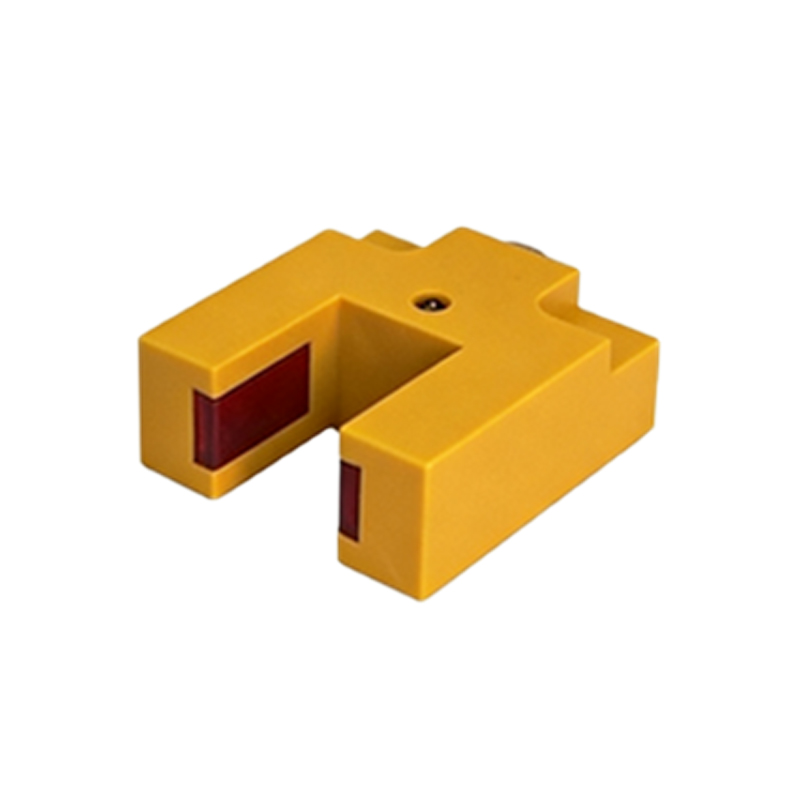
Material Selection and Mechanical Stability

The primary principle of a photoelectric sensor plastic base is to provide a stable platform for the optical and electronic components. Engineers select thermoplastics with high glass transition temperatures to prevent deformation under thermal stress. For instance, polybutylene terephthalate (PBT) offers excellent creep resistance and low moisture absorption, ensuring consistent alignment between the emitter and receiver. The base must also incorporate stress-relief features, such as ribbing or gussets, to distribute mechanical loads during installation. This prevents micro-cracks that could compromise the sensor's hermetic seal.
Optical Alignment and Reflectivity Management
Optical performance hinges on precise alignment of the LED and photodetector relative to the base's mounting surface. The plastic base is molded with tight tolerances, often within ±0.1 mm, to maintain focal distances. Additionally, internal surfaces are textured or coated to minimize stray light reflections that could cause false triggering. In designs for through-beam sensors, the base includes channels or guides for the light path, ensuring no obstruction from plastic burrs. For diffuse sensors, the base geometry may incorporate a reflective cavity to enhance signal strength.
Electrical Insulation and Noise Mitigation
A critical principle of plastic bases is their role as electrical insulators. They isolate sensitive electronics from the metallic housing or mounting brackets, preventing ground loops and electromagnetic interference (EMI). High-quality bases use materials with dielectric strength exceeding 20 kV/mm, which is vital in high-voltage environments. To further reduce EMI, the base may house ferrite beads or shielding layers. Engineers also design the base with integrated terminal blocks or press-fit connectors, ensuring low-resistance contacts without soldering.
Environmental Sealing and Compliance
Industrial sensors often operate in harsh conditions, so the plastic base must provide a reliable barrier against contaminants. The base design includes grooves for O-rings or gaskets, achieving IP67 or IP69K ratings. Ultrasonic welding or laser bonding techniques are used to join the base to the sensor cap, creating a seamless seal. The plastic formulation may include UV stabilizers for outdoor use or anti-static additives to prevent dust attraction. Compliance with standards like IEC 60947 ensures the base withstands temperature extremes from -40°C to +80°C without cracking.
Thermal Management and Heat Dissipation
While plastic is inherently less conductive than metal, modern bases incorporate thermal management principles. Heat generated by the sensor's electronics is dissipated through the base via embedded metallic inserts or thermal pads. The plastic itself may be compounded with thermally conductive fillers like boron nitride, achieving thermal conductivities up to 2 W/mK. This prevents overheating that could degrade optical components. Engineers also analyze the base's cross-section to ensure adequate airflow in forced-convection environments.
Conclusion: Optimization for Reliability
The photoelectric sensor plastic base is not a passive component but a key enabler of sensor longevity and accuracy. By integrating mechanical stability, optical precision, electrical insulation, environmental sealing, and thermal management, modern bases elevate industrial automation performance. As sensor miniaturization continues, advanced molding techniques like multi-shot injection and micro-patterning will further refine these principles. Engineers must prioritize base design as an integral part of the sensor system to achieve zero-defect manufacturing goals.