Introduction to Mining Photoelectric Sensors
Photoelectric sensors are critical components in mining operations, used for object detection, positioning, and safety monitoring in harsh underground environments. These sensors operate by emitting light and detecting its reflection or interruption, making them ideal for coal, ore, and mineral processing. Due to dust, moisture, and explosive gases, mining photoelectric sensors must meet stringent safety standards like ATEX or IECEx. This guide explores the primary types of mining photoelectric sensors, their working principles, and typical applications.
Through-Beam Sensors
Through-beam sensors consist of a separate emitter and receiver, aligned opposite each other. In mining, they are used for long-range detection (up to 30 meters) in conveyor belt systems and entry/exit zones. The emitter sends a continuous light beam, and when an object breaks the beam, the receiver triggers a signal. These sensors are highly reliable in dusty conditions because the light path is straight and less affected by contamination. However, they require precise alignment and are often used for safety barriers or material flow control.
Retro-Reflective Sensors
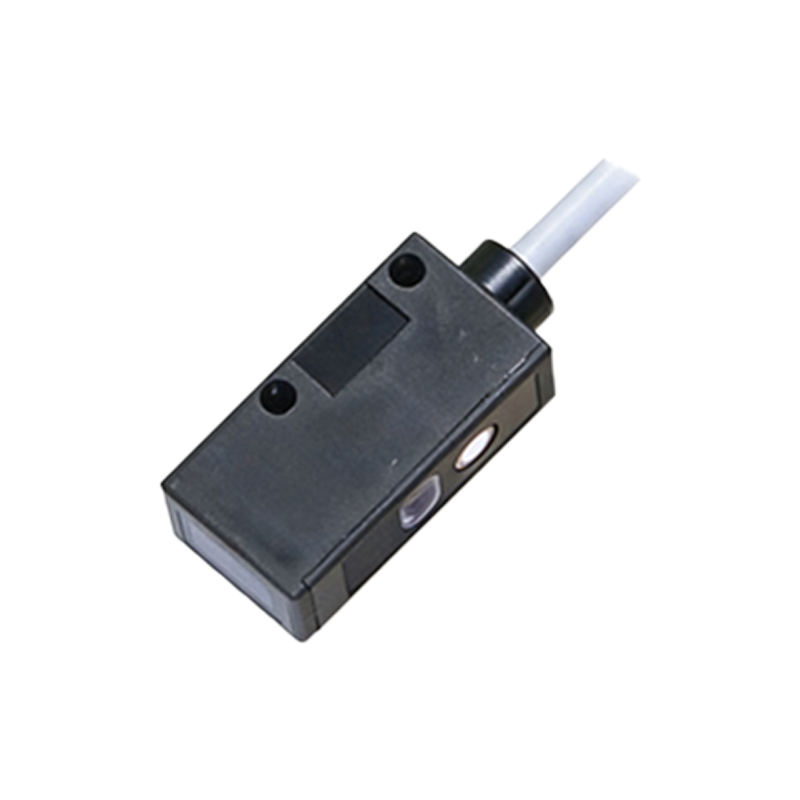
Retro-reflective sensors combine the emitter and receiver in one housing, with a reflector placed at the target location. They are popular in mining for detecting vehicles, equipment, or personnel in tunnels. The sensor emits polarized light to avoid false signals from shiny surfaces. The working range is typically 0.5 to 10 meters. These sensors are easier to install than through-beam types but can be affected by heavy dust or mud on the reflector. Common applications include mining shuttle car detection and conveyor belt alignment monitoring.
Diffuse (Proximity) Sensors
Diffuse sensors emit light and detect the reflection directly from the target object. In mining, they are used for short-range detection (up to 2 meters) of materials on conveyors or in hoppers. These sensors do not require a separate reflector or receiver, making them compact and cost-effective. However, their performance depends on object color, surface finish, and ambient light. For mining, background suppression versions are preferred to ignore reflective surfaces like wet coal or rock. Applications include level detection in ore bins or presence sensing for crusher feeds.
Fiber Optic Photoelectric Sensors
Fiber optic sensors use flexible glass or plastic fibers to transmit light to and from the sensing area. They are ideal for explosive mining environments because the electronic components can be placed remotely in safe areas. The fiber tips are small and can be inserted into tight spaces, such as drill rigs or conveyors. These sensors withstand high temperatures and vibration. They are often used in coal mines for gas detection or machinery status monitoring. However, they require careful fiber handling and may have lower sensitivity in heavy dust.
Laser-Based Photoelectric Sensors
Laser sensors use a focused laser beam for high-precision detection over long distances, up to 100 meters. In mining, they are used for profiling stockpiles, measuring vehicle speed, or detecting small objects like bolts. They offer excellent accuracy even in low visibility due to dust. However, laser sensors are more expensive and require eye-safe ratings (Class 1 or 2). Applications include automated drilling alignment and safety zone monitoring for heavy equipment. They are less common in general mining but growing in advanced automation systems.
Intrinsically Safe and Explosion-Proof Sensors
All mining photoelectric sensors must comply with hazardous area certifications. Intrinsically safe sensors limit electrical energy to prevent sparks, while explosion-proof sensors contain any internal explosion. These sensors use special housings, like stainless steel with IP67 or higher ratings, to resist corrosion and moisture. They are certified for use in methane gas or coal dust environments. Common types include retro-reflective and through-beam models with M12 connectors and LED indicators. Proper selection ensures safe operation in underground mines.
Conclusion: Choosing the Right Sensor
Selecting the correct mining photoelectric sensor depends on factors like range, environmental conditions, and safety requirements. Through-beam sensors are best for long-distance reliability; retro-reflective for medium-range detection; diffuse for short-range proximity; fiber optic for explosive zones; and laser for precision tasks. Engineers must also consider cable length, supply voltage, and integration with PLC systems. Regular maintenance, including cleaning optics and checking alignment, extends sensor life. Always verify ATEX/IECEx certifications for compliance.