In modern manufacturing, achieving consistent, high-quality welds is paramount for structural integrity, safety, and efficiency. Manual welding, while skilled, is susceptible to human error and fatigue, especially in complex or high-volume production environments. This is where laser weld seam tracking sensors step in, acting as the critical "eyes" of automated welding systems. These sophisticated instruments provide real-time guidance, ensuring the welding torch follows the joint path with exceptional accuracy.
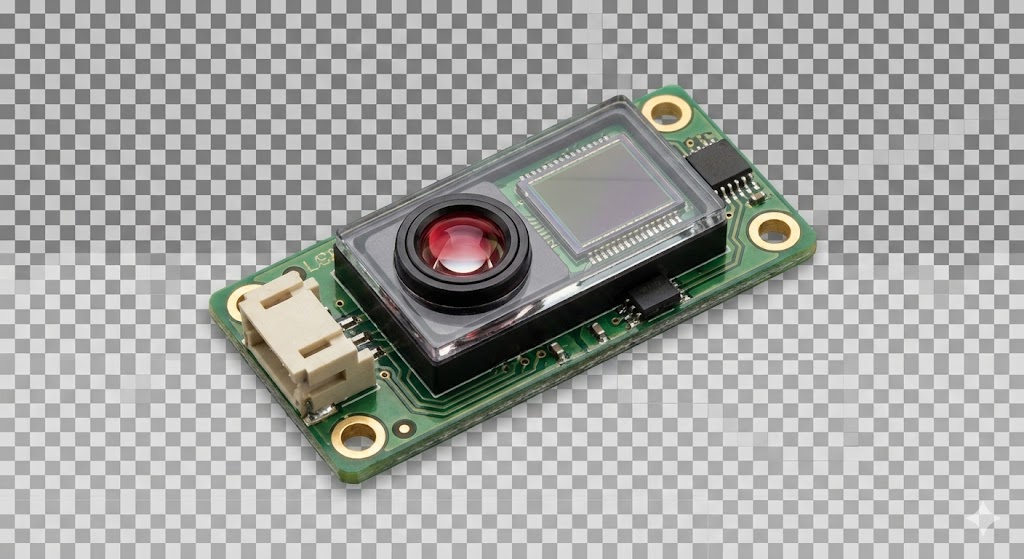
A laser weld seam tracking sensor is a non-contact measurement device. It typically projects a laser line or pattern onto the workpiece surface ahead of the welding torch. A high-resolution camera or optical sensor captures the reflected laser light. By analyzing the deformation of this laser line as it falls onto the joint—be it a butt joint, lap joint, or V-groove—the sensor's onboard processor can calculate the joint's precise position, gap width, and mismatch in three dimensions. This data is instantly communicated to the robot or welding carriage controller, which makes micro-adjustments to the torch path, maintaining optimal alignment throughout the weld.
The core technology hinges on triangulation. The laser emitter, camera, and the measured point on the workpiece form a triangle. Knowing the fixed baseline distance between the laser and the camera, and the angle at which the reflected light enters the camera, the system computes the exact height and lateral position of the joint. Advanced sensors utilize specialized algorithms to filter out interference from welding arc glare, spatter, and ambient light, ensuring reliable operation in harsh industrial settings.
The benefits of integrating these sensors into welding automation are substantial. First and foremost is the dramatic improvement in weld quality and consistency. By compensating for part fit-up variations, thermal distortion during welding, and fixture inaccuracies, the sensor eliminates defects like lack of fusion or misaligned beads. This leads to stronger products and significantly reduces scrap and rework costs. Secondly, it enables higher productivity. Welding speeds can be increased as the system confidently adapts to the joint in real-time, without the need for slower, pre-programmed paths that assume perfect part placement. It also reduces the time and cost associated with precise fixturing, as the sensor can handle larger tolerances in part positioning.

Furthermore, these sensors unlock greater flexibility. A single robotic cell can handle different product variants or batches without extensive reprogramming, as the sensor locates the joint autonomously. This is crucial for industries moving towards high-mix, low-volume production. They also facilitate the welding of complex three-dimensional seams that would be extremely challenging to program manually.
Applications span critical industries where weld reliability is non-negotiable. In automotive manufacturing, they are used for body-in-white construction, ensuring precise welds on frames and panels. The heavy machinery and construction sector employs them for welding large structural beams, booms, and chassis. In shipbuilding and pipeline construction, they track long, curved seams. The aerospace industry relies on them for welding critical engine components and airframe structures where integrity is paramount.
When selecting a laser seam tracking sensor, key specifications must be considered. Measurement range, resolution, and frequency (update rate) determine its capability to track at high speeds and detect fine joint details. The sensor's robustness is critical; it must withstand intense heat, spatter, and electromagnetic interference from the welding process. Compatibility with existing robot controllers and welding power sources is essential for seamless integration. Modern sensors often come with intuitive software for easy setup, calibration, and data logging for quality assurance.
Looking ahead, the evolution of these instruments is intertwined with Industry 4.0. Future sensors will feature enhanced connectivity for integration into digital factory networks, providing valuable process data for analytics and predictive maintenance. Advances in machine vision and AI will allow sensors to not only track the joint but also classify joint types autonomously and make more sophisticated decisions about welding parameters in real-time, moving closer to fully adaptive welding systems.
In conclusion, the laser weld seam tracking sensor is far more than a simple accessory; it is a fundamental precision instrument that transforms robotic welding from a rigid, repetitive task into an intelligent, adaptive process. By providing real-time spatial awareness, it ensures that automated welding delivers on its promise of superior quality, efficiency, and flexibility, making it an indispensable tool in advanced manufacturing.