Introduction to Optical Sensing Technologies
Optical sensors are pivotal components in modern industrial automation, offering non-contact, high-precision measurement and detection capabilities. Among the diverse range of optical sensors, photoelectric sensors and grating sensors stand out due to their widespread applications and technical sophistication. These devices convert light signals into electrical outputs, enabling machines to perceive environmental changes, measure distances, detect objects, and monitor movements with remarkable accuracy. The evolution of these technologies has been driven by the increasing demand for efficiency, reliability, and miniaturization in sectors such as manufacturing, robotics, automotive, and aerospace. Understanding their operational principles, advantages, and limitations is essential for engineers and system designers to select the appropriate sensor for specific tasks, ensuring optimal performance and cost-effectiveness in automated systems.
Fundamentals of Photoelectric Sensors
Photoelectric sensors operate based on the modulation of light beams to detect the presence, absence, or distance of objects. They typically consist of an emitter (light source), a receiver (photodetector), and associated signal processing circuitry. Common light sources include LEDs, laser diodes, or infrared emitters, which project a beam toward the target. The receiver analyzes the reflected or interrupted light to generate an output signal. There are three primary configurations: through-beam (opposed), retro-reflective, and diffuse (proximity) modes. Through-beam sensors offer the longest detection ranges and highest reliability by separating the emitter and receiver, while diffuse sensors are compact and suitable for close-range applications. Photoelectric sensors excel in tasks like object counting, level sensing, and edge detection due to their fast response times, versatility, and ease of integration. However, they can be susceptible to environmental factors such as ambient light, dust, or surface reflectivity, which may require additional shielding or filtering.

Principles of Grating Sensors
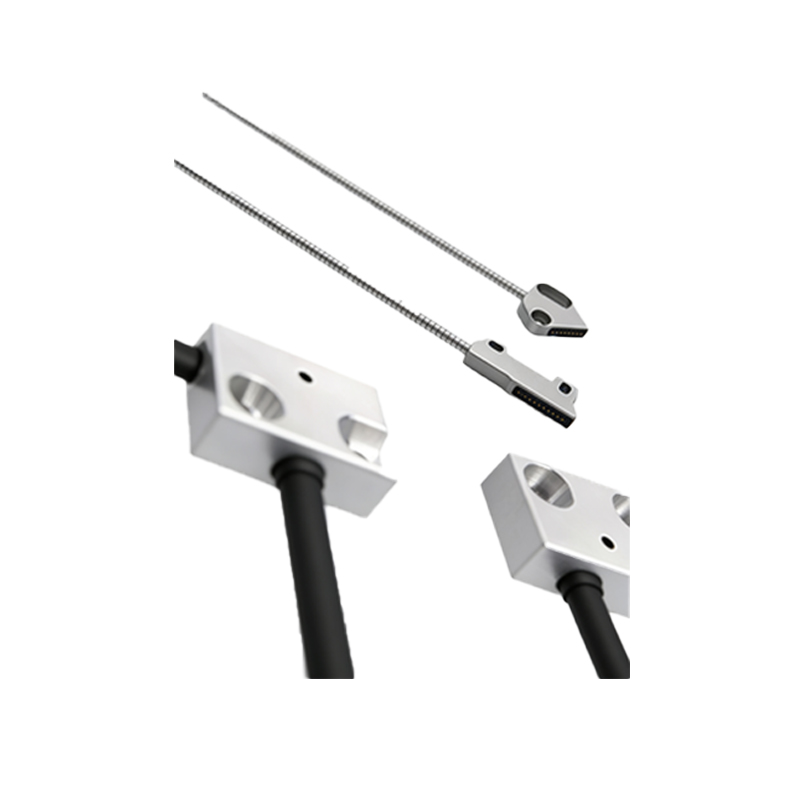
Grating sensors, also known as optical encoders or grating rulers, are specialized devices used for high-resolution displacement and position measurement. They employ a periodic grating structure—typically a glass or metal scale with precisely etched lines—that interacts with a light source and photodetector array. As the grating moves relative to the sensor head, the light pattern modulates, creating interference or moiré fringes that are converted into electrical pulses. These pulses correspond to incremental movements, allowing for precise tracking of linear or angular position. Grating sensors are categorized into incremental and absolute types, with the former providing relative position data and the latter offering unique position values without requiring a reference point. Key advantages include sub-micron resolution, high repeatability, and stability over wide temperature ranges. They are indispensable in applications demanding extreme precision, such as CNC machine tools, coordinate measuring machines, and semiconductor lithography equipment.
Comparative Analysis: Performance and Applications
When comparing photoelectric and grating sensors, several factors influence selection, including accuracy, range, environmental robustness, and cost. Photoelectric sensors generally provide moderate accuracy (millimeter to micrometer level) and are ideal for binary detection or simple distance measurements over ranges from a few millimeters to several meters. They are cost-effective and suitable for high-speed operations in packaging, material handling, and safety systems. In contrast, grating sensors deliver superior accuracy (nanometer to micrometer level) but over shorter measurement ranges, typically up to a few meters. Their complexity and higher cost make them preferable for precision engineering, metrology, and motion control where minimal error is critical. Environmental considerations also differ: photoelectric sensors may require clean conditions to avoid optical interference, while grating sensors often incorporate protective seals against contaminants but can be sensitive to mechanical vibrations.
Integration and Future Trends
Integrating optical sensors into industrial systems involves careful consideration of interface compatibility, signal processing, and network connectivity. Modern sensors increasingly feature digital outputs (e.g., IO-Link, Ethernet/IP) and smart functionalities like self-diagnostics, adaptive thresholds, and data logging. The convergence with Industry 4.0 technologies, such as IoT and AI, enables predictive maintenance and real-time analytics, enhancing overall system intelligence. Future advancements are likely to focus on miniaturization, enhanced durability in harsh environments, and multi-functional designs that combine sensing modalities. For instance, hybrid sensors integrating photoelectric detection with grating-based precision could emerge for versatile applications. Additionally, developments in materials (e.g., fiber optics, nanomaterials) and light sources (e.g., VCSELs) promise improved performance and energy efficiency, further solidifying the role of optical sensors in automated industries.
Conclusion
Both photoelectric and grating sensors are vital to industrial automation, each serving distinct roles based on their technical characteristics. Photoelectric sensors offer flexibility and cost-efficiency for general-purpose detection, while grating sensors provide unparalleled precision for demanding measurement tasks. Engineers must evaluate application requirements—such as resolution, speed, environmental conditions, and budget—to make informed decisions. As technology progresses, the boundaries between these sensor types may blur, leading to more integrated and intelligent solutions. Ultimately, the strategic deployment of optical sensors enhances productivity, quality, and safety, driving innovation across global manufacturing and engineering landscapes.