When selecting a laser sensor for an application, one of the most critical specifications to understand is its minimum sensing distance. Often overlooked in favor of maximum range, the minimum distance defines how close an object can be to the sensor's front face while still being detected reliably. This parameter is not merely a technical footnote; it is a fundamental design constraint that directly impacts system integration, accuracy, and safety.
At its core, the minimum distance is dictated by the physics of the laser measurement principle and the internal design of the sensor. For time-of-flight (ToF) laser sensors, which calculate distance by measuring the round-trip time of a laser pulse, a primary limitation is the phenomenon of "saturation." When an object is extremely close, the reflected laser light returns to the receiver too quickly and with excessive intensity. This can overwhelm the photodetector, causing it to enter a saturated state where it cannot accurately resolve the timing of the return signal. The sensor's electronics require a finite amount of time to reset and prepare for the next measurement cycle. If an object is within this blind zone, the sensor may output an invalid reading, a maximum range value, or a constant error.
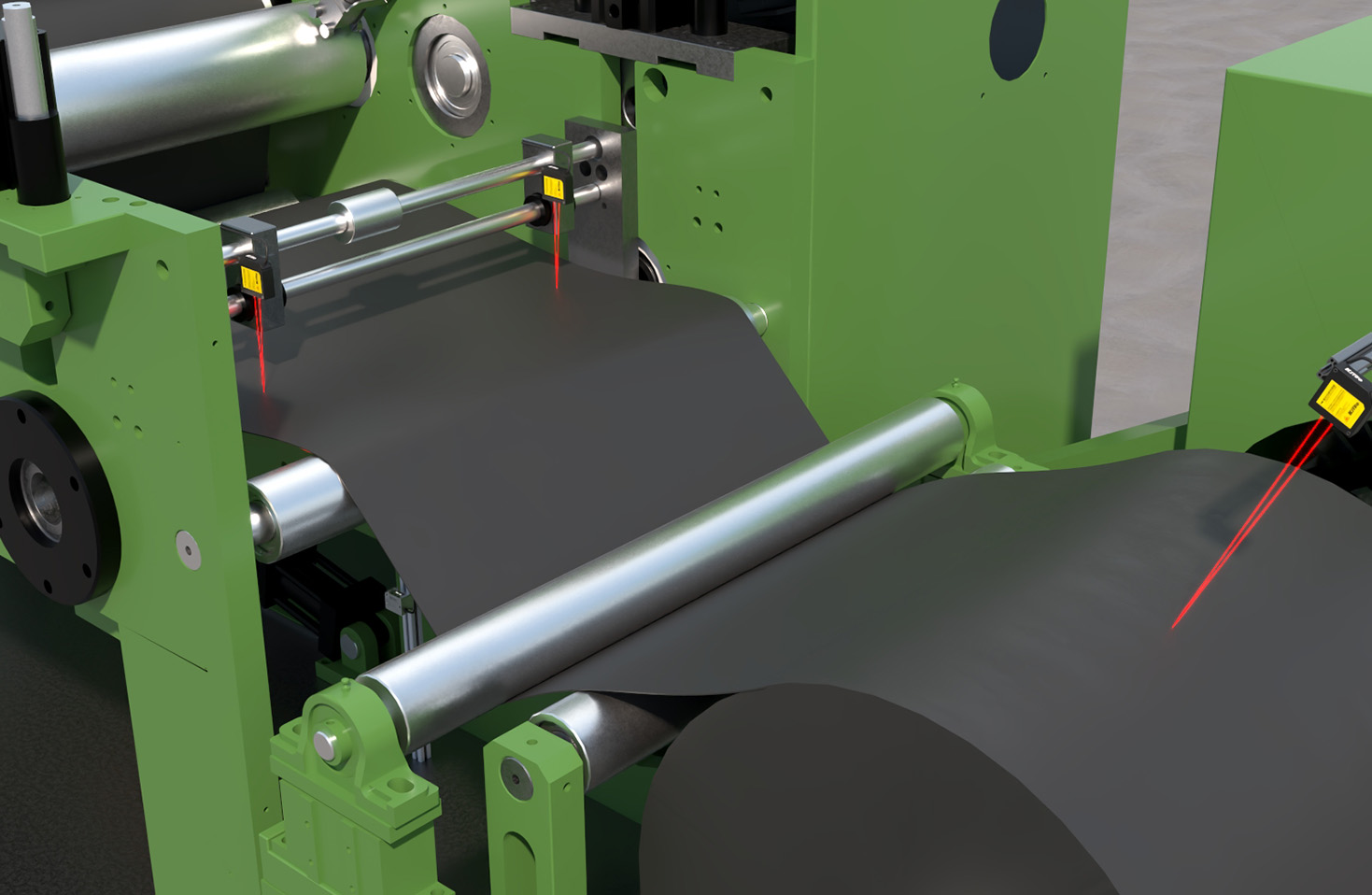
Triangulation-based laser sensors, commonly used for high-precision displacement measurement, face a different geometric constraint. In this method, the laser spot, the object's surface, and the receiving lens form a triangle. As the target moves very close to the emitter, the angle of the reflected spot on the position-sensitive detector (PSD or CMOS) becomes extremely acute. This can push the reflected spot beyond the physical boundaries of the detector array or into a region where optical distortion is high, making accurate calculation impossible. Therefore, the minimum distance is often set to ensure the reflected spot remains within the linear, calibrated portion of the detector.
Several key factors influence the specified minimum operating distance:

1. Laser Power and Receiver Sensitivity: Sensors with very high sensitivity or automatic gain control may have a shorter minimum distance, as they can handle a wider dynamic range of return signals without saturating.
2. Optical Design: The design of the transmitter and receiver lenses, including their field of view and separation (baseline in triangulation sensors), is paramount. A larger baseline can improve accuracy but may increase the minimum distance.
3. Signal Processing Algorithms: Advanced firmware can employ techniques to mitigate saturation effects or correct for near-field geometric distortions, effectively pushing the functional minimum distance closer.
4. Emitter Wavelength: While less directly impactful than other factors, the wavelength can influence how light interacts with very close surfaces and the properties of optical coatings used.
Ignoring the minimum distance specification can lead to significant operational issues. In a robotic pick-and-place cell, a sensor mounted too close to a conveyor may fail to detect incoming objects, causing process failures. In autonomous mobile robots (AMRs), a short-range LiDAR with an unconsidered minimum blind zone might not perceive an obstacle immediately in front, leading to a collision. For precision measurement in manufacturing, attempting to measure within the blind zone will yield unreliable data, compromising quality control.
Therefore, system integrators must carefully plan sensor placement. The minimum distance is typically measured from the sensor's front housing or protective window. It is essential to consult the manufacturer's datasheet, as this value can range from a few millimeters for specialized close-range sensors to several tens of centimeters for long-range ToF LiDAR units. When the application requires detection of objects potentially closer than the sensor's minimum, a simple mechanical offset bracket can be used to physically position the sensor further back, ensuring the target always remains within the valid sensing range.
In conclusion, the minimum sensing distance is a non-negotiable parameter in laser sensor selection. It arises from fundamental optical and electronic limitations inherent to the measurement technology. A thorough understanding of this specification, coupled with thoughtful mechanical integration, is crucial for deploying reliable, accurate, and safe laser sensing systems across industries such as automation, metrology, and robotics. Always prioritize a full review of the sensor's operational envelope—defined by both its minimum and maximum distances—to ensure optimal performance in the intended environment.