Reflective proximity sensors are widely used in industrial automation, robotics, and consumer electronics for non-contact detection of objects. Understanding their working principle is essential for proper selection and application. This article explains the core mechanism, components, and key considerations of reflective proximity sensors.
At its heart, a reflective proximity sensor operates on the principle of light emission and reception. The sensor contains two main components within a single housing: an infrared (IR) light-emitting diode (LED) and a photodetector, typically a phototransistor or photodiode. The IR LED emits a beam of invisible infrared light. When an object enters the sensor's detection range, this light beam strikes the object's surface. A portion of the incident light is reflected back towards the sensor. The photodetector is positioned to receive this reflected light. Its electrical characteristics, such as resistance or current flow, change in proportion to the intensity of the received light. The sensor's internal circuitry monitors this change. When the reflected light intensity exceeds a predefined threshold—indicating an object is within the preset detection distance—the sensor's output state switches. This output is typically a digital signal (ON/OFF) or an analog signal proportional to distance.
The effectiveness of this principle depends heavily on the properties of the target object. The color, material, and surface texture significantly influence the amount of light reflected. Light-colored, smooth, and matte surfaces reflect infrared light well, resulting in longer and more reliable detection ranges. Conversely, dark-colored, absorbent, or highly glossy surfaces may scatter or absorb most of the light, reducing the effective range or causing detection failure. This is a critical factor during system design.
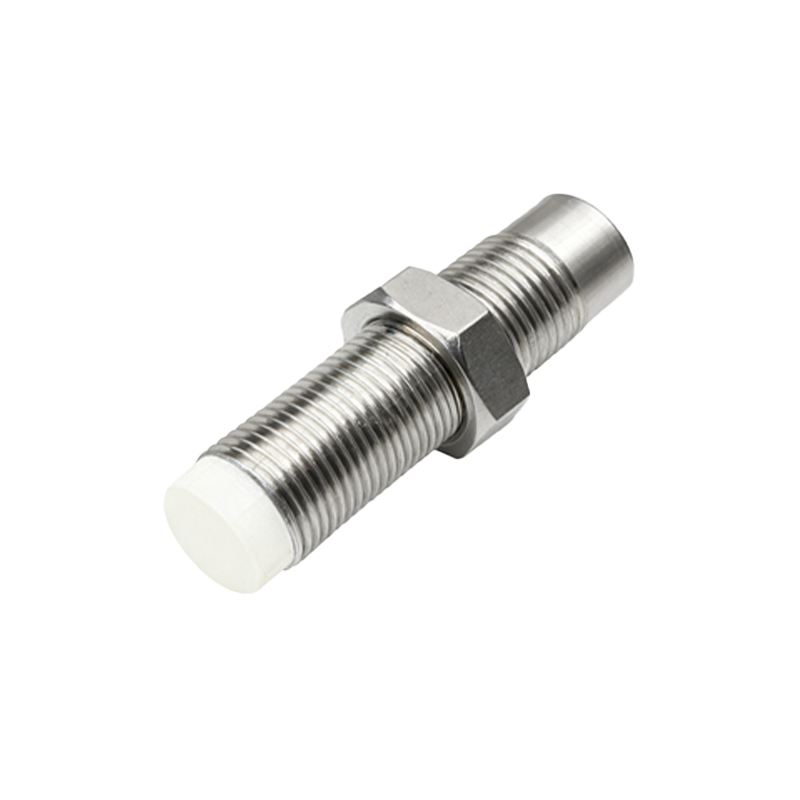
Several key parameters define a sensor's performance. The sensing distance is the maximum range at which it can reliably detect a standard white test object. The hysteresis is the difference between the switch-on and switch-off points, which prevents output chatter when an object is at the edge of the detection zone. The response time indicates how quickly the sensor can react to the presence or absence of an object. Furthermore, the light spot size determines the minimum detectable object size and affects precision.
Compared to other proximity sensing technologies like ultrasonic or inductive sensors, reflective optical sensors offer distinct advantages. They provide very fast response times, suitable for high-speed counting or positioning. They can detect a wide variety of materials, including non-metals, which inductive sensors cannot. Their compact size allows for installation in tight spaces. However, environmental factors like ambient light, dust, fog, or oil mist can interfere with the light beam, potentially causing false triggers. Many modern sensors incorporate modulated light signals and synchronous detection circuits to mitigate interference from ambient light.
In application, correct installation is paramount. The sensor must be mounted perpendicular to the expected target surface for optimal light reflection. The operating environment should be considered; protective housings may be needed in dirty or wet conditions. Regular lens cleaning maintains performance. These sensors are ubiquitous, found in applications such as paper detection in printers, bottle counting on production lines, door position sensing in elevators, and obstacle detection in automated guided vehicles (AGVs).

In summary, the reflective proximity sensor is a versatile and reliable device based on the simple yet effective principle of emitting light and measuring its reflection. By carefully considering target properties, environmental conditions, and sensor specifications, engineers can effectively integrate these sensors to create robust and efficient automated systems.