Introduction to Quadrilateral Photoelectric Sensors
Quadrilateral photoelectric sensors represent a specialized category within industrial sensing technology, designed to detect objects within a precisely defined rectangular or square detection zone. Unlike conventional photoelectric sensors that rely on single-point or linear beams, quadrilateral sensors employ multiple emitter and receiver pairs arranged to form a geometric perimeter. This configuration enables them to monitor an area rather than a line, making them indispensable in applications requiring boundary monitoring, object profiling, or intrusion detection. The fundamental principle involves emitting infrared, visible, or laser light across the quadrilateral's edges and analyzing the received signals to determine if an object intersects the plane. Their ability to provide two-dimensional spatial information without complex imaging systems has led to widespread adoption in manufacturing, security, and automation sectors, where accuracy and reliability are paramount.
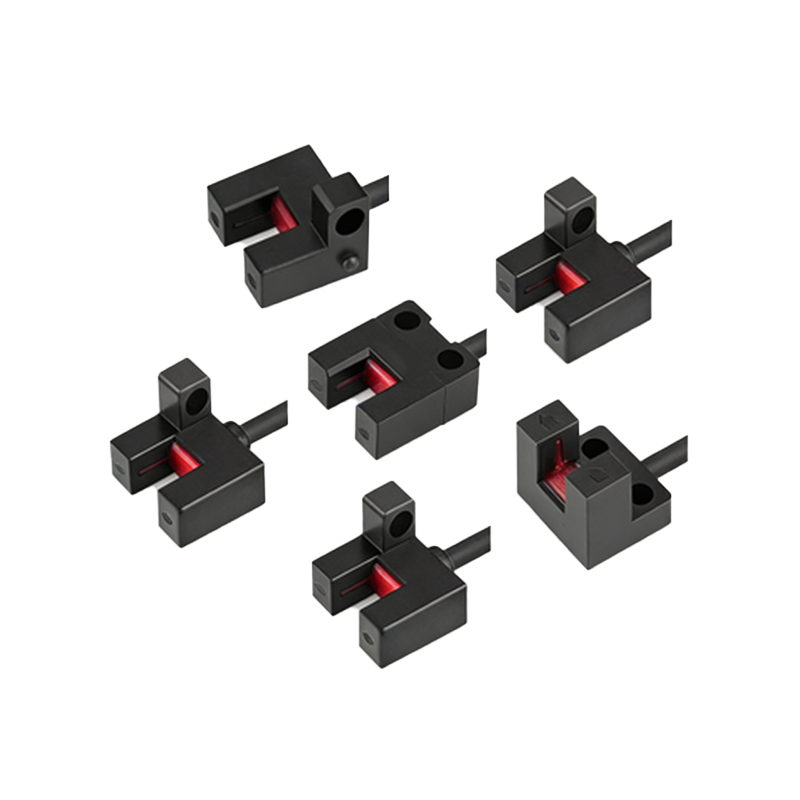
Technical Working Mechanism
The operational core of a quadrilateral photoelectric sensor lies in its array of light-emitting diodes (LEDs) or laser diodes and corresponding phototransistors or photodiodes. These components are strategically positioned at the corners or along the sides of a quadrilateral frame. Typically, the system operates in a through-beam mode, where emitters on one side project light beams directly to receivers on the opposite side, creating a grid-like pattern within the area. When an object enters this zone, it interrupts specific beams, and the sensor's embedded microprocessor analyzes the pattern of interruptions to calculate the object's position, size, and movement trajectory. Advanced models incorporate modulation techniques to filter ambient light interference, ensuring stable performance in varying environmental conditions. This mechanism allows for high-resolution detection, with some sensors capable of discerning objects as small as a few millimeters, while offering adjustable sensitivity to ignore minor disturbances like dust or vibrations.
Key Advantages Over Traditional Sensors
Quadrilateral photoelectric sensors offer distinct benefits compared to standard single-beam or array sensors. Firstly, they provide area-based detection, eliminating blind spots common in linear setups, which enhances safety in machinery guarding applications. Secondly, their precise geometric definition allows for customizable detection zones, enabling engineers to tailor the sensor to specific task requirements, such as monitoring conveyor belt loading or verifying package dimensions. Thirdly, these sensors often feature faster response times due to parallel processing of multiple beams, facilitating real-time monitoring in high-speed production lines. Additionally, their non-contact nature reduces wear and tear, leading to lower maintenance costs and longer operational lifespans. By integrating digital outputs and communication protocols like IO-Link or Ethernet/IP, they seamlessly connect with industrial control systems, supporting Industry 4.0 initiatives for smart automation.
Common Industrial Applications
In industrial settings, quadrilateral photoelectric sensors are deployed across diverse scenarios. In automotive manufacturing, they verify the correct placement of components on assembly lines by detecting if parts protrude beyond designated boundaries. In packaging industries, these sensors ensure boxes are properly aligned and sized before sealing, reducing waste and improving efficiency. For security and access control, they serve as invisible barriers to detect unauthorized entry into restricted areas, often integrated with alarm systems. Another critical use is in robotic workcells, where they define safe operating perimeters to prevent collisions between robots and human operators, adhering to safety standards like ISO 13855. Moreover, in logistics and warehousing, they monitor inventory levels by sensing objects on shelves, aiding in automated stock management. Their versatility also extends to quality inspection processes, where they identify defective products based on dimensional irregularities.
Selection and Installation Guidelines
Choosing the right quadrilateral photoelectric sensor requires careful consideration of several factors. The detection range and resolution must match the application's spatial requirements; for instance, larger areas may need sensors with extended beam ranges or higher density arrays. Environmental conditions such as temperature, humidity, and exposure to chemicals should influence the selection of housing materials, typically rated IP67 or higher for durability. The light source type—infrared for general use, red light for visible alignment, or laser for high precision—affects performance in different lighting environments. During installation, precise alignment of emitters and receivers is crucial to maintain the quadrilateral's integrity; many models include alignment indicators or software tools to simplify this process. Mounting should minimize vibrations and obstructions, and regular calibration is recommended to account for thermal expansion or mechanical shifts. Integrating these sensors with programmable logic controllers (PLCs) often involves configuring parameters like detection logic and output signals to optimize system responsiveness.
Future Trends and Innovations
The evolution of quadrilateral photoelectric sensors is closely tied to advancements in industrial automation and sensing technology. Emerging trends include the integration of artificial intelligence (AI) algorithms to enhance object recognition capabilities, allowing sensors to distinguish between different materials or shapes within the detection zone. Miniaturization efforts are leading to more compact designs without sacrificing performance, enabling deployment in space-constrained applications. Wireless connectivity options, such as Bluetooth or Wi-Fi, are becoming prevalent, facilitating easier installation and remote monitoring. Additionally, energy-efficient designs powered by low-voltage sources or energy harvesting methods are gaining traction to support sustainable operations. As industries move toward greater interoperability, standardized communication frameworks will likely make these sensors more adaptable to diverse ecosystems. Research into hybrid systems combining photoelectric principles with other sensing modalities, like ultrasonic or capacitive, promises even higher accuracy and reliability for complex industrial tasks.