What is a Photoelectric Sensor?
A photoelectric sensor is a device that uses a light transmitter, often an LED or laser diode, and a photoelectric receiver to detect the presence, absence, or distance of an object. It operates on the principle of converting light signals into electrical signals. When the emitted light beam is interrupted or reflected by a target object, the change in light intensity at the receiver is processed by the sensor's internal circuitry to generate a switching output. This non-contact detection method makes photoelectric sensors exceptionally reliable for industrial automation, offering long sensing distances, high speed, and the ability to detect a wide variety of materials regardless of color, material, or surface finish, unlike proximity sensors which typically detect metals.
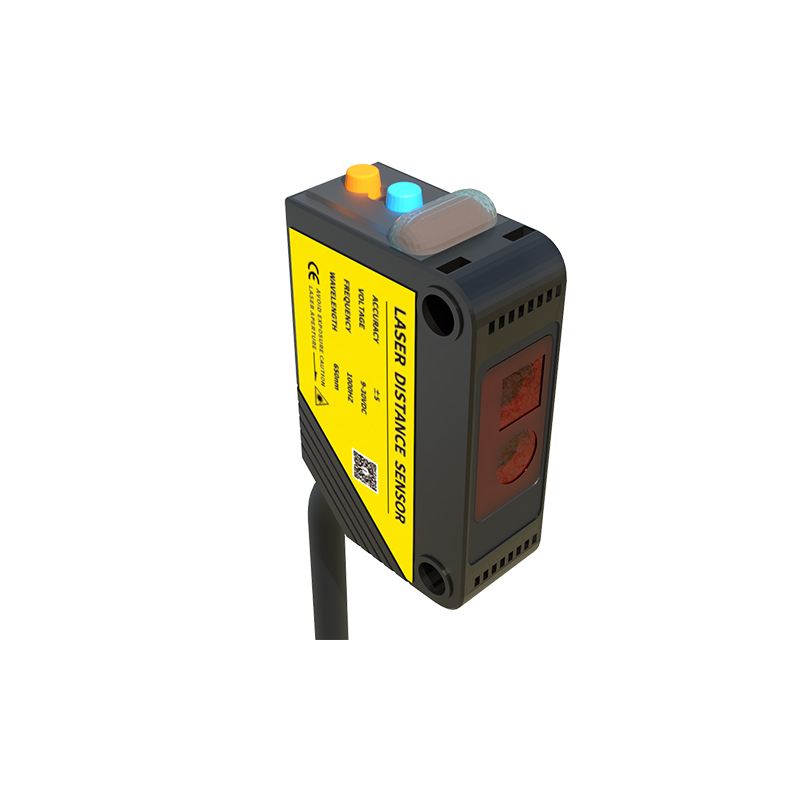
Core Operating Principles
The fundamental operation hinges on light modulation. The sensor's emitter sends a modulated light pulse at a specific frequency. The receiver is tuned to recognize only light modulated at that same frequency. This sophisticated technique effectively filters out ambient light from factory lighting or sunlight, ensuring stable and accurate detection immune to interference. The received light intensity is compared to a pre-set threshold. If the intensity crosses this threshold (due to the presence or absence of an object, depending on the sensing mode), the sensor's output switch changes state, sending a signal to a controller like a PLC.
Primary Sensing Modes: Through-Beam
Through-beam sensors, also called opposed-mode sensors, consist of two separate units: a transmitter and a receiver positioned opposite each other. Detection occurs when an object breaks the light beam between them. This mode offers the longest possible sensing distances, often exceeding 100 meters, and provides the highest reliability because it is less affected by the object's surface color, angle, or reflectivity. It is ideal for precise detection of small objects or in environments with dust or dirt, as only a significant beam blockage triggers the output.
Primary Sensing Modes: Retro-Reflective
In the retro-reflective mode, both the emitter and receiver are housed in a single unit. The sensor emits light towards a specially designed reflector, such as a corner-cube reflector, which bounces the beam directly back to the receiver. An object is detected when it interrupts this return path. This mode provides a practical sensing range, typically up to 10-15 meters, and simplifies installation as only one sensor unit and a reflector need to be wired and aligned. A key feature is the polarizing filter, which prevents the sensor from mistakenly detecting shiny objects as the reflector.
Primary Sensing Modes: Diffuse Reflective
Diffuse reflective, or proximity-mode, sensors also house the emitter and receiver together. They detect an object by the light diffused (scattered) back from the object's own surface. This is a single-unit solution requiring no separate reflector, making installation very flexible. However, sensing distance is shorter and is influenced by the object's color, size, and surface texture—lighter, matte surfaces are detected at greater distances than dark, shiny ones. Advanced versions with background suppression or fixed-field teaching functionality help mitigate these variations.
Key Performance Specifications
Understanding sensor specifications is critical for selection. Sensing distance, or range, defines the operational limit. Repeatability indicates the precision of detection at the same point. Response time is the delay between detection and output switching, crucial for high-speed applications. Light source type (red LED, infrared LED, laser) affects spot size, visibility for alignment, and sensing capability. Environmental ratings for IP (Ingress Protection) and NEMA enclosures ensure reliability against dust, water, and chemical exposure. Operating voltage and output type (PNP/NPN, analog, IO-Link) define electrical compatibility.
Advanced Features and Technologies
Modern photoelectric sensors incorporate advanced features for complex tasks. Background suppression sensors use triangulation to detect objects only within a precise, defined zone, ignoring surfaces beyond it. Contrast sensors evaluate the difference in reflected light intensity to distinguish between marks and backgrounds, essential in packaging and printing. Color sensors differentiate colors by analyzing the RGB components of reflected light. Fiber optic units, with separate amplifiers and flexible light guides, enable detection in extremely tight spaces, high-temperature areas, or environments with high EMI.
Typical Industrial Applications
Photoelectric sensors are ubiquitous in factory automation. On conveyor lines, they count bottles, detect label presence, or position boxes for filling. In packaging machinery, they ensure correct carton flap folding and verify seal integrity. In material handling, they provide pallet presence detection for robotic pick-and-place systems. They are fundamental in assembly automation for part verification and orientation checks. Safety applications include presence sensing at machine access points. Their versatility also extends to food & beverage, pharmaceuticals, and automotive manufacturing.
Selection and Installation Best Practices
Selecting the right sensor involves analyzing the application: target material, size, required sensing distance, environmental conditions, and required output. Always consider a 20-30% margin on the stated sensing distance to account for real-world variables like dirt accumulation on lenses. For installation, ensure secure mounting to prevent vibration-induced misalignment. Keep lenses clean and free from obstructions. Carefully align through-beam and retro-reflective pairs during setup. For diffuse sensors, test with actual production samples to account for surface variability. Proper electrical wiring and shielding are mandatory to prevent noise interference.