In the realm of industrial automation and electronic control, the proximity switch Hall sensor stands as a critical component for non-contact detection. Unlike mechanical limit switches, these sensors operate without physical touch, offering enhanced reliability, longevity, and precision. Their core functionality hinges on the Hall Effect, a fundamental physical principle discovered by Edwin Hall in 1879.
The Hall Effect occurs when a current-carrying conductor is placed in a magnetic field. A voltage, known as the Hall voltage, is generated perpendicular to both the current and the magnetic field. A Hall sensor is a semiconductor device engineered to exploit this effect. It produces a voltage output proportional to the strength of the applied magnetic field. In a proximity switch configuration, this sensor is integrated into a circuit that triggers a switching action—turning a load on or off—when a predefined magnetic field threshold is detected.
A typical proximity switch Hall sensor comprises several key elements: the Hall-effect IC (Integrated Circuit), a magnet, signal conditioning circuitry, and an output stage. The magnet is usually embedded in the target object whose presence or position needs to be sensed. As this target approaches the sensor, the magnetic field at the Hall IC intensifies. Once the field strength crosses the sensor's built-in threshold, the IC's output state changes abruptly. This digital signal is then processed and amplified to drive an output transistor, which can interface directly with programmable logic controllers (PLCs), microcontrollers, or other control systems.
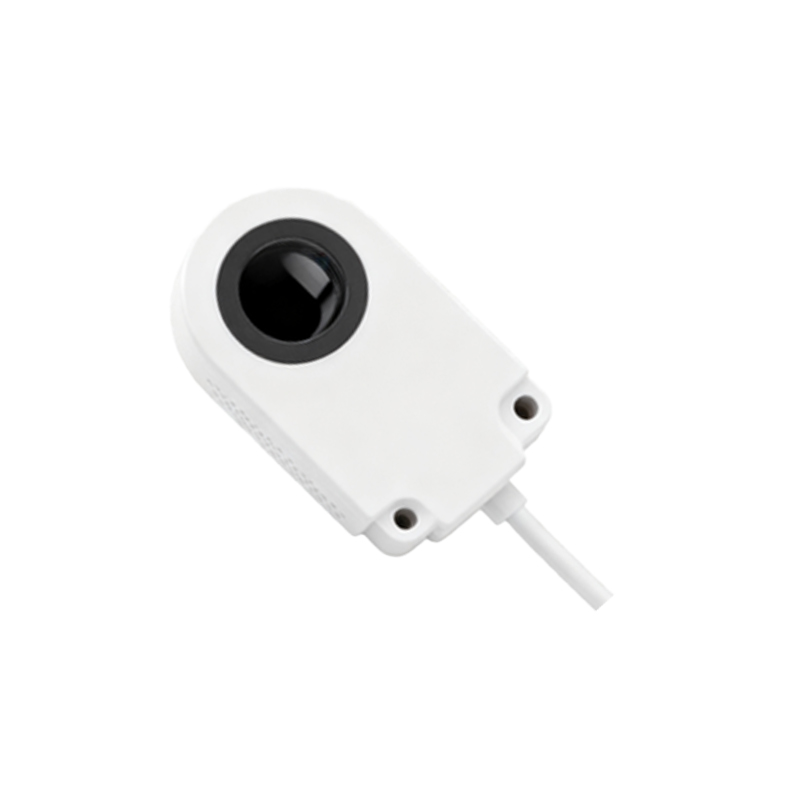
There are primarily two output types for these switches: digital and analog. Digital output switches, the most common in proximity applications, provide a simple ON/OFF signal. They are further categorized into unipolar (responding to a single magnetic pole) and bipolar (responding to both north and south poles, often with a latching function). Analog output switches provide a continuous voltage signal proportional to the distance to the magnet, useful for precise position sensing.
The advantages of using Hall-effect proximity switches are numerous. Their solid-state, non-contact nature means no moving parts to wear out, leading to virtually infinite operational life in terms of switching cycles. They are immune to environmental contaminants like dust, oil, and moisture, making them ideal for harsh industrial environments. They can operate at very high switching frequencies, detecting objects at speeds mechanical switches cannot match. Furthermore, they are not affected by ambient light, unlike optical sensors, and provide consistent performance regardless of the target material's color or surface finish, as long as the magnetic field is present.
These characteristics make proximity switch Hall sensors indispensable across a wide spectrum of industries. In automotive applications, they are used for gear position sensing, seat belt detection, and brake pedal position. In manufacturing, they detect the position of cylinders, count products on conveyor belts, and serve as end-of-travel limit switches in robotic arms. Consumer electronics utilize them in laptops and mobile phones as lid/door open detection sensors. They are also crucial in brushless DC motors to commutate the windings by sensing the rotor's magnetic field position.
When selecting a Hall-effect proximity sensor, several parameters must be considered. The sensing distance, or switch point, is determined by the magnet's strength and the sensor's sensitivity. Operating voltage range, output type (NPN/PNP sinking/sourcing), and temperature range must match the application requirements. Packaging is also vital; sensors come in tubular, rectangular, or surface-mount packages with varying ingress protection (IP) ratings for durability.
In summary, the proximity switch Hall sensor is a versatile, robust, and highly reliable solution for position and presence detection. By converting magnetic flux into an electrical switching signal, it forms an invisible yet essential link in automated systems, enabling precise control without physical interaction. Its continued evolution, with trends toward miniaturization, higher sensitivity, and integrated smart features, ensures its pivotal role in the advancing landscape of industrial and electronic design.