Introduction to Photoelectric Sensors
Photoelectric sensors are fundamental components in modern industrial automation, renowned for their reliability, versatility, and non-contact detection capabilities. At their core, these devices operate on a simple principle: they emit a beam of light and detect changes in the received light signal to sense the presence, absence, or position of an object. Despite the advanced applications they enable, the basic structure of a standard photoelectric sensor is elegantly straightforward. This inherent simplicity is a key factor in their robustness, ease of integration, and widespread adoption across diverse sectors, from packaging and material handling to automotive assembly and food processing. Understanding the basic structural components demystifies their operation and highlights their engineering efficiency.
Core Structural Components
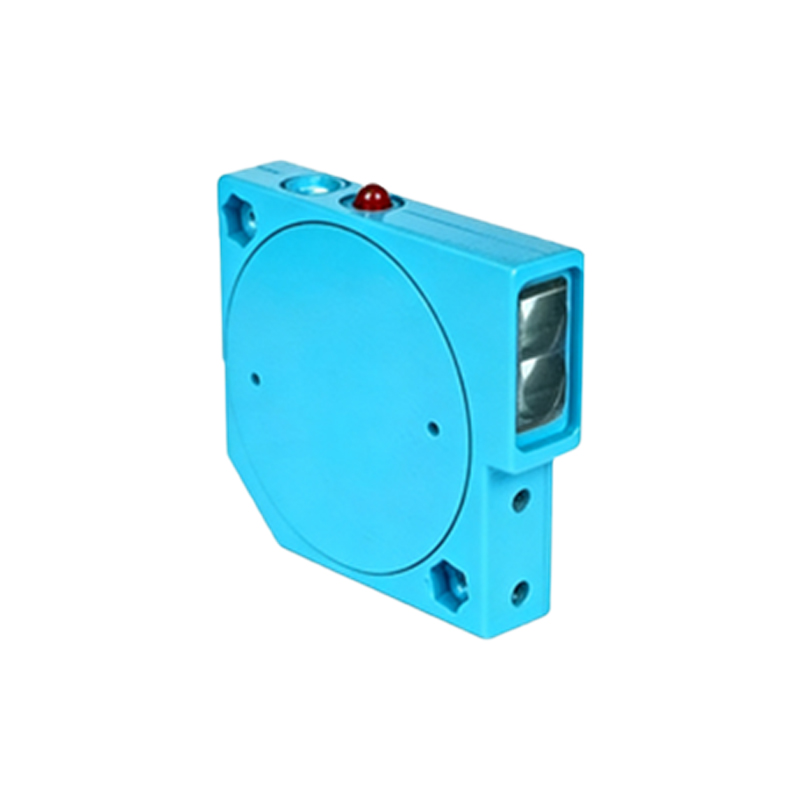
The fundamental architecture of a typical photoelectric sensor consists of three primary sections: the emitter, the receiver, and the signal processing unit, all housed within a single, compact casing. The emitter is essentially a light source, most commonly a Light Emitting Diode (LED) that produces either visible red, infrared, or laser light. The choice of wavelength depends on the application, with infrared being popular for its immunity to ambient light interference. Positioned opposite or adjacent to the emitter, the receiver is a phototransistor or photodiode. This component is specifically tuned to be sensitive to the wavelength of light emitted by the paired LED. The third critical section is the amplifier or signal processing circuitry. This unit powers the LED, amplifies the often-weak electrical signal from the receiver, and processes it to produce a clear, digital output signal (e.g., ON/OFF).
Housing and Optical Design
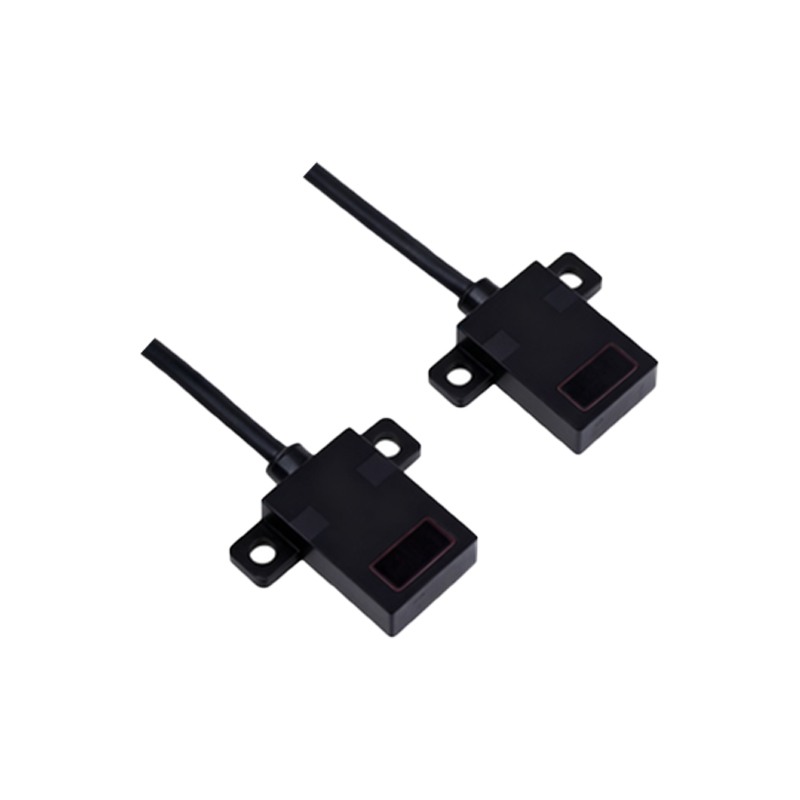
The physical housing plays a crucial role in the sensor's performance and durability. Typically constructed from robust plastics like PBT or metals such as stainless steel, the housing protects the internal electronics from environmental hazards like dust, moisture, oils, and physical impact, often meeting IP67 or higher protection ratings. Integral to the housing are the lenses. The emitter and receiver each have dedicated lenses that shape and focus the light beam. The emitter lens collimates the light into a tight, coherent beam, increasing sensing range and accuracy. The receiver lens collects the maximum amount of reflected or transmitted light and directs it precisely onto the sensitive area of the phototransistor. This optical design is simple yet highly effective, ensuring optimal signal strength.
Operating Modes and Corresponding Structure
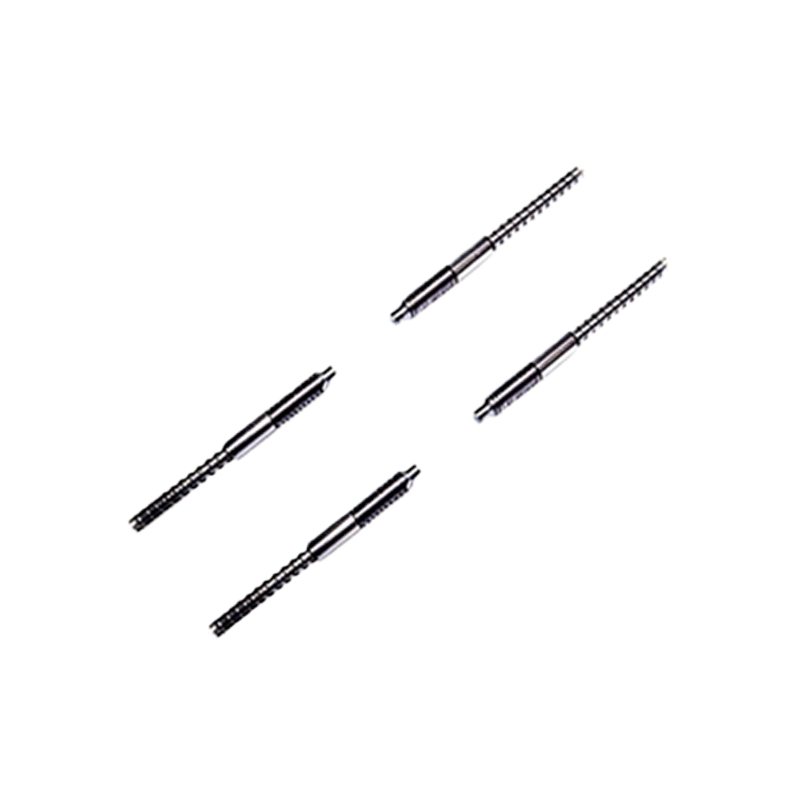
The physical arrangement of the emitter and receiver defines the three primary operating modes, each with a slight structural nuance. In a through-beam sensor, the emitter and receiver are housed in two separate units placed opposite each other. Detection occurs when an object breaks the light beam between them. This mode offers the longest sensing range and highest reliability. A retro-reflective sensor houses both emitter and receiver in the same unit. It uses a special reflector, like a corner-cube reflector, to bounce the light beam back. An object is detected when it interrupts this return path. The diffuse reflective sensor also has a single housing containing both elements. It detects an object by the light reflected directly off the object's surface. This self-contained design is the most compact and easiest to install, though sensing range is typically shorter.
Output Circuitry and Connectivity
The output stage is where the processed signal interfaces with the larger control system, such as a PLC. This part of the structure is equally straightforward. Common outputs include transistor-based types (NPN or PNP sourcing/sinking) and relay contacts. These are connected via a cable or a quick-disconnect connector integrated into the housing. Many modern sensors also incorporate simple status indicators, usually LEDs, that show power status and output state. This visual feedback is a vital diagnostic tool. The simplicity of the output circuitry—essentially a solid-state switch—ensures fast response times, long operational life, and compatibility with standard industrial voltage levels (e.g., 10-30V DC).
Advantages of a Simple Structure
The minimalist design philosophy behind photoelectric sensor structure yields significant practical benefits. First and foremost is reliability. With fewer moving parts and a solid-state design, these sensors are exceptionally resistant to wear and failure. Ease of installation and setup is another major advantage. Their compact, often cylindrical or rectangular form factor allows for mounting in tight spaces using standard brackets. The clear operational modes simplify selection and alignment. Furthermore, simple structures are cost-effective to manufacture and maintain, contributing to a lower total cost of ownership. This robustness and simplicity make them a "set-and-forget" component in many automated systems.
Conclusion: Elegance in Simplicity
In summary, the photoelectric sensor is a paradigm of elegant engineering, where a simple and efficient structure enables complex and critical automation tasks. Its design, centered on the precise interplay of an emitter, a receiver, and basic signal processing within a protective shell, is remarkably effective. This structural simplicity directly translates into the high performance, durability, and versatility that industry demands. Whether detecting a transparent bottle on a high-speed conveyor or ensuring the safety of a machine guard, the uncomplicated design of the photoelectric sensor remains its greatest strength, proving that in industrial sensing, simplicity is indeed the ultimate sophistication.