In industrial automation and machinery design, the ability to detect the presence or absence of an object without physical contact is crucial. Among various sensing technologies, proximity sensors stand out for their reliability and versatility, particularly when the target is a metal plate, such as one made of iron or steel. This article delves into the operational principles, key considerations, and practical applications of using proximity sensors to detect ferrous metal plates.
At its core, a proximity sensor is a device that emits an electromagnetic field or a beam of electromagnetic radiation and looks for changes in the field or return signal. For detecting metal plates, inductive proximity sensors are the most common and effective choice. These sensors operate on the principle of electromagnetic induction. Inside the sensor, a coil is fed with an alternating current, generating an oscillating electromagnetic field around the active face. When a conductive metal object, like an iron plate, enters this field, eddy currents are induced on the surface of the metal. These eddy currents draw energy from the sensor's oscillator circuit, causing a measurable change in the oscillation amplitude. The sensor's internal circuitry detects this energy loss and triggers a solid-state output switch, signaling the presence of the target.
The effectiveness of this detection hinges on several factors. First is the sensing distance, often termed the "nominal sensing distance" or Sn. This is the standard detection range specified for a mild steel target under ideal conditions. For an iron plate, the actual sensing distance can be very close to this nominal value. It's critical to note that the sensing distance can be affected by the size, thickness, and material of the target. A larger, thicker iron plate will typically be detected at a greater distance than a smaller or thinner one. Furthermore, different metals have different "correction factors." While iron and mild steel have a factor of 1.0, stainless steel might have a factor of 0.7 to 0.9, meaning the effective sensing distance is reduced. Always consult the sensor's datasheet for specific material factors.
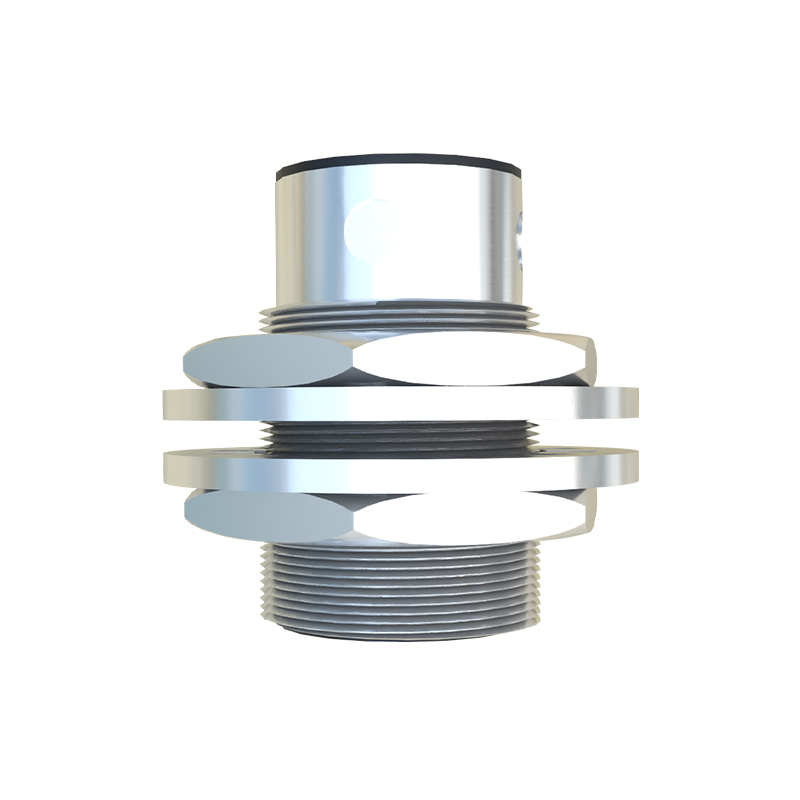
Another vital consideration is the mounting environment. Inductive sensors are designed to be immune to non-metallic materials, but the presence of other metals in close proximity can interfere with performance. For instance, if the sensor is mounted in a metal bracket, a "flush-mountable" or "shielded" sensor design should be used to prevent the bracket from influencing the electromagnetic field. Conversely, "non-flush" or "unshielded" sensors offer a longer sensing range but require a metal-free zone around their sides. Proper mounting is essential to ensure repeatable and reliable detection.
The surface condition of the iron plate also plays a role. While inductive sensors are generally robust, excessive rust, paint, or other non-conductive coatings can slightly reduce the effective sensing distance. However, a thin, uniform layer of paint or rust usually does not prevent detection, as the electromagnetic field can penetrate it to induce eddy currents in the underlying metal. For plates with very thick, non-conductive coatings, sensors with an extended sensing range or a "factor 1" capability for all metals might be necessary.
In practical applications, the detection of iron plates with proximity sensors is ubiquitous. Common use cases include:
Position Verification: Confirming a metal part has reached the correct position in an assembly machine or conveyor system.
End-of-Travel Detection: Sensing the limit of a pneumatic cylinder's stroke by detecting its internal piston (often made of metal) or an attached metal flag.
Counting and Sorting: Counting metal parts on a production line or sorting them based on presence.
Safety Interlocks: Ensuring a metal guard door is securely closed before machinery can operate.
When selecting a sensor for such tasks, engineers must specify not only the sensing distance but also the output type (PNP/NPN, NO/NC), supply voltage, housing material (e.g., stainless steel for harsh environments), and connection type. Regular testing and maintenance are recommended to account for mechanical wear or buildup that could affect performance over time.
In conclusion, inductive proximity sensors provide a highly effective, non-contact method for detecting iron plates and other ferrous metals. Their operation, based on the disturbance of an electromagnetic field by induced eddy currents, offers a robust solution resistant to environmental factors like dirt and moisture. By understanding the principles of sensing distance, material influence, and proper installation, designers and maintenance personnel can ensure reliable operation in countless automation scenarios, enhancing both efficiency and safety in industrial settings.