Introduction to Non-Contact Sensing
In the realm of industrial automation, non-contact sensing technologies are fundamental for ensuring precision, reliability, and efficiency. Two of the most prevalent and versatile solutions are proximity switches and fiber optic sensors. While both serve the critical function of detecting objects without physical touch, their underlying principles, construction, and ideal applications differ significantly. This article delves into the technical specifics of each, providing a clear comparison to guide selection for various automation challenges. Understanding the distinct advantages and limitations of inductive/capacitive proximity sensors versus fiber optic units is essential for optimizing system performance and cost-effectiveness.
Core Technology of Proximity Switches
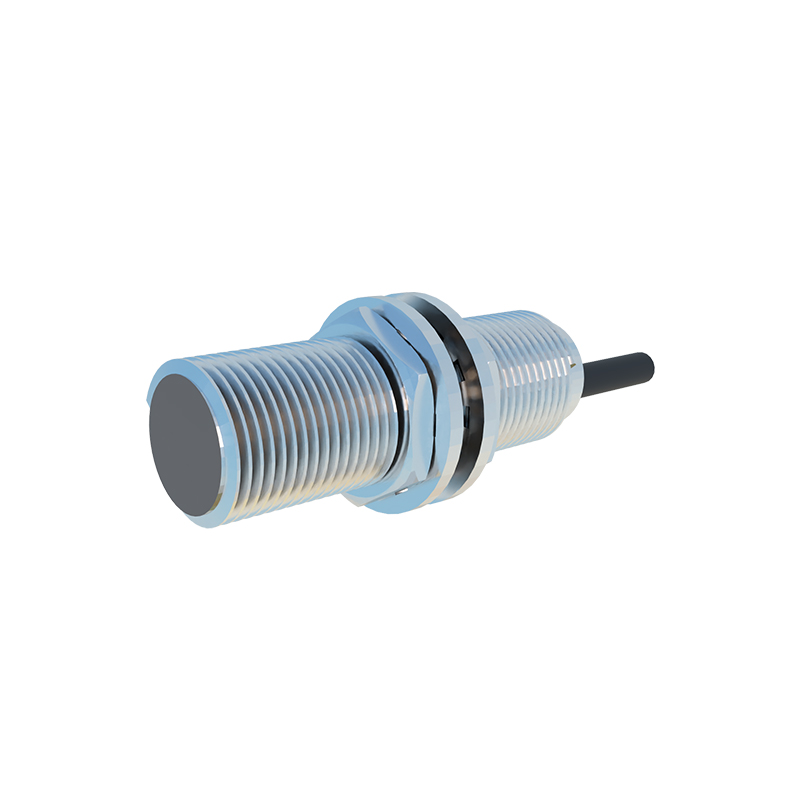
Proximity switches, often simply called prox sensors, operate primarily on electromagnetic principles. The most common type is the inductive proximity sensor, which generates an oscillating electromagnetic field. When a metallic object enters this field, eddy currents are induced in the target, causing a change in the oscillation amplitude. This change is detected by the sensor's circuitry, triggering a solid-state output signal. Capacitive proximity sensors function similarly but can detect both metallic and non-metallic materials (like plastics, wood, or liquids) by sensing changes in capacitance caused by the target's dielectric constant. These sensors are renowned for their robustness, simple installation, and ability to operate in harsh environments with dust, oil, or vibration. They typically have a shorter sensing range compared to optical methods but offer exceptional durability and resistance to environmental interference.
Core Technology of Fiber Optic Sensors
Fiber optic sensors, in contrast, are based on the transmission and modulation of light. The system consists of an amplifier unit and a fiber optic cable that acts as the sensing head. Light is emitted from the amplifier, travels through the fiber, and is either reflected back from the target (diffuse mode), interrupted by the target (through-beam mode), or reflected off a specific reflector (retro-reflective mode). The amplifier detects changes in the intensity or phase of the returned light to determine the presence or absence of an object. The key advantage lies in the fiber cable itself: it is extremely small, flexible, and immune to electromagnetic interference (EMI). This allows sensing in incredibly tight spaces, high-temperature zones, or areas with strong electrical noise, where traditional proximity switches would fail.
Comparative Analysis: Key Performance Factors
Several critical factors differentiate these sensors. Sensing range is a primary distinction; fiber optic sensors, especially in through-beam configuration, can achieve much longer ranges (up to several meters) compared to the limited range of proximity switches (typically millimeters to a few tens of millimeters). Target material is another major differentiator. Inductive prox switches only detect metals, while capacitive versions have broader material detection but can be less stable. Fiber optic sensors are largely material-agnostic, detecting virtually any object that interrupts or reflects light, though surface color and texture can affect performance in diffuse mode. Environmental resistance also varies. Proximity switches excel in dirty, oily, or wet conditions with high IP ratings. Fiber optic cables are chemically inert and withstand extreme temperatures, but the amplifier unit requires a cleaner control panel environment.
Application-Specific Selection Guidelines
Choosing between a proximity switch and a fiber optic sensor hinges on the specific application requirements. Proximity switches are the default choice for standard metal detection tasks such as counting gear teeth, verifying cylinder position, or detecting metal parts on a conveyor. Their ruggedness makes them ideal for heavy machinery and automotive manufacturing. Fiber optic sensors are indispensable in specialized scenarios. These include detecting tiny components in electronics assembly, monitoring fill levels of transparent liquids or bottles in packaging, sensing in vacuum or explosive atmospheres (using intrinsically safe fibers), and performing high-speed counting on small, closely spaced objects. Their small sensing head allows for installation in mechanisms where space is severely constrained.
Installation and Maintenance Considerations
Installation complexity differs. Proximity switches are typically self-contained, threaded devices that are easy to mount and wire. Fiber optic systems require mounting both the amplifier and the delicate fiber cable, which needs careful routing and bending to avoid signal loss or cable damage. Maintenance for proximity switches is generally minimal. For fiber optics, keeping the lens ends of the fiber clean is crucial, as dust or debris can significantly attenuate the light signal. However, the separation of the sensing head (fiber) from the electronics (amplifier) in fiber optic systems allows for easier replacement of damaged sensing points without changing the entire electronic unit, which can be a maintenance advantage in complex setups.
Conclusion and Future Outlook
Both proximity switches and fiber optic sensors are pillars of modern industrial sensing. The choice is not about which technology is superior, but which is more