Introduction to Photoelectric Proximity Sensors
Photoelectric proximity sensors are essential components in modern industrial automation, widely used for object detection, positioning, and counting without physical contact. These sensors operate by emitting a beam of light, typically infrared, visible red, or laser, and detecting changes in the received light signal when an object interrupts or reflects the beam. Their non-contact nature ensures minimal wear and tear, making them ideal for high-speed applications in manufacturing, packaging, and robotics. The core principle relies on the interaction between light and objects, enabling precise detection even in challenging environments. This article delves into the technical details of how these sensors function, exploring their key components and operational modes.
Core Components and Light Emission
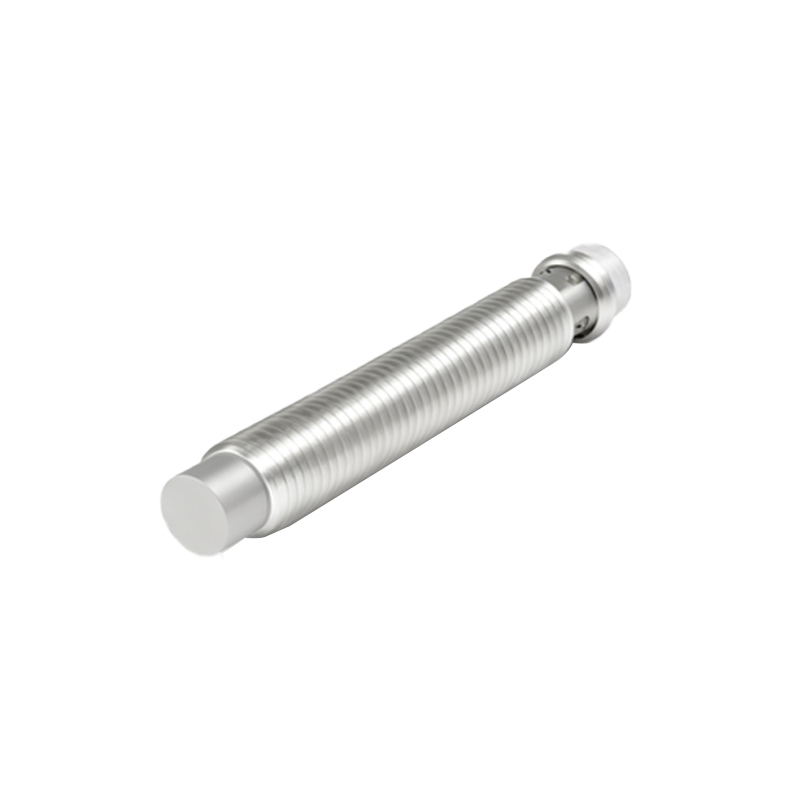
A photoelectric proximity sensor consists of three main parts: an emitter, a receiver, and a signal processing circuit. The emitter, usually an LED (Light Emitting Diode) or laser diode, generates a focused light beam. For industrial applications, infrared LEDs are common due to their immunity to ambient light interference, while laser diodes offer higher accuracy for long-range detection. The emitter is driven by a constant current source to ensure stable light output, which is crucial for reliable operation. The light beam is modulated at a specific frequency, often in the kHz range, to distinguish it from background light sources, reducing false triggers. This modulation enhances the sensor's ability to operate in brightly lit conditions, such as outdoor settings or under factory lighting.
Light Detection and Signal Reception
The receiver component typically includes a phototransistor or photodiode that converts incoming light into an electrical signal. When the emitted light beam strikes an object, it may be reflected, absorbed, or transmitted, depending on the object's properties. In reflective-type sensors, the receiver detects light bounced back from the target, while in through-beam sensors, it senses light directly from the emitter if unobstructed. The receiver circuit is tuned to the same modulation frequency as the emitter, filtering out noise and ambient light. This selective detection ensures high sensitivity and accuracy, allowing the sensor to identify objects as small as a few millimeters or detect transparent materials like glass or plastic with specialized models.
Operational Modes and Sensing Techniques
Photoelectric proximity sensors operate in several modes, each suited to different applications. The through-beam mode uses separate emitter and receiver units placed opposite each other; detection occurs when an object breaks the light beam, offering long-range and high-precision sensing. The retro-reflective mode employs a single unit with both emitter and receiver, along with a reflector; objects are detected when they interrupt the light path to and from the reflector, providing easy installation. The diffuse reflective mode, the most common, integrates emitter and receiver in one housing, detecting light reflected directly off the object, ideal for close-range tasks. Advanced versions include background suppression sensors that ignore reflections beyond a set distance, and color contrast sensors that differentiate based on light wavelength.
Signal Processing and Output
Once the receiver captures the light signal, the processing circuit analyzes it to determine the presence or absence of an object. This involves amplifying the weak electrical signal, demodulating it to remove the modulation frequency, and comparing it to a threshold value. If the signal exceeds the threshold, indicating an object is detected, the sensor triggers an output switch. Common output types include digital (PNP or NPN transistors) for on/off control, analog (0-10V or 4-20mA) for distance measurement, and IO-Link for digital communication with controllers. The response time, often in microseconds, enables high-speed detection in dynamic processes, such as conveyor belt systems or robotic assembly lines.
Environmental Factors and Calibration
Environmental conditions significantly impact sensor performance. Dust, fog, or oil can scatter light, reducing detection range, while ambient light from sun or lamps may cause interference. To mitigate this, sensors feature housings with IP ratings for protection against dust and moisture, and use modulated light with narrow-band filters. Calibration involves adjusting sensitivity settings, often via potentiometers or teach-in buttons, to optimize for specific object materials, colors, and distances. Regular maintenance, like lens cleaning, ensures consistent operation. In harsh industrial settings, ruggedized models with metal casings and extended temperature ranges are available.
Applications in Industry
Photoelectric proximity sensors are versatile tools across various sectors. In automotive manufacturing, they detect parts on assembly lines, ensuring precise positioning. In packaging, they count items and control filling levels. Logistics systems use them for barcode reading and parcel sorting, while in agriculture, they monitor crop movement. Their ability to sense non-metallic objects complements inductive sensors, making