Introduction to Photoelectric Counting Sensors
In the realm of industrial automation, accurate and reliable counting is a fundamental operation for inventory management, production tracking, and quality control. Among the various sensing technologies available, photoelectric sensors have emerged as a dominant and versatile solution for counting applications. These devices operate on the principle of detecting the presence, absence, or quantity of objects by using a light transmitter and a receiver. Their non-contact nature, high speed, and exceptional precision make them indispensable in environments ranging from high-speed packaging lines to intricate assembly stations. This guide delves into the operational principles, types, key selection criteria, and practical implementation strategies for photoelectric sensors in counting tasks, providing engineers and technicians with the knowledge to optimize their systems.
Core Operating Principles
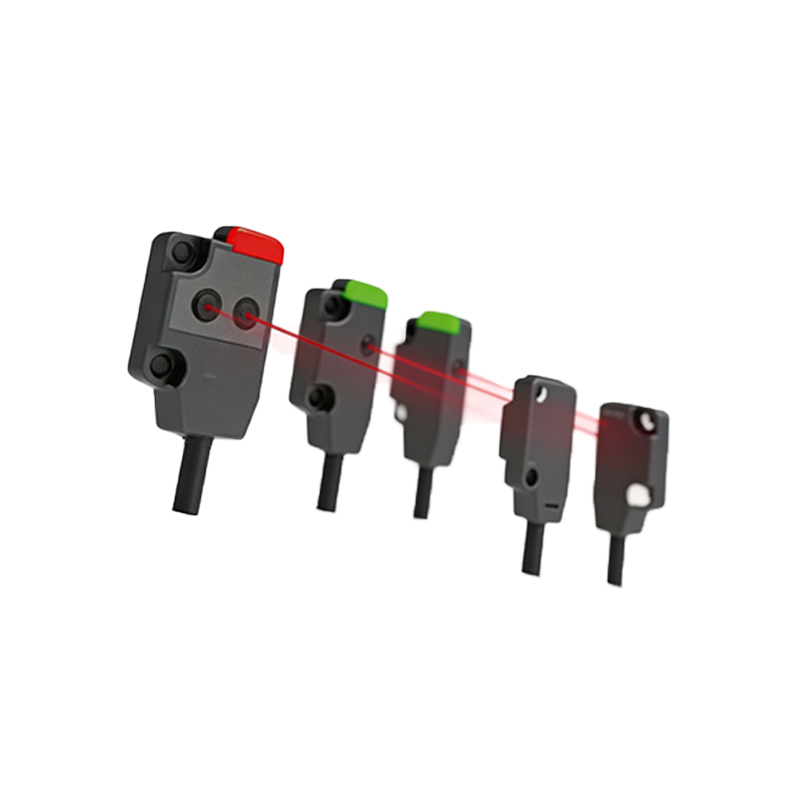
At its heart, a photoelectric sensor consists of an emitter, which projects a beam of light (typically visible red, infrared, or laser), and a receiver, which detects the intensity of that light. The counting logic is triggered by a change in the received light signal. The most common method is the "beam-break" principle. An object passing between the emitter and receiver interrupts the light beam, causing the sensor's output to switch states. This transition—from light received to light blocked, or vice versa—is registered as one count by a connected controller, such as a PLC or a dedicated counter module. Advanced sensors can also count based on the reflection of light from an object, a principle crucial for certain sensor configurations.
Primary Types and Configurations
Selecting the correct sensor type is critical for application success. The three main configurations are through-beam, retro-reflective, and diffuse reflective. Through-beam sensors, with separate emitter and receiver units, offer the longest sensing ranges and highest reliability for counting, as they are less affected by object color, texture, or reflectivity. They are ideal for counting objects on fast conveyors. Retro-reflective sensors house both emitter and receiver in one housing, using a reflector to bounce the beam back. They provide a good balance of range and ease of installation, suitable for counting larger objects where through-beam mounting is impractical. Diffuse reflective sensors detect light reflected directly from the target object. While their range is shorter and they can be influenced by object color, they are perfect for counting objects where mounting a reflector or separate receiver is impossible, such as in tight spaces.
Critical Selection Parameters for Counting
Beyond the basic type, several technical parameters dictate sensor performance in counting scenarios. Sensing distance, or range, must exceed the required gap between sensor and object path. Response time, measured in milliseconds or microseconds, determines the maximum counting speed; a sensor must be fast enough to detect each discrete object without missing counts. Beam spot size is another key factor. A small, precise spot (often achieved with laser models) allows for counting small or closely spaced items, preventing double-counting of a single object or missing small gaps between items. Environmental robustness, including IP ratings for dust and water resistance and temperature tolerance, ensures reliable operation in harsh industrial settings.
Enhancing Accuracy and Overcoming Challenges
Achieving 100% counting accuracy requires addressing common challenges. Vibration can cause misalignment, especially in through-beam systems; using sensors with alignment indicators and secure mounting is essential. Transparent or highly reflective objects (like glass or shiny metal) may not reliably interrupt or reflect a standard beam. For these, specialized sensors with polarized filters or background suppression technology are employed. Background suppression sensors measure the angle of the reflected light, allowing them to ignore distant background surfaces and detect only objects within a precise, defined window, eliminating false counts. For high-speed counting on vibrating conveyors, sensors with advanced digital filtering and programmable logic can distinguish between actual product passages and environmental noise.
Integration with Control Systems
The sensor's output signal is the critical link to the counting system. Most photoelectric sensors provide discrete digital outputs (PNP/NPN) that send a simple on/off pulse for each count. These pulses are wired directly to a high-speed counter input on a PLC. Modern sensors also offer IO-Link communication, a point-to-point serial connection that not only transmits the switch signal but also allows for remote configuration, diagnostics, and parameterization (like adjusting sensitivity) from the controller. This simplifies setup and maintenance. For standalone applications, sensors can be connected to dedicated electronic counters that display the total and often include batch control functions.
Application Examples in Industry
Practical applications are vast. In bottling plants, through-beam sensors count bottles on filling lines, ensuring each crate receives the correct number. In pharmaceutical packaging, small-spot diffuse sensors count pills as they fall into blisters. Automotive manufacturers use retro-reflective sensors to count components entering a robotic welding cell. On logistics sorting lines, arrays of sensors count parcels on conveyor belts, directing them to appropriate chutes. In each case, the specific demands of object size, speed, spacing, and environment guide the selection of the optimal photoelectric counting sensor.
Maintenance and Best Practices
To ensure long-term counting reliability, a proactive maintenance routine is advised. Regularly clean the sensor lens and, if applicable, the reflector to prevent dust or grime from attenuating the light signal. Periodically verify alignment, particularly after maintenance activities that might disturb the mounting. Utilize built-in diagnostic features, such as stability LEDs or IO-Link status reports, to monitor sensor health. Always follow manufacturer guidelines for electrical installation, including proper wiring, surge protection, and power supply specifications to prevent electrical damage. By understanding the technology and adhering to these practices, engineers can deploy photoelectric counting systems that deliver unwavering accuracy and contribute significantly to operational efficiency.