Introduction to Photoelectric Sensing Technology
Photoelectric sensors are fundamental components in industrial automation, offering non-contact detection of objects based on light modulation. These devices operate by emitting a light beam—typically from an LED or laser diode—and detecting changes in the received light intensity, pattern, or time-of-flight. The core principle relies on the interaction between light and the target object, which may reflect, absorb, or interrupt the beam. This technology is favored for its precision, long sensing ranges, and adaptability to diverse environments, from clean rooms to harsh manufacturing floors. By converting optical signals into electrical outputs, photoelectric sensors enable real-time monitoring and control in applications such as packaging, material handling, and assembly lines.
Core Operating Principles
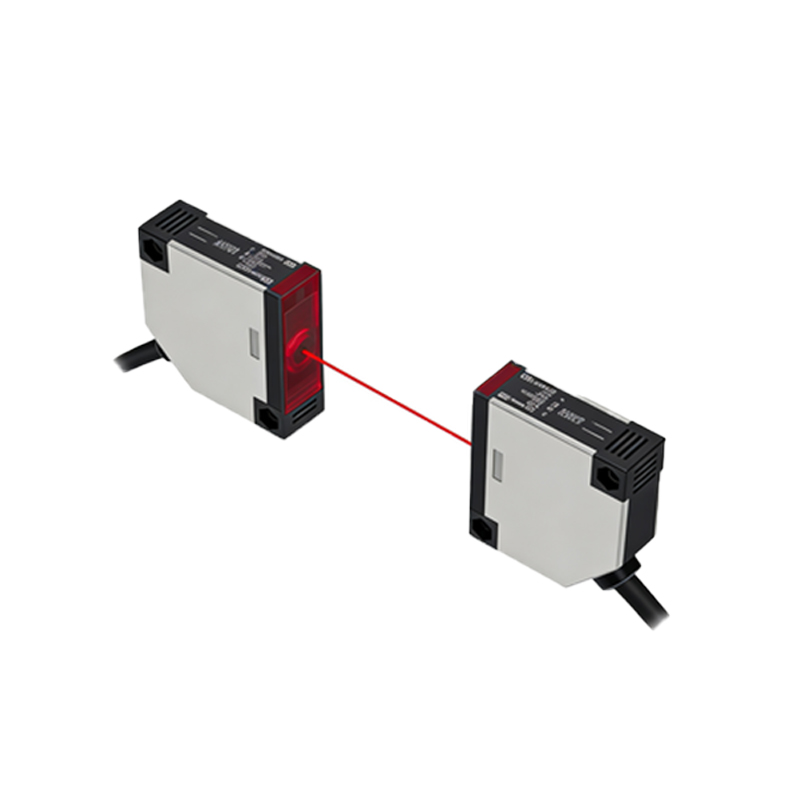
The functionality of photoelectric sensors hinges on three primary operational modes: through-beam, retro-reflective, and diffuse-reflective. In through-beam mode, separate emitter and receiver units are aligned opposite each other; detection occurs when an object interrupts the light path. This mode offers the highest accuracy and longest range but requires precise alignment. Retro-reflective sensors use a single housing containing both emitter and receiver, along with a reflector to bounce light back; objects are detected when they block the reflected beam. Diffuse-reflective sensors rely on light reflecting directly off the target, making them simpler to install but more sensitive to surface color and texture. Advanced variants incorporate background suppression or time-of-flight calculations to enhance reliability.
Key Internal Components
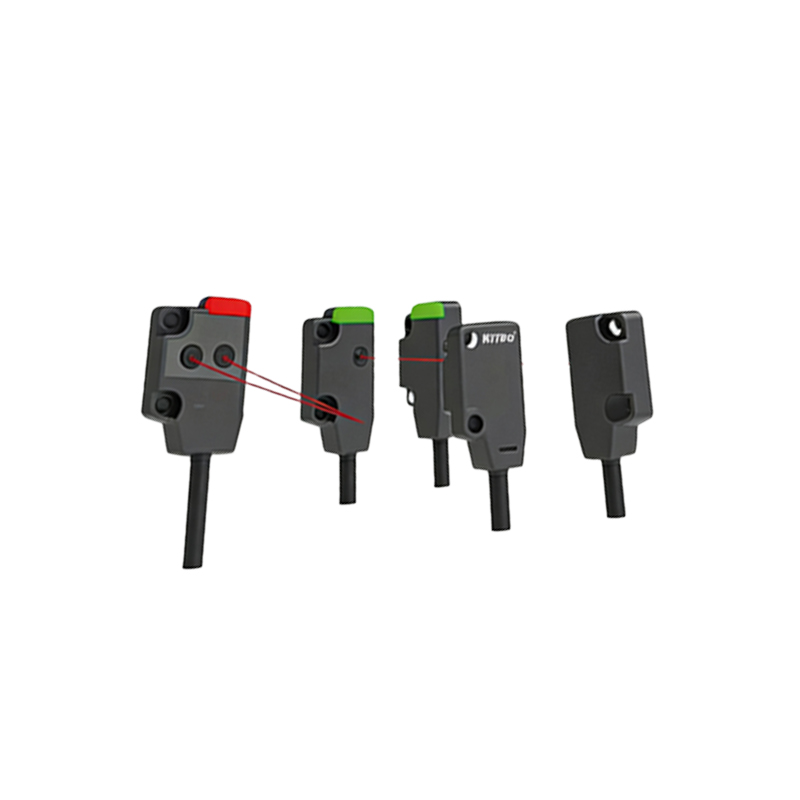
A photoelectric sensor comprises several critical components that ensure optimal performance. The light source, often a modulated infrared, visible red, or laser LED, generates the detection beam. Modulation—pulsing the light at specific frequencies—helps mitigate ambient light interference. The receiver section includes a photodiode or phototransistor that converts incoming light into electrical signals. Signal processing circuitry then amplifies and filters these signals, comparing them to predefined thresholds to determine object presence. Housing materials, such as stainless steel or rugged plastics, provide environmental protection against dust, moisture, and mechanical impact. Additional features may include potentiometers for sensitivity adjustment or digital interfaces for programmability.
Light Source and Modulation Techniques
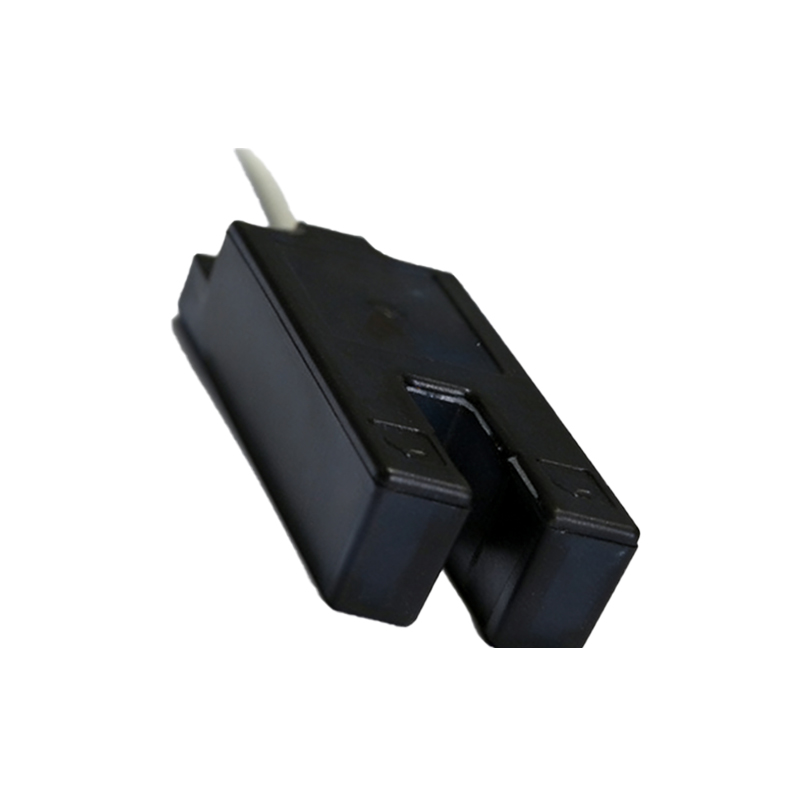
The choice of light source significantly influences sensor capabilities. Infrared LEDs are common for their invisibility and resistance to ambient light, while red LEDs offer visible alignment aids. Laser diodes enable precise, long-range detection but at higher costs. Modulation is essential for noise reduction: by emitting pulsed light and synchronizing the receiver to the same frequency, sensors can distinguish their own signal from background illumination. This allows stable operation under varying lighting conditions, such as sunlight or factory lamps. Some sensors employ multiple wavelengths or polarization filters to further reject false triggers from reflective surfaces.
Receiver and Signal Processing
The receiver component is tasked with capturing light and transforming it into usable data. Photodiodes provide fast response times, whereas phototransistors offer higher gain for weak signals. Once converted, the electrical signal undergoes processing through analog or digital circuits. Analog processing involves amplification and threshold comparison, triggering an output when the signal exceeds a set level. Digital processing, found in smart sensors, may include microcontroller-based algorithms for background suppression, temperature compensation, or communication via protocols like IO-Link. These advancements improve detection consistency across different object sizes and colors.
Output Configurations and Connectivity
Photoelectric sensors deliver results through various output mechanisms to interface with control systems. Discrete outputs include NPN/PNP transistors or relay contacts, providing simple on/off signals for PLCs or relays. Analog outputs, such as 0-10V or 4-20mA, convey continuous data like distance or intensity for process monitoring. Modern sensors also feature serial communication (e.g., RS-485) or industrial Ethernet protocols for integration into networked automation environments. Configurability is enhanced via teach-in buttons or software tools, allowing users to set parameters like sensing range or output delay without physical adjustments.
Environmental Considerations and Applications
Durability in operational environments is crucial for sensor longevity. Enclosures rated IP67 or higher protect against water and dust ingress, while temperature-stable components ensure performance from -25°C to 70°C. In challenging settings—like welding areas or food processing plants—specialized models resist electromagnetic interference, vibrations, or chemical exposure. Applications span industries: in logistics, sensors count boxes on conveyors; in automotive, they verify part presence; in pharmaceuticals, they ensure precise fill levels. Emerging uses include autonomous guided vehicles (AGVs) for navigation and smart packaging lines with color detection capabilities.
Maintenance and Calibration Best Practices
Regular maintenance sustains sensor accuracy and lifespan. Routine cleaning of lenses and reflectors prevents buildup from dust or oil, which can attenuate light signals. Alignment checks are vital for through-beam and retro-reflective types, as misalignment causes false readings. Calibration may involve adjusting sensitivity to accommodate new materials or environmental shifts. Diagnostic features, like built-in LED indicators or remote monitoring via networks, aid troubleshooting. Implementing preventive schedules reduces downtime, while selecting sensors with robust self-diagnostics can preempt failures in critical automation systems.