Introduction to Proximity Sensing
Proximity sensors are fundamental components in modern industrial automation, designed to detect the presence or absence of an object without physical contact. These devices are crucial for tasks such as object counting, position verification, and machine safety. Unlike mechanical limit switches, proximity sensors offer non-contact detection, leading to higher reliability, longer service life, and faster response times. They operate on various physical principles, primarily inductive, capacitive, and photoelectric methods, each suited to different materials and environmental conditions. The selection of the appropriate sensor type is critical for ensuring system accuracy and efficiency in diverse industrial settings, from automotive assembly lines to food processing plants.
Inductive Proximity Sensor Operation
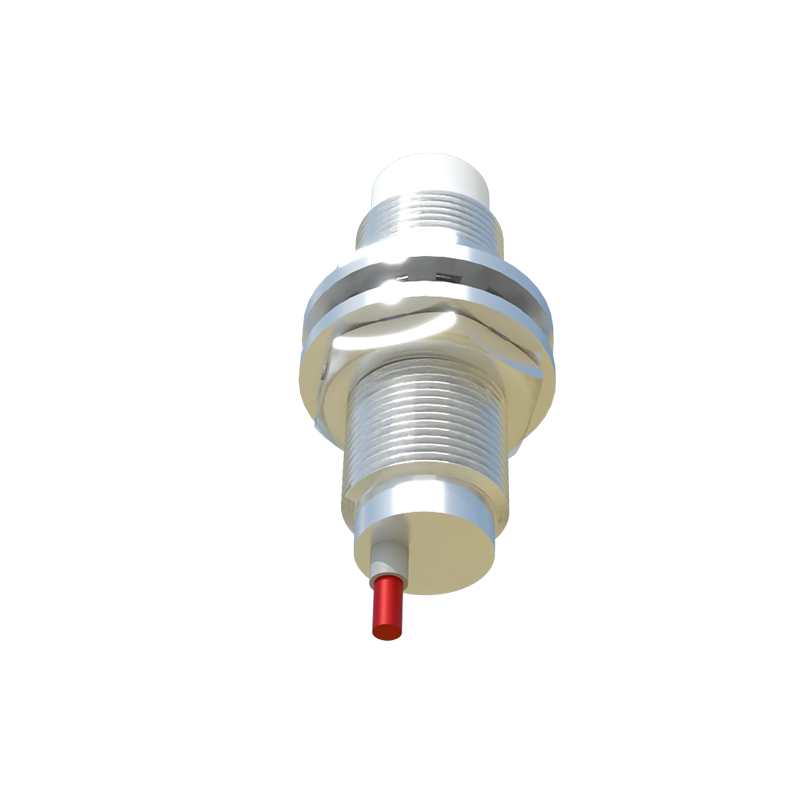
Inductive proximity sensors are the most common type used for detecting metallic objects. Their core working principle is based on electromagnetic induction. The sensor contains an oscillator circuit that generates a high-frequency alternating magnetic field from a coil wound around a ferrite core. When a conductive metal object enters this oscillating field, eddy currents are induced on the surface of the target. These eddy currents draw energy from the oscillator, causing a reduction in its oscillation amplitude. An evaluation circuit within the sensor monitors this amplitude change. Once the amplitude drops below a predefined threshold—indicating the object is within the specified sensing range—the sensor's output state switches, typically from open to closed or vice-versa. These sensors are highly reliable for detecting ferrous and non-ferrous metals, though their sensing range varies with the target material's conductivity and permeability.
Capacitive Proximity Sensor Functionality
Capacitive proximity sensors are versatile devices capable of detecting a wide range of materials, including metals, plastics, glass, liquids, and granular substances. They function by measuring changes in capacitance. The sensor's active face forms one plate of a capacitor, with the ground plane or a surrounding guard ring acting as the other plate. The oscillator circuit charges this electrode to generate an electrostatic field. When any object with a dielectric constant different from air enters this field, it alters the capacitance of the system. This change affects the oscillator's amplitude or frequency. The sensor's circuitry detects this shift and triggers an output switch when the change exceeds a set level. A sensitivity adjustment potentiometer allows users to fine-tune the sensor to ignore certain materials or background interference, making them ideal for applications like liquid level detection, material handling, and non-metallic object presence sensing.
Photoelectric Sensing Technology
Photoelectric proximity sensors, or photoelectric switches, detect objects by using a light beam, typically infrared, visible red, or laser. They consist of a light emitter (LED or laser diode) and a receiver (phototransistor or photodiode). There are three main operational modes: through-beam, retro-reflective, and diffuse (proximity) mode. In the diffuse mode, which functions as a true proximity sensor, the emitter and receiver are housed in the same unit. The emitted light strikes a target object and is scattered or reflected back to the receiver. The intensity of the reflected light is measured. When an object is present within the sensing range, the received light intensity increases, triggering the output. These sensors offer the longest sensing distances and can detect objects of almost any material, color, or surface finish, but their performance can be affected by ambient light, dust, and the object's reflectivity.
Key Performance Characteristics
Understanding the specifications of a proximity sensor is essential for correct application. The sensing distance, or nominal range, is the maximum distance at which a standard target can be reliably detected. This is often specified for inductive and capacitive sensors. Repeatability refers to the sensor's ability to consistently detect an object at the same distance. Response time is the delay between the target entering the sensing zone and the output switching. Switching frequency defines how many detection cycles per second the sensor can handle. Environmental factors like temperature, humidity, and exposure to chemicals or washdowns are addressed by the sensor's housing material and Ingress Protection (IP) rating. Additionally, output types (NPN/PNP, NO/NC) must be compatible with the controller's input module, such as a PLC.
Application Considerations and Selection
Selecting the right proximity sensor requires a thorough analysis of the application. For metal detection in harsh environments with oil or coolant, a shielded inductive sensor with a high IP rating is preferred. For detecting plastic bottles on a conveyor, a capacitive or diffuse photoelectric sensor is suitable. Sensing range, target material, size, and required mounting style (flush or non-flush) are primary decision factors. Electrical characteristics, including supply voltage and output current, must match the control system. In high-speed applications, a sensor