Introduction to Photoelectric Sensors
Photoelectric sensors are widely used in industrial automation for detecting the presence, absence, or position of objects without physical contact. These sensors operate by emitting a light beam, typically from an LED or laser diode, and measuring the reflected or transmitted light using a photodetector. The core principle involves converting light signals into electrical signals, which are then processed to trigger outputs. When integrated with motors, photoelectric sensors enable precise control over motion systems, enhancing efficiency in applications like conveyor belts, robotic arms, and packaging machinery. This combination is essential in modern manufacturing, where accuracy and speed are critical.
Working Principle of Photoelectric Sensors
The operation of photoelectric sensors relies on three main types: through-beam, retro-reflective, and diffuse reflective. In through-beam sensors, an emitter and receiver are placed opposite each other; an object interrupts the light beam, causing a detection signal. Retro-reflective sensors use a reflector to bounce light back to the receiver, with detection occurring when the beam is blocked. Diffuse reflective sensors detect objects by measuring light scattered back from the surface. All types generate an electrical output, such as a digital signal or analog voltage, which can interface with motor controllers. This output is processed to start, stop, or adjust motor speed, ensuring synchronized operations in automated systems.
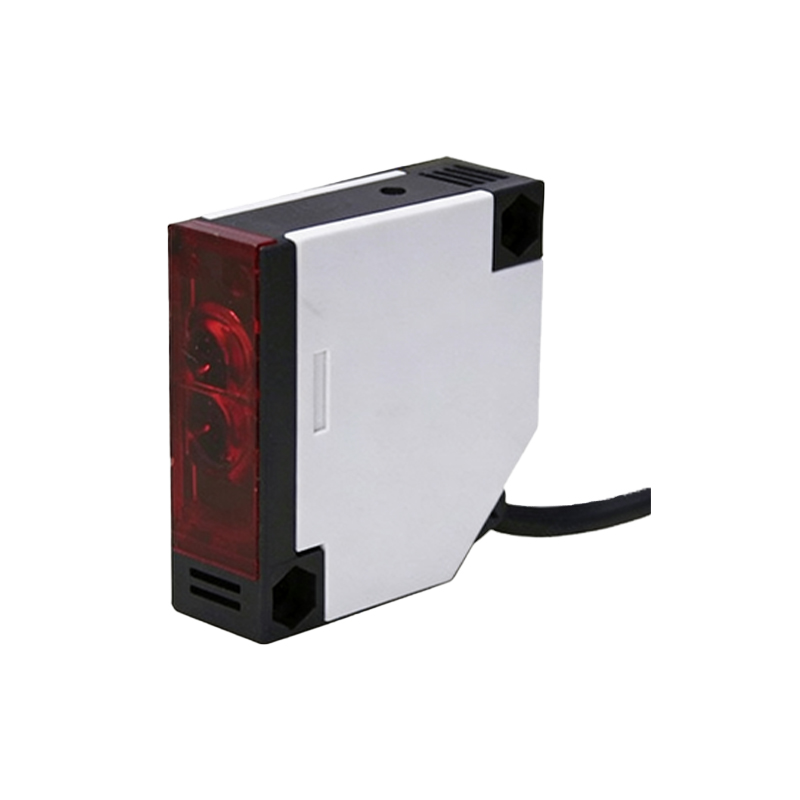
Integration with Motor Systems
Integrating photoelectric sensors with motors involves connecting the sensor output to a motor drive or controller. When the sensor detects an object, it sends a signal to the controller, which then commands the motor to perform specific actions, like rotating, stopping, or changing direction. For instance, in a conveyor system, a sensor can detect items on the belt and signal the motor to move or halt accordingly, preventing jams and optimizing throughput. This setup often includes feedback loops for closed-loop control, where sensors provide real-time data on position or speed, allowing motors to adjust dynamically. Such integration improves precision, reduces manual intervention, and supports complex automation tasks.
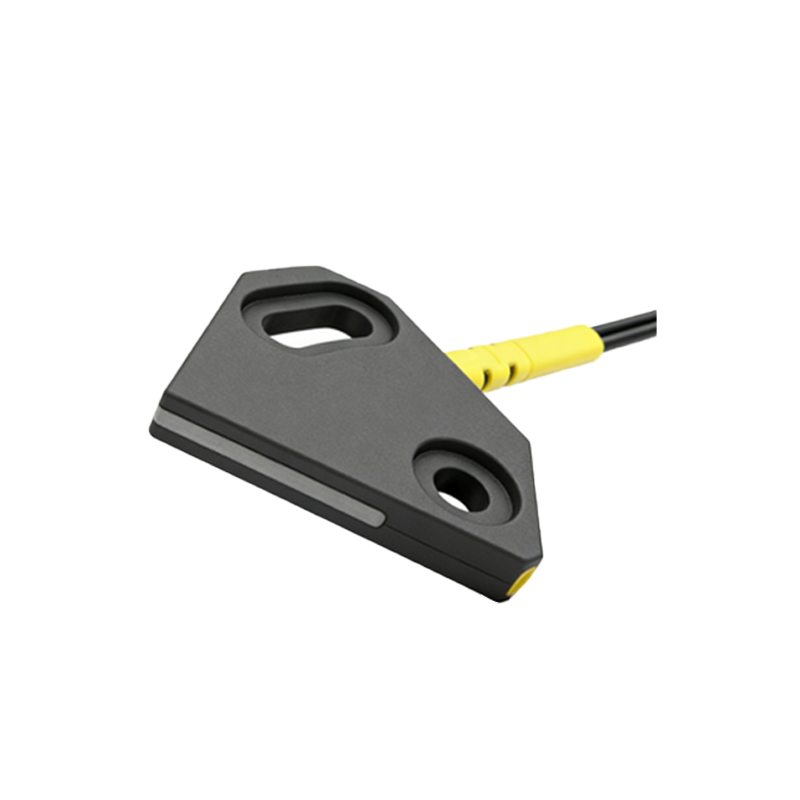
Types of Motors Used with Photoelectric Sensors
Various motor types are paired with photoelectric sensors based on application needs. DC motors are common for simple on/off control due to their ease of use and low cost. Stepper motors offer precise positioning, making them ideal for applications requiring exact movements, such as in CNC machines or 3D printers. Servo motors provide high torque and accuracy, often used in robotics where sensors guide arm movements. AC motors are employed in heavy-duty industrial settings for continuous operation. In each case, photoelectric sensors act as input devices, triggering motor responses to ensure efficient and reliable performance across different environments.
Applications in Industrial Automation
Photoelectric sensors with motors are pivotal in numerous industrial applications. In assembly lines, they detect components and control motors to align or assemble parts accurately. Packaging machines use sensors to count products and regulate motor-driven conveyors for filling and sealing. In material handling, sensors monitor inventory levels and command motors to sort or transport goods. Robotics heavily relies on this combination for navigation and object manipulation, with sensors providing feedback for motor adjustments. These applications highlight how the synergy between sensors and motors enhances productivity, safety, and automation in sectors like automotive, electronics, and food processing.
Advantages and Challenges
The integration of photoelectric sensors with motors offers significant advantages, including non-contact detection, high speed, and durability in harsh conditions. It reduces wear and tear compared to mechanical switches, leading to lower maintenance costs. However, challenges exist, such as interference from ambient light, which can cause false triggers, or alignment issues in through-beam setups. To mitigate these, sensors with modulated light or protective housings are used. Additionally, proper calibration and shielding ensure reliable performance. Overcoming these challenges maximizes the benefits, making this technology a cornerstone of modern industrial systems.
Future Trends and Innovations
Future developments in photoelectric sensors and motor integration focus on smart technologies and IoT connectivity. Advances include sensors with embedded processors for self-diagnostics and adaptive control, reducing setup time. Wireless communication enables remote monitoring and control of motor systems via cloud platforms. Miniaturization allows for compact designs in space-constrained applications. Energy-efficient motors paired with low-power sensors contribute to sustainable operations. As Industry 4.0 evolves, this combination will drive autonomous systems, with AI algorithms optimizing sensor-motor interactions for predictive maintenance and enhanced efficiency in global manufacturing landscapes.