In the realm of industrial automation, consumer electronics, and automotive systems, proximity sensors serve as the silent sentinels, enabling machines to perceive their immediate environment without physical contact. Their core function is detection, but the depth and nuance of this capability are what define their effectiveness in diverse applications. Understanding the factors that influence a proximity sensor's detection ability is crucial for engineers and designers to implement reliable and efficient solutions.
The detection capability of a proximity sensor is fundamentally governed by its sensing principle. Inductive sensors generate an electromagnetic field and detect changes caused by the presence of conductive, typically metallic, targets. Their effective sensing range is highly dependent on the target material's properties, such as conductivity and permeability. A mild steel target will be detected at the sensor's nominal range, while stainless steel or aluminum may require a reduction factor, often detecting at only 60-80% of that range. Capacitive sensors, on the other hand, create an electrostatic field and react to any material that alters the dielectric constant, including liquids, plastics, and wood. This makes them versatile but also susceptible to interference from environmental factors like humidity or contaminants on the sensor face.
A critical specification is the rated operating distance (Sn). This is the nominal sensing distance under standardized conditions, as defined by IEC 60947-5-2. It is not the absolute maximum distance but a reliable benchmark. The assured operating distance (Sa), typically 90% of Sn, is the distance within which operation is guaranteed considering factors like supply voltage tolerance and temperature variations. For consistent performance, targets should be positioned within this Sa range. The concept of hysteresis is vital for stable switching. It is the difference between the switch-on point (as the target approaches) and the switch-off point (as it moves away). This prevents rapid, chattering output signals if the target hovers at the exact sensing threshold, ensuring clean on/off states.
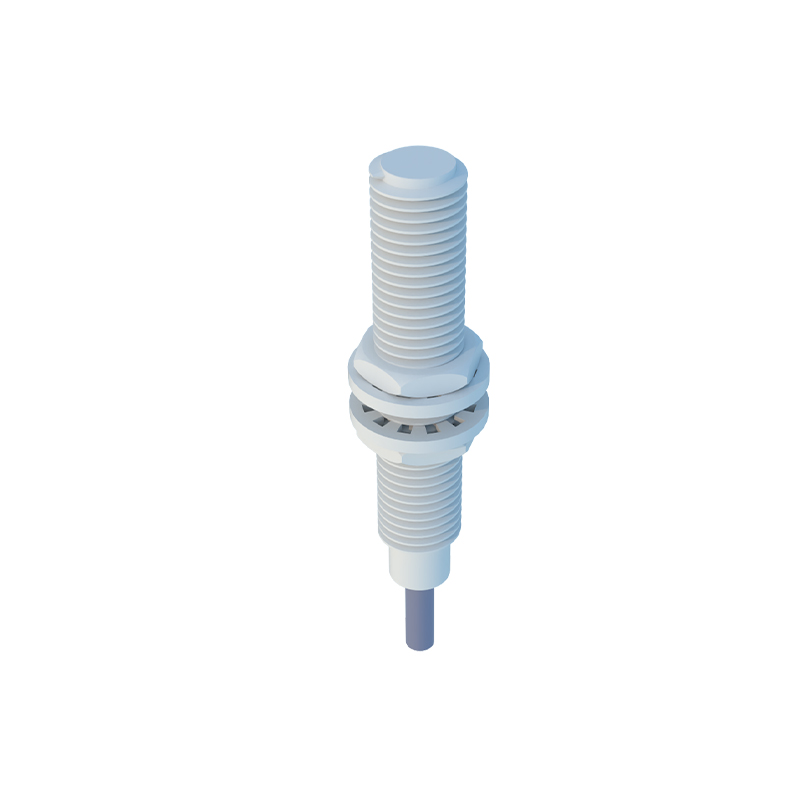
Beyond the nominal range, real-world detection is influenced by multiple variables. Target characteristics are paramount. For inductive sensors, the size, shape, and material of the target directly affect the sensing distance. A target smaller than the sensor's active face diameter will reduce the effective range. Standardized tests use a square mild steel target (Fe360) with a side length equal to the sensor diameter or three times the Sn, whichever is greater. The mounting conditions also play a significant role. Flush-mountable sensors can be embedded in metal without affecting performance, while non-flush sensors require a clear, unobstructed surrounding area to achieve their full range, as their electromagnetic field extends laterally. Embedding a non-flush sensor in metal would severely degrade its detection capability.
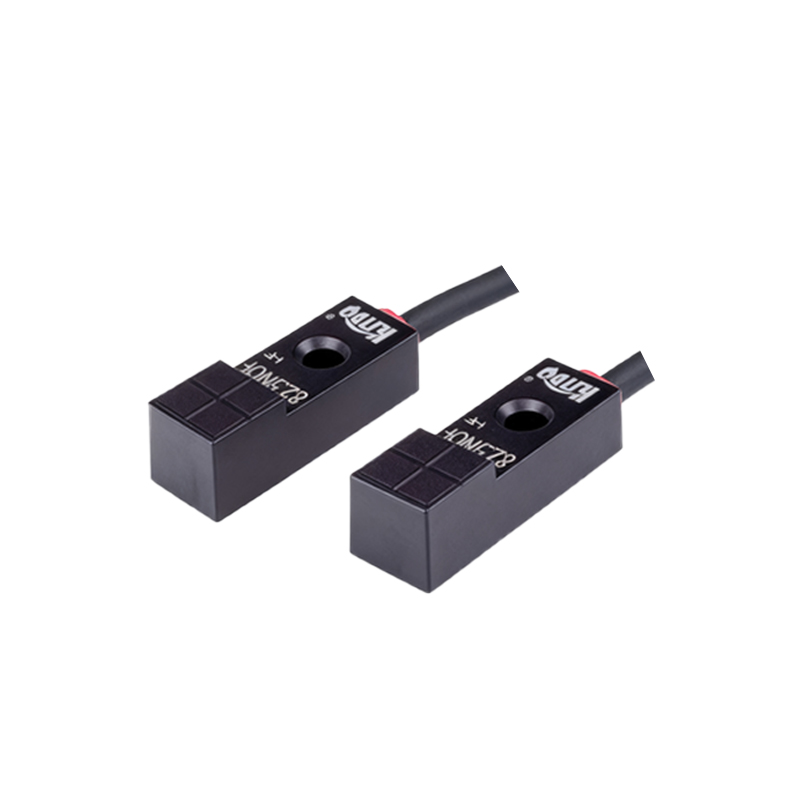
Environmental factors can enhance or impede detection. Temperature extremes can affect the electronic components and the oscillation circuit, potentially altering the sensing distance. While high-quality sensors are compensated for standard industrial temperature ranges, extreme conditions must be considered. The presence of foreign materials like dust, chips, or coolant can coat capacitive sensors or conductive debris can affect inductive sensors, leading to false triggering or dampened response. In such environments, sensors with robust housings (e.g., IP67, IP69K ratings) and designed-in immunity are essential.
Modern advancements have significantly expanded detection capabilities. Analog output sensors provide a continuous voltage or current signal proportional to the distance to the target, enabling precise position monitoring rather than simple presence detection. Factor-1 sensors are a specialized type of inductive sensor designed to detect all metals (like steel, aluminum, and copper) at the same nominal range, simplifying application where target material varies. Furthermore, multi-technology sensors that combine inductive, capacitive, and photoelectric principles in one housing offer unparalleled flexibility for complex detection tasks.
When selecting a sensor for an application, a systematic evaluation of the detection requirements is necessary. First, define the target material, size, and required detection distance. Second, consider the operating environment: temperature, potential contaminants, and electrical noise. Third, determine the required output type (discrete PNP/NPN or analog) and switching frequency for dynamic applications. Finally, factor in mechanical constraints like housing style (cylindrical, rectangular) and mounting requirements. A sensor chosen with these parameters in mind will deliver optimal and reliable detection capability, forming a robust link in the automated chain. The true measure of a proximity sensor is not just its listed range, but its consistent and repeatable performance under the specific conditions of its intended use.