Introduction to Capacitive Sensing Technology
Capacitive proximity sensors are versatile non-contact detection devices widely used in industrial automation. Unlike their inductive counterparts, which detect only metallic objects, capacitive sensors can detect a vast range of materials, including liquids, plastics, wood, and granular substances. This capability stems from their fundamental operating principle: the detection of changes in capacitance. At its core, a capacitor consists of two conductive plates separated by a dielectric material. The sensor itself forms one plate of this capacitor, with the target object acting as the second plate, and the intervening air (or other medium) serving as the dielectric. The sensor's electronics measure the capacitance of this system. When a target enters the sensing field, it alters the dielectric constant and the effective plate area, leading to a measurable change in capacitance that triggers the sensor's output switch.
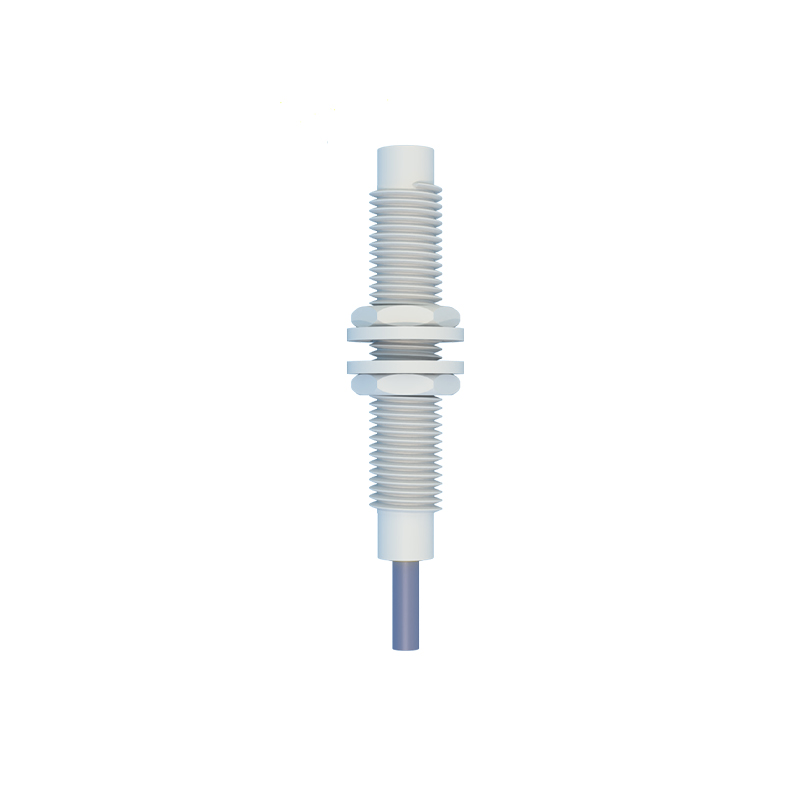
Core Operating Principle and Internal Components
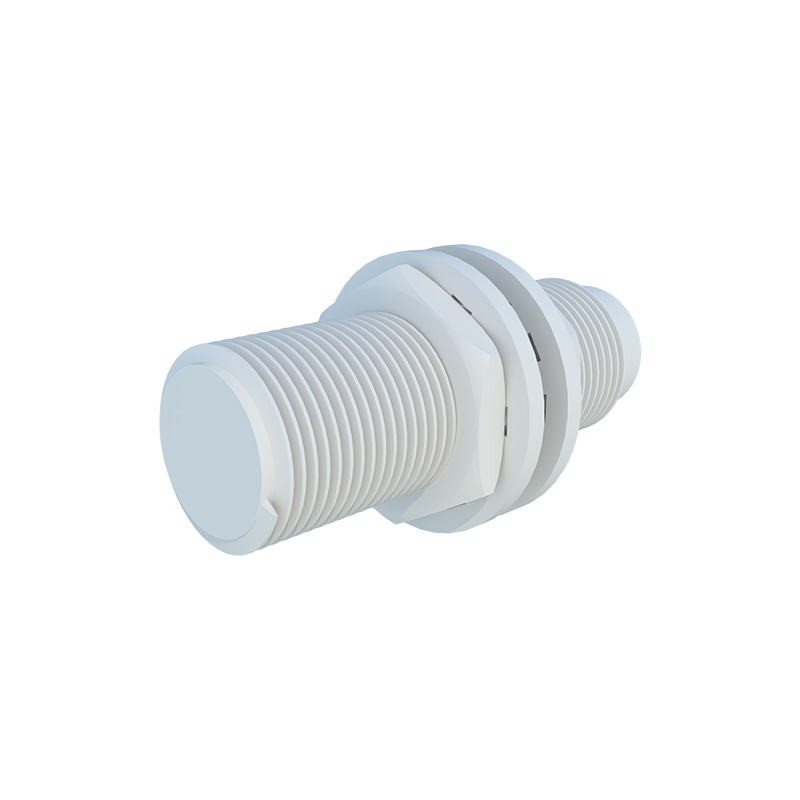
The heart of a capacitive proximity sensor is an oscillator circuit. When power is applied, this circuit generates a high-frequency electromagnetic field that emanates from the active sensing surface, typically a metal disk. In the absence of a target, the oscillator operates at a baseline amplitude. As a target approaches, it interacts with this field. Even non-conductive materials have a dielectric constant higher than air. This increase in the dielectric constant between the "plates" causes a rise in the system's capacitance. The sensor's internal circuitry continuously monitors the oscillator's amplitude. Once the amplitude reaches a pre-defined threshold—the sensing distance or setpoint—a Schmitt trigger circuit activates, changing the sensor's output state (e.g., from OFF to ON). This output can be a switching signal via an NPN or PNP transistor, or an analog signal proportional to distance.
Key Design Features: Sensitivity Adjustment and Shielding
A critical feature of most capacitive sensors is a sensitivity adjustment potentiometer. This allows engineers to fine-tune the sensing distance and compensate for different target materials or challenging environmental conditions, such as the buildup of dust or condensation on the sensor face. Furthermore, capacitive sensors are available in two primary housing designs: shielded and unshielded. Shielded sensors have a metallic ring surrounding the active face that focuses the electrostatic field radially forward. This design allows for flush mounting in metal without false triggering. Unshielded sensors have a more extended, lateral sensing field and cannot be mounted flush with surrounding metal, but they often offer a longer sensing range. Understanding this distinction is crucial for correct installation and reliable operation.
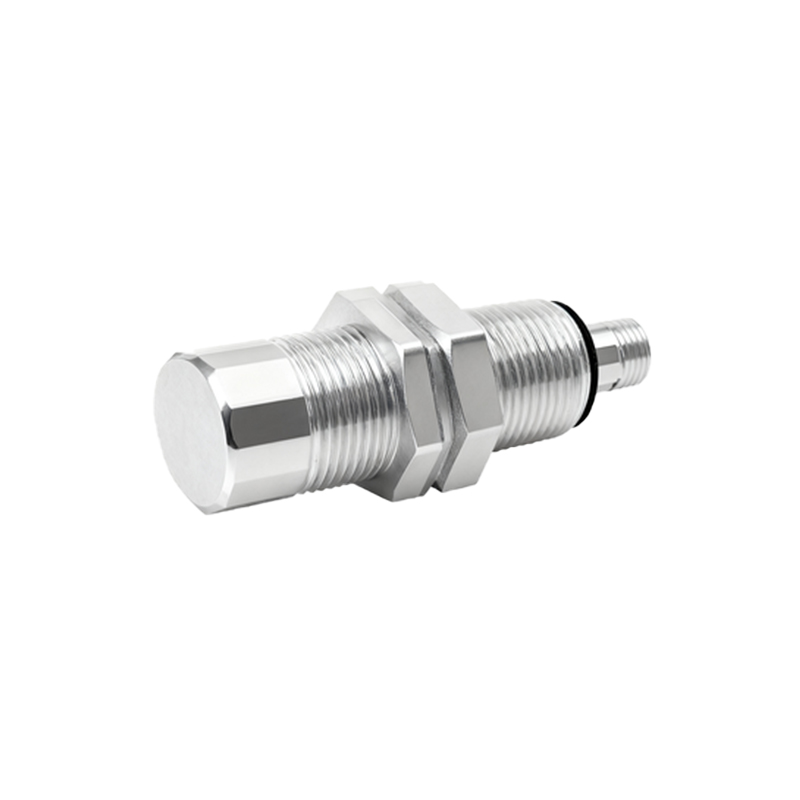
Material Detection and Dielectric Constants
The effectiveness of a capacitive sensor is directly linked to the dielectric constant (εr) of the target material. A higher dielectric constant results in a more pronounced change in capacitance and, therefore, a longer effective sensing range. For instance, water has a very high dielectric constant (around 80), making it easily detectable. Plastics and ceramics have moderate values, while air is the baseline at 1.0. This principle enables applications like liquid level detection in non-metallic tanks, where the sensor can detect the presence of a liquid (high εr) versus air (low εr) through the container wall. Manufacturers provide reduction factors in datasheets, indicating that the sensing range for a material like PVC will be a fraction of the rated range for steel.
Common Industrial Applications and Use Cases
The unique ability to detect non-metals opens a broad spectrum of applications. A primary use is liquid level control, whether detecting the presence of water, chemicals, or food products in tanks, bottles, or pipes. In packaging, they verify the fill level of containers, detect missing caps, or count non-metallic items like cardboard boxes or plastic bottles. They are employed in woodworking to monitor lumber position and in agriculture to sense grain levels in silos. Furthermore, capacitive sensors can detect powdered materials, monitor the presence of labels on products, and function as touch-sensitive switches in human-machine interfaces. Their robustness makes them suitable for harsh environments where contamination is a concern.
Advantages, Limitations, and Selection Criteria
The principal advantage of capacitive sensors is their material versatility. They are also largely unaffected by target color or surface finish. However, they have limitations. Their sensing range is generally shorter than that of ultrasonic or photoelectric sensors. They can be susceptible to false triggers from environmental factors like humidity changes, oil mist, or dust with high dielectric properties, necessitating careful sensitivity adjustment and mounting. When selecting a sensor, key criteria include the required sensing distance (with the appropriate reduction factor for the target material), the housing style (shielded vs. unshielded) for the mounting configuration, the output type (discrete or analog), and the environmental protection rating (IP67/IP69K for