Human proximity sensors have become integral components in modern automation, security, and interactive systems. These devices detect the presence or movement of individuals within a defined range without physical contact, enabling applications from automatic lighting to industrial safety mechanisms. Programming these sensors effectively requires an understanding of their operational principles, interface protocols, and environmental considerations.
Proximity sensors typically utilize technologies such as infrared (IR), ultrasonic, capacitive, or microwave sensing. Each technology offers distinct advantages. Infrared sensors, for example, detect heat signatures or reflected IR beams, making them suitable for indoor occupancy detection. Ultrasonic sensors emit sound waves and measure echo return time, effective in varied lighting conditions but sensitive to acoustic interference. Capacitive sensors react to changes in electrical fields caused by conductive objects like the human body, ideal for touchless interfaces. Microwave sensors use electromagnetic waves, offering longer range but requiring careful calibration to avoid false triggers.
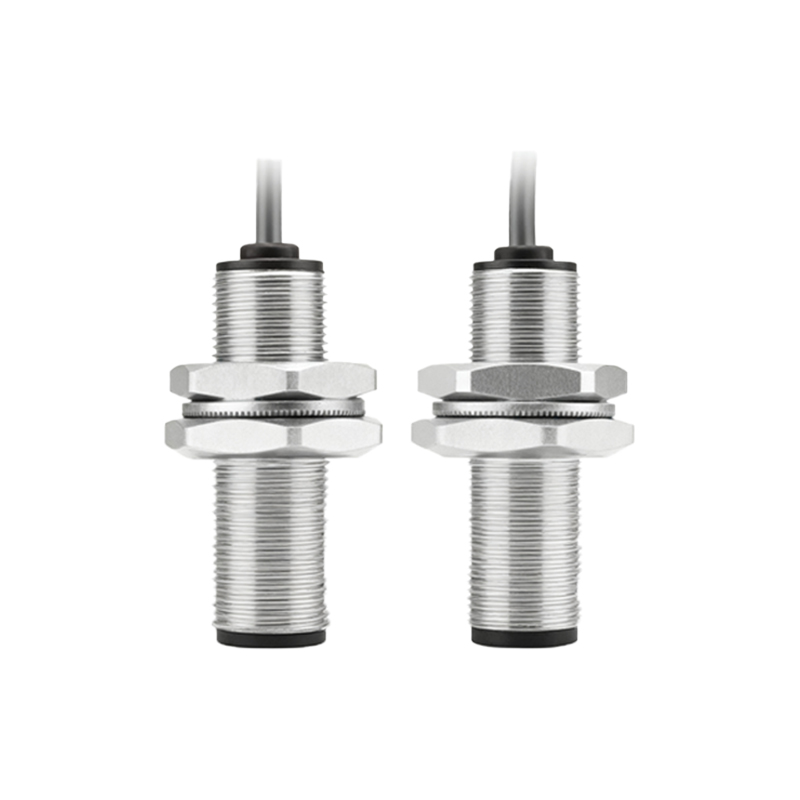
When developing software for human proximity detection, start by selecting the appropriate sensor type based on the application's range, accuracy, and environmental factors. For instance, a security system in a warehouse might combine ultrasonic sensors for wide-area coverage with IR sensors for precise zone monitoring. Programming begins with hardware initialization, which involves configuring GPIO pins, communication interfaces (like I2C, SPI, or UART), and power settings. Most sensors provide digital or analog outputs; digital outputs simplify code by offering binary detection signals, while analog outputs allow for distance estimation through voltage or pulse-width measurements.
A basic program structure includes setup routines for sensor calibration and loop functions for continuous monitoring. Calibration is critical to minimize false positives from environmental noise—such as moving machinery or pets. Implement threshold adjustments in code to set detection sensitivity. For example, with an IR sensor, you might adjust the trigger level based on ambient temperature readings. Incorporate debouncing algorithms to ensure stable detection, especially in scenarios with intermittent movement.
Advanced programming techniques involve data fusion from multiple sensors to enhance reliability. Using a microcontroller like Arduino or Raspberry Pi, developers can integrate sensor arrays with filtering algorithms (e.g., Kalman filters) to smooth data and improve accuracy. For networked systems, MQTT or HTTP protocols enable sensor data transmission to cloud platforms for real-time analytics and remote control. Consider energy efficiency by programming sleep modes during inactive periods, which is vital for battery-operated devices.
Error handling and diagnostics are essential for robust systems. Log sensor status and detection events to identify malfunctions or environmental changes. In industrial settings, program fail-safe mechanisms—such as triggering alarms when a sensor fails—to maintain safety compliance. Testing under real-world conditions, like varying humidity or lighting, ensures code adaptability.
Ultimately, successful human proximity sensor programming balances technical precision with practical application needs. By leveraging modular code, thorough calibration, and adaptive algorithms, developers can create responsive and reliable systems that enhance user interaction and safety across diverse domains.