Introduction to Photoelectric Sensors in Ball Cameras
Photoelectric sensors are fundamental components in modern industrial automation, and their integration into ball cameras represents a significant advancement in machine vision and positional control systems. A ball camera, often referred to in industrial contexts as a pan-tilt-zoom (PTZ) camera unit, relies on precise feedback mechanisms to orient its lens assembly. Photoelectric sensors within these systems provide non-contact, high-speed detection of position, presence, or movement. They function by emitting a beam of light—typically infrared, visible red, or laser—and detecting changes in the received light signal caused by the presence or absence of a target object, which in this case, is often an internal flag or marker on the camera's gimbal mechanism. This enables the camera's control system to accurately know its pan and tilt angles without physical contact, eliminating mechanical wear and enabling rapid, repeatable movements.

Core Operating Principles and Technologies
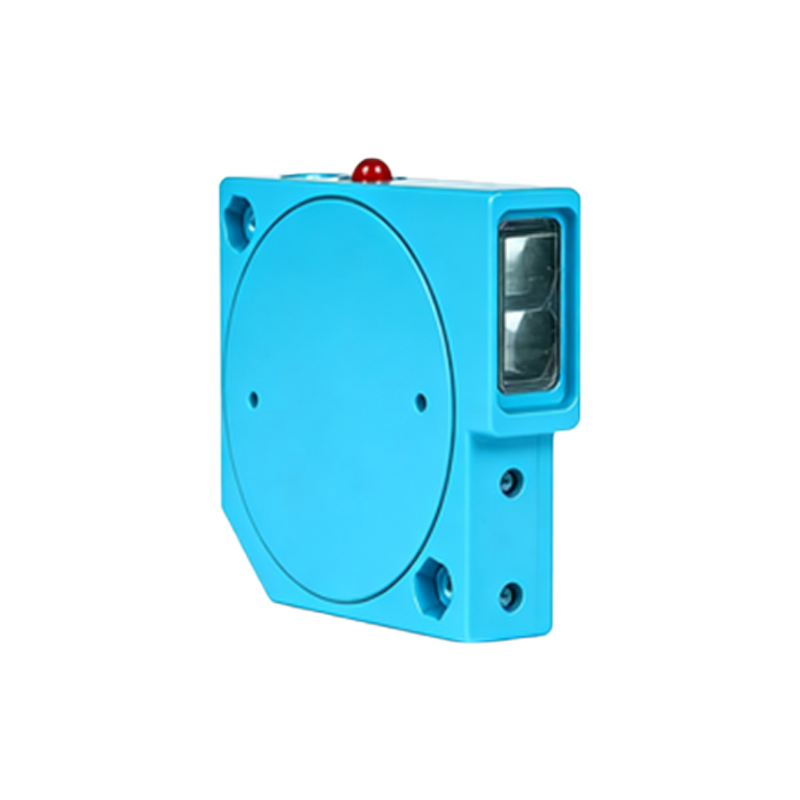
The operational principle hinges on the modulation and reception of light. Common types deployed in ball cameras include through-beam, retro-reflective, and diffuse-reflective sensors. Through-beam sensors, with separate emitter and receiver units, offer the longest sensing ranges and highest reliability, ideal for detecting the extreme limits of pan or tilt rotation. Retro-reflective types use a single unit and a reflector, suitable for intermediate range detection within the housing. Diffuse-reflective sensors detect light reflected directly from the target itself and are often used for proximity sensing or detecting specific components in the assembly path. Advanced versions incorporate background suppression or fixed-field technology, allowing them to ignore objects beyond a set distance, a critical feature in the confined, reflective interior of a camera housing. The choice of light source, such as modulated LED or laser diode, is crucial for immunity to ambient light interference, ensuring stable operation under varying factory lighting conditions.
Key Functions in Ball Camera Systems
Within a ball camera, photoelectric sensors perform several vital functions. Primarily, they serve as limit switches, defining the safe mechanical endpoints for pan and tilt movements to prevent damage from over-rotation. They also act as homing or reference point sensors. Upon system initialization, the camera mechanism often moves until it triggers a specific sensor, establishing a known "zero" position from which all other angular movements are calculated. Furthermore, they can provide incremental positional feedback. By arranging multiple sensors or using a coded pattern on a rotating shaft, the system can interpolate position between major points, enhancing the granularity of control. This feedback loop is integral to the servo or stepper motor control system, allowing for smooth, accurate tracking and positioning, which is essential for surveillance, automated inspection, or robotic guidance applications.
Advantages Over Alternative Sensing Methods
The adoption of photoelectric sensors in ball cameras presents distinct advantages compared to traditional methods like potentiometers or mechanical micro-switches. Their non-contact nature ensures virtually infinite operational life, as there is no physical wear from sliding contacts or actuation arms. This leads to dramatically higher reliability and lower maintenance requirements. They offer superior speed, capable of detecting events in microseconds, which translates to faster system response and higher operational cycles. Their output is typically a clean, digital signal (PNP/NPN) or analog current/voltage, easily interfaced with modern programmable logic controllers (PLCs) and microprocessors. Additionally, they are immune to magnetic fields, a potential issue with Hall effect sensors, and are less susceptible to dust and contamination when properly housed, compared to optical encoders that may require exposed slits.
Design Considerations and Integration Challenges
Successfully integrating photoelectric sensors into a ball camera design requires careful engineering. Physical constraints are paramount; the sensors must be miniaturized to fit within the compact dome or housing without impeding movement. The selection of housing material (often IP-rated for dust and moisture resistance) and lens type is critical for reliable operation. Electrical design must account for power supply stability, output signal conditioning, and protection against voltage transients. A significant challenge is managing internal reflections from shiny surfaces, such as metal brackets or the camera housing itself, which can cause false triggering. This is mitigated through sensor selection (e.g., background suppression models), precise mechanical alignment, and the use of light-absorbing materials or baffles around the sensing path. Thermal management is also considered, as extreme temperatures can affect the output intensity of the light emitter.
Future Trends and Technological Evolution
The future of photoelectric sensors in ball cameras is aligned with broader trends in industrial IoT and miniaturization. We are witnessing the development of sensors with integrated IO-Link communication, which provides not just a switching signal but detailed diagnostic data (e.g., signal strength, operating temperature, contamination warnings) to predictive maintenance systems. This enables condition-based monitoring rather than scheduled replacement. Furthermore, the convergence of sensing and vision is progressing. Smart sensors with simple pattern recognition or measurement capabilities could offload basic processing tasks from the main camera CPU. The use of laser-based sensors continues to grow, offering extremely small spot sizes for high-precision positioning of miniature camera assemblies. As ball cameras find new applications in drones, advanced robotics, and augmented reality systems, the demand for ever-smaller, smarter, and more robust photoelectric sensors will continue to drive innovation in this essential component technology.