Introduction to Uniform Spot Photoelectric Sensors
In the realm of industrial automation and control, photoelectric sensors stand as fundamental components for detection, positioning, and measurement. Among the diverse types available, the uniform spot photoelectric sensor represents a significant advancement in precision and reliability. Unlike conventional sensors that may produce a beam with a Gaussian intensity profile—brighter in the center and fading towards the edges—a uniform spot sensor generates a beam with consistent intensity across its entire projected area. This characteristic is crucial for applications requiring high accuracy, as it eliminates detection errors caused by intensity variations within the sensing spot. The core technology often involves specialized optics, such as diffusers or engineered lenses, to homogenize the light emitted from an LED or laser diode, creating a clearly defined, even field of illumination.
Core Operating Principles and Technology
The fundamental operation of a uniform spot photoelectric sensor follows the same basic principles as other photoelectric devices: it emits a light beam and detects changes in the received light to sense an object's presence or absence. The primary distinction lies in the light source and optical design. These sensors typically utilize a high-quality, stable light source, often a visible red or laser LED, coupled with a collimating lens and a beam homogenizer. The homogenizer, which can be a micro-lens array or a diffractive optical element, scrambles the light to distribute energy evenly. This results in a sharply defined spot with uniform intensity, whether the sensor operates in through-beam, retro-reflective, or diffuse reflective mode. This uniformity ensures that the sensor's response is consistent regardless of where an object intersects the beam within the spot's boundaries.
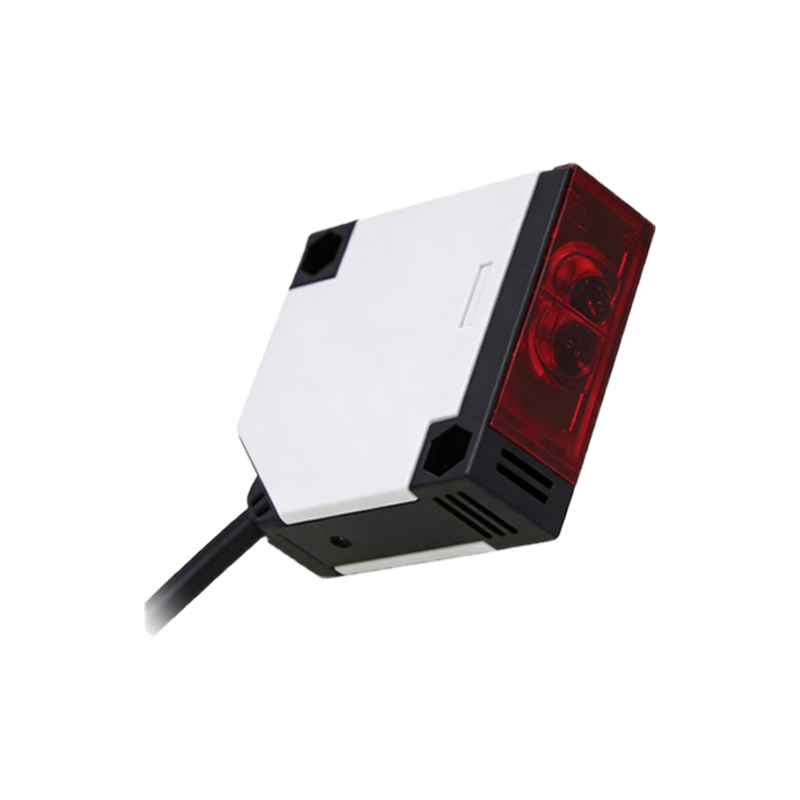
Key Advantages in Industrial Applications
The benefits of employing uniform spot sensors are manifold, directly translating to enhanced process quality and reduced downtime. First and foremost is the elimination of edge detection errors. In tasks like edge guiding, web break detection, or precise positioning of small components, a Gaussian beam might fail to detect an object if it only passes through the dimmer edges. A uniform spot guarantees reliable detection across the entire area. Secondly, it allows for more precise measurement and sizing. Applications involving object height verification, diameter checking, or gap measurement benefit from a consistent threshold of reflected or blocked light. Furthermore, these sensors exhibit superior performance with challenging surfaces, such as shiny, reflective, or uneven materials, as the even illumination minimizes specular reflection hotspots that could confuse standard sensors.
Critical Selection Criteria and Specifications
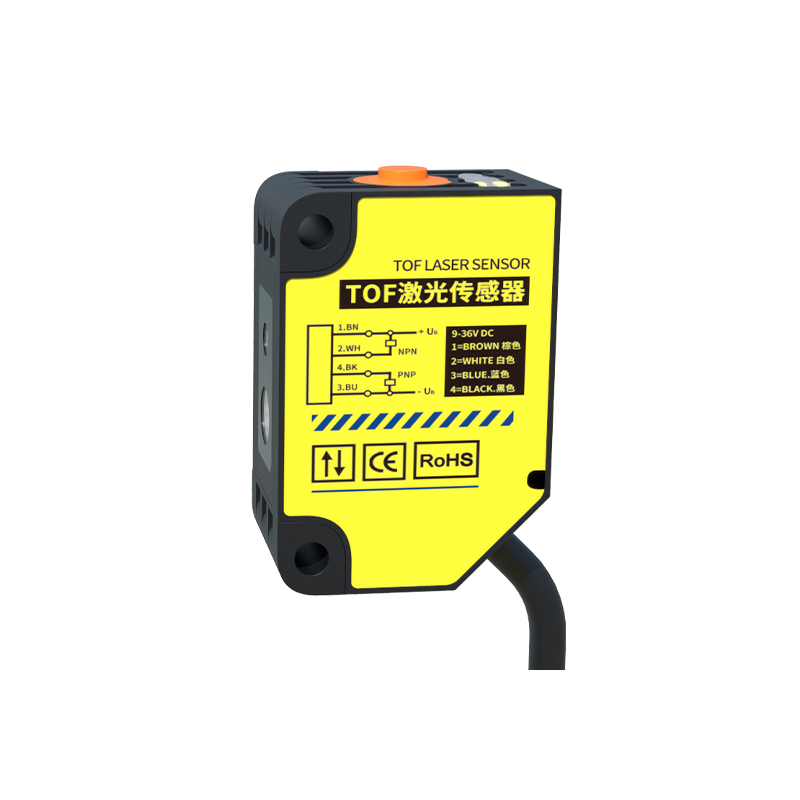
Selecting the appropriate uniform spot sensor requires careful consideration of several technical parameters. The spot size and shape (often circular or rectangular) must match the target object's dimensions and the required detection tolerance. The sensing distance, or range, is another vital factor, influenced by the light source power and receiver sensitivity. Response time, typically in microseconds, determines the sensor's suitability for high-speed production lines. Environmental robustness is non-negotiable in industrial settings; thus, ingress protection (IP) ratings for dust and water resistance, temperature operating ranges, and housing material (often stainless steel or ruggedized plastic) are crucial. Additionally, output types (NPN/PNP, analog, or IO-Link) and connectivity must align with the existing control system architecture.
Implementation in Complex Automation Systems
Integrating uniform spot sensors into complex automation systems unlocks new levels of precision. In robotic pick-and-place systems, they ensure accurate part presence verification before a gripper engages, preventing mishandling. On packaging lines, they reliably detect transparent films, clear bottles, or low-contrast labels that would challenge conventional sensors. In semiconductor and electronics manufacturing, their precise beams are indispensable for wafer alignment, component placement on PCBs, and inspecting micro-scale features. The consistent performance also simplifies system calibration and maintenance, as technicians do not need to account for "hot spots" within the beam, leading to faster setup and more stable long-term operation.
Maintenance, Calibration, and Best Practices
While uniform spot sensors are designed for durability, adherence to best practices ensures optimal lifespan and performance. Regular cleaning of the lens surface is essential to prevent dust, oil, or debris from attenuating the light beam. Alignment checks are critical, especially for through-beam configurations over long distances, to ensure the spot is correctly projected onto the receiver. Although the uniform spot reduces one variable, periodic verification against a known standard or test target is recommended to confirm sensing stability. Leveraging sensors with built-in diagnostics, such as stability indicators or contamination warnings via IO-Link communication, can facilitate predictive maintenance, alerting operators to potential issues before they cause a production stoppage.
Future Trends and Technological Evolution
The future of uniform spot photoelectric sensor technology is closely tied to broader trends in Industry 4.0 and smart manufacturing. We are witnessing the integration of more sophisticated onboard intelligence. Sensors with integrated processors can now analyze the light profile in real-time, making adaptive decisions and providing rich data beyond a simple on/off signal. The miniaturization of optical components continues, allowing for smaller sensor housings without compromising spot quality or sensing range. Furthermore, the development of new wavelengths and the combination of uniform spot technology with other sensing principles, like confocal or color recognition, are opening doors for even more demanding applications in quality inspection and complex robotic vision guidance systems.