Introduction to Proximity Sensing Evolution
The landscape of industrial automation and smart systems is undergoing a profound transformation, largely driven by advancements in sensor technology. Among these, proximity sensors stand as critical components, enabling non-contact detection of objects and materials. Their evolution from simple inductive switches to sophisticated, intelligent systems mirrors the broader trajectory of Industry 4.0 and the Internet of Things (IoT). This article explores the current trends and future projections shaping the development of proximity sensors, providing a graphical conceptualization of their technological trajectory. The progression is not merely linear but multidimensional, encompassing enhancements in sensing range, accuracy, intelligence, and integration capabilities.
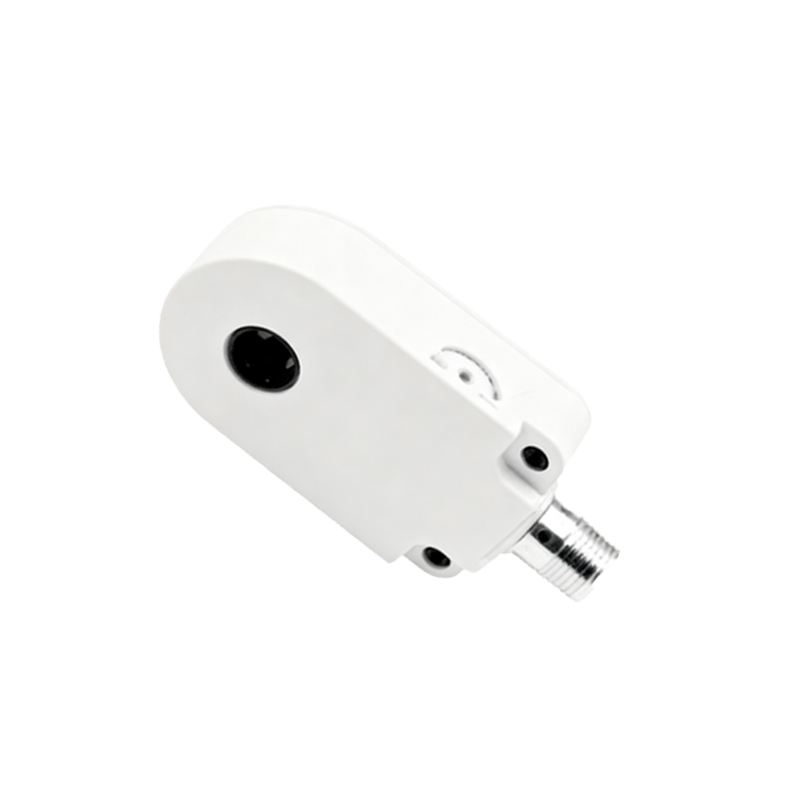
Enhanced Sensing Range and Multi-Material Detection
A primary trend visible on the development graph is the significant extension of effective sensing ranges. Traditional inductive and capacitive sensors were often limited to short distances, suitable for specific metallic or material targets. Modern advancements, particularly in ultrasonic and time-of-flight (ToF) optical sensors, have dramatically increased these ranges. Furthermore, the ability to reliably detect a wider variety of materials—including plastics, glass, liquids, and even transparent objects—has become a standard requirement. This is achieved through refined capacitive sensing techniques and hybrid sensor designs that combine multiple physical principles. The trend line on the graph shows a steep upward curve for both range and material versatility, directly responding to demands from complex packaging, logistics, and automotive assembly lines.
Integration of Intelligence and IoT Connectivity
The most pronounced inflection point in the trend graph represents the integration of embedded intelligence and connectivity. Proximity sensors are no longer simple binary switches. They are evolving into smart devices with onboard microprocessors capable of performing initial data processing, condition monitoring, and self-diagnostics. The integration of IO-Link communication has become a dominant trend, allowing for bidirectional data exchange, remote parameter configuration, and predictive maintenance alerts. This intelligence enables sensors to communicate not just a presence/absence signal, but also data on distance, temperature, signal strength, and device health. The graph illustrates a convergence line where sensor data seamlessly feeds into IoT platforms and cloud analytics, forming the sensory layer of cyber-physical systems.
Miniaturization and Robust Design for Harsh Environments
Despite increased functionality, a concurrent and critical trend is miniaturization. The demand for smaller form factors allows sensors to be installed in space-constrained applications like compact robotics, consumer electronics, and medical devices. The trend graph shows a downward curve for sensor size alongside an upward curve for housing robustness. Engineers are achieving this through advanced manufacturing techniques like MEMS (Micro-Electro-Mechanical Systems) and improved packaging. Furthermore, sensors are being designed to withstand increasingly harsh environments—resisting extreme temperatures, high pressures, corrosive chemicals, and intense washdowns. This duality of being smaller yet tougher is a key driver for adoption in food & beverage, pharmaceutical, and heavy industrial sectors.
Advancements in Sensing Technologies: LiDAR and Vision-Based Systems
The frontier of proximity sensing is being expanded by the adoption of new technologies traditionally used in other fields. Solid-state LiDAR (Light Detection and Ranging) is emerging as a high-precision, long-range proximity solution for autonomous guided vehicles (AGVs) and robotic navigation. Similarly, low-cost vision sensors and 3D cameras are being employed for complex proximity tasks that require shape recognition or profile detection alongside simple presence sensing. On the trend graph, these technologies represent new, high-growth branches diverging from the core trunk of traditional sensors. They offer rich data sets but also require more sophisticated processing, indicating a shift towards sensor fusion—where data from multiple sensor types is combined for superior contextual awareness.
Energy Efficiency and Wireless Power Solutions
Sustainability and operational efficiency are pushing the development of low-power proximity sensors. The trend line clearly indicates a reduction in energy consumption per sensing operation. This is crucial for battery-operated devices in mobile applications and aligns with global energy-saving initiatives. Innovations in circuit design, sleep/wake modes, and energy harvesting are central to this trend. Concurrently, the adoption of wireless power transfer for sensors in rotating or moving parts (like crane hooks or rotary tables) is gaining traction, eliminating the need for cumbersome slip rings or trailing cables and enhancing system reliability and safety.
Future Outlook and Concluding Trends
Projecting the trend graph into the future reveals several converging paths. The next generation will likely feature increased use of artificial intelligence at the edge, allowing sensors to make autonomous decisions based on learned patterns. Standardization of communication protocols will further simplify integration. Furthermore, the development of "smart materials" that change properties in response to stimuli may lead to entirely new sensor paradigms. The overarching trajectory points towards a future where proximity sensors are ubiquitous, intelligent, self-sufficient nodes