Capacitive proximity sensors are versatile electronic devices that detect the presence or absence of objects without physical contact. Unlike their inductive counterparts, which only sense metals, capacitive sensors can detect a wide range of materials, including liquids, plastics, glass, wood, and granular substances. This makes them indispensable in modern industrial automation, consumer electronics, and various other fields.
The fundamental operating principle is based on changes in capacitance. A capacitive sensor essentially functions as an open capacitor. Its active surface consists of two metallic electrodes arranged similarly to the plates in a capacitor, though often embedded in an insulating material. When an object enters the sensor's electrostatic field, it alters the dielectric properties between these electrodes. Even non-conductive materials have a dielectric constant higher than air. This change in the dielectric causes a shift in the oscillator's amplitude. The sensor's evaluation circuit detects this shift and triggers a switching signal—either normally open (NO) or normally closed (NC).
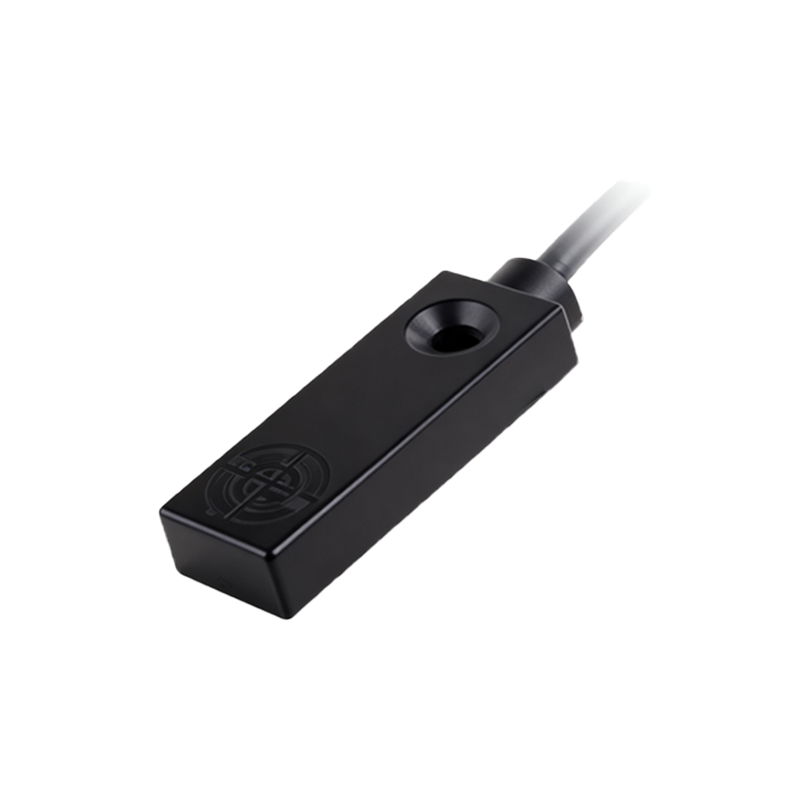
Key characteristics define their performance. Sensing range is a primary specification, typically ranging from a few millimeters to about 25 millimeters for standard models. It's crucial to note that the effective sensing distance can vary significantly with the target material's dielectric constant. For instance, water has a very high constant, making it easily detectable, while some plastics may require a reduced sensing distance. Another vital feature is the flush-mounting capability. Many capacitive sensors can be installed flush with a metal mounting surface without affecting their operation, thanks to shielding that focuses the field forward. Non-flush (unshielded) variants offer a longer range but require a non-metallic surround.
The applications for capacitive proximity sensors are extensive. In industrial packaging, they reliably detect levels of liquids, powders, or granules through non-metallic container walls, preventing overfills or shortages. On assembly lines, they verify the presence of plastic caps, glass bottles, or cardboard boxes. In the wood and paper industry, they monitor material rolls and sheet counts. A common everyday application is in touch-sensitive buttons on elevator panels or consumer appliances, where a finger's touch alters the local capacitance. They are also widely used for liquid level control in tanks and for detecting material interfaces.
Selecting the right sensor involves several considerations. First, identify the target material and its dielectric constant to determine the required sensitivity and effective range. The operating environment is critical; sensors are available with robust housings (e.g., PBT, stainless steel) and high IP ratings (like IP67) for dusty, humid, or washdown conditions. Output type must match the control system—common options include DC PNP/NPN transistor outputs or analog (4-20 mA, 0-10V) outputs for continuous distance measurement. For challenging applications involving very small objects or detection through thick walls, sensors with adjustable sensitivity potentiometers are essential to fine-tune the response and ignore the container wall itself.
Installation and wiring require attention for optimal performance. Ensure the sensor is properly grounded to minimize electrical noise interference. Maintain a clearance distance from other metal objects or adjacent sensors to prevent mutual interference. When detecting materials through a container wall, always calibrate the sensitivity with the container empty and then with the material present to set the correct threshold. Regular maintenance involves cleaning the sensing face from buildup, as adhesives or residues can cause false triggering.
Compared to other sensing technologies, capacitive sensors offer unique advantages. Their ability to sense non-metallics through barriers is a clear benefit over inductive sensors. While ultrasonic sensors also detect diverse materials, capacitive sensors are often simpler, more cost-effective for shorter ranges, and unaffected by factors like sound-absorbing materials or air turbulence. However, they can be influenced by extreme humidity or conductive contaminants, which may necessitate careful shielding and environmental protection.
In conclusion, capacitive proximity sensors provide a reliable, non-contact solution for detecting a vast array of solid and liquid materials. Their operational principle, grounded in capacitance change, enables flexibility that is critical for complex automation tasks. By carefully considering the target material, environmental conditions, and required output, engineers can effectively integrate these sensors to enhance system reliability, reduce mechanical wear, and enable sophisticated control processes across countless industries.