Introduction to Through-Beam Photoelectric Sensors
Through-beam photoelectric sensors, often considered the most robust and reliable type in the photoelectric sensing family, operate on a straightforward principle. They consist of two separate units: a light emitter and a light receiver. The emitter projects a continuous or modulated beam of light, typically infrared, visible red, or laser, directly to the receiver. When an opaque object passes between the two units, it interrupts this light beam. The receiver detects this interruption and triggers an output signal. This simple "beam-break" method allows for very long sensing ranges, high excess gain, and exceptional reliability, as the sensor's operation is largely unaffected by the object's color, reflectivity, or surface finish. These characteristics make through-beam sensors indispensable in demanding industrial environments for tasks like object detection, counting, and safety guarding.
Core Working Principle and Components
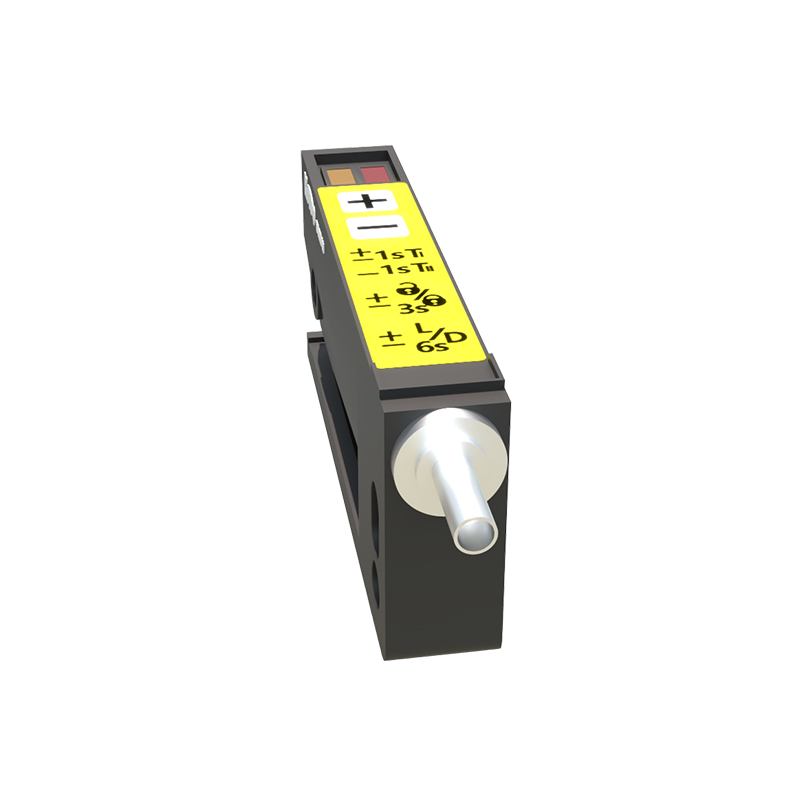
The fundamental operation hinges on the precise alignment of the emitter and receiver. The emitter contains a light source, such as an LED or laser diode, and a lens to focus the light into a coherent beam. The receiver houses a phototransistor or photodiode tuned to the specific wavelength of the emitted light. Advanced models use modulated light pulses with a corresponding receiver that only responds to that specific modulation frequency. This design effectively eliminates interference from ambient light sources, such as factory lighting or sunlight, ensuring stable operation. The key performance metric is "excess gain," which quantifies the amount of light energy reaching the receiver beyond the minimum required for operation. High excess gain allows the sensor to tolerate significant lens contamination, minor misalignment, or atmospheric attenuation like fog or dust, maintaining consistent performance.
Key Advantages in Industrial Settings
Through-beam sensors offer several distinct advantages that justify their widespread use. First is their exceptional sensing range, which can extend from a few centimeters up to several hundred meters for specialized laser models, far surpassing other photoelectric types. Second, they provide the highest level of reliability for detecting small or fast-moving objects because the beam is precisely defined and the detection is binary (beam present or broken). They are also largely immune to problematic object characteristics. Whether detecting a clear glass bottle, a matte black rubber piece, or a shiny metal component, the sensor will react consistently as long as the object is sufficiently opaque to interrupt the beam. This makes them ideal for complex production lines with varying products.
Common Applications and Use Cases
These sensors are deployed across virtually every industry. In material handling and packaging, they are used for bottle/can counting on high-speed conveyors, detecting the presence of boxes, and monitoring stack height. In the automotive sector, they verify the passage of components through assembly stations and ensure robot cell safety. In wood and metal processing, they detect broken tools or monitor material feed. A critical safety application is as the core component of safety light curtains, where arrays of through-beam pairs create an invisible protective screen around hazardous machinery. Any interruption of the beams immediately signals the machine to stop. Their long-range capability also makes them suitable for large-scale applications like vehicle detection in parking garages or warehouse door monitoring.
Installation, Alignment, and Maintenance Considerations
Proper installation is crucial for optimal performance. The primary challenge is achieving and maintaining precise mechanical alignment between the emitter and receiver. Misalignment is the most common cause of sensor failure. Many sensors feature built-in alignment aids like visual alignment spots (through a sight) or audible signal strength indicators. Using sturdy mounting brackets and installing sensors on stable, vibration-free surfaces is essential. For long-range setups, laser models are preferred due to their highly collimated beam, which simplifies alignment. Maintenance primarily involves keeping the lenses clean from dust, oil, or debris, which can gradually reduce the excess gain and eventually cause failure. Regular checks of the alignment and lens condition as part of preventive maintenance schedules are highly recommended.
Selection Criteria and Comparison with Other Types
When selecting a through-beam sensor, engineers must evaluate several parameters. The required sensing distance is paramount. The operating environment dictates the needed housing material (e.g., metal or plastic) and ingress protection (IP) rating for resistance to dust and water. The choice of light source (standard infrared, visible red for easier alignment, or laser for long range/precision) is also critical. Output type (PNP/NPN, relay, analog) must match the control system. It is important to compare through-beam sensors with retro-reflective and diffuse-reflective types. While through-beam offers the longest range and highest reliability, it requires two separate units and careful alignment. Retro-reflective sensors use a single unit and a reflector, offering easier installation but shorter ranges and potential issues with shiny objects. Diffuse sensors are the easiest to install but have the shortest range and are sensitive to object color and surface.
Future Trends and Technological Developments
The evolution of through-beam photoelectric sensors continues to focus on enhancing performance and simplifying integration. Trends include the development of sensors with even higher excess gain and immunity to intense ambient light. The integration of IO-Link and other smart communication protocols is becoming standard, allowing for remote configuration, diagnostics, and condition monitoring—enabling predictive maintenance. Miniaturization is another key trend, allowing these sensors to fit into increasingly compact machinery. Furthermore, the combination of multiple sensing principles into one device, such as a through-beam sensor with additional background suppression capabilities, is emerging to solve more complex application challenges. As Industry 4.0 and smart factories advance, the role of these robust and data-capable sensors will only grow more significant.