Introduction to Series Connection in Sensor Circuits
In industrial control systems, the wiring configuration of sensors is a fundamental aspect of system design. Photoelectric sensors, renowned for their non-contact detection capabilities, are often connected in specific patterns to fulfill complex control logic. One such critical configuration is the series connection, also known as a "daisy chain." This method involves connecting the output signals of multiple sensors in a sequential, end-to-end manner. The primary function of this arrangement is to create a logical AND condition. Essentially, the final output signal to the controller, such as a PLC (Programmable Logic Controller), is only activated when every single sensor in the series string is in its triggered or "ON" state. This setup is fundamentally different from parallel connections, which create an OR condition. Understanding the operational principles and applications of series-connected photoelectric sensors is crucial for designing safe, efficient, and reliable automated processes.
Core Function and Logical Operation
The core function of connecting photoelectric sensors in series is to enforce a mandatory sequence or a multi-point safety check. Each sensor in the chain acts as a normally open (NO) contact within the circuit. When a sensor detects its target—be it an object, person, or specific position—it closes its internal switching circuit, allowing current to flow through to the next device. If all sensors are simultaneously satisfied, the circuit is complete, and a signal is sent. For instance, consider a protective light curtain at the entrance of a robotic cell, series-connected with a door position sensor. The machine can only initiate its cycle if the light curtain is unobstructed AND the safety door is confirmed closed. If any one sensor in the chain is not activated—meaning the light beam is broken or the door is open—the circuit remains open, and the machine receives a "stop" or "not ready" signal. This hardwired logic provides a fail-safe layer that is independent of, and often supplemental to, software-based safety protocols.

Key Applications in Industrial Settings
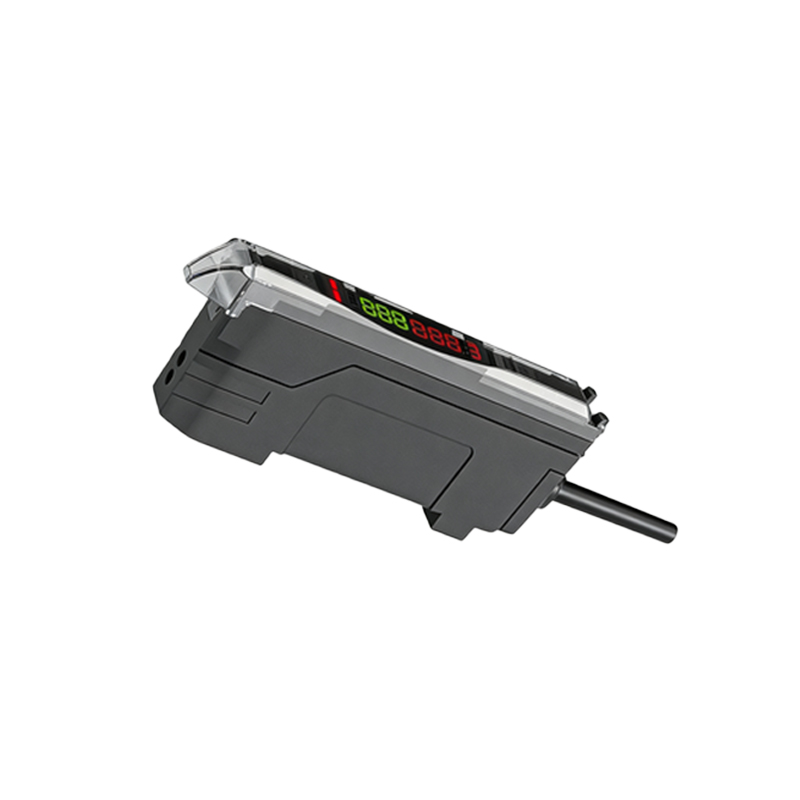
Series connections find extensive use in scenarios demanding high reliability and safety. A classic application is in machine guarding and area monitoring. Multiple safety-rated photoelectric sensors or light curtains can be wired in series to create a large, protected zone. Only when the entire zone is clear does the machinery operate. Another vital application is in complex material handling and assembly verification. On an automated assembly line, a series of through-beam or diffuse sensors might be placed at consecutive stations. The control system may require verification that Part A is correctly placed (Sensor 1), Part B is added (Sensor 2), and a fastener is installed (Sensor 3) before the assembly is allowed to proceed to the next stage. This ensures process integrity and prevents jams or defective products from moving down the line. Furthermore, in packaging machinery, series-connected sensors can confirm that a box is present, correctly positioned, and has the proper lid before initiating the sealing process.
Wiring Considerations and Technical Specifications
Implementing a series connection requires careful attention to electrical specifications. The total voltage drop across all sensors must be considered. As current flows through each device, a small voltage is dropped across its internal switching element. When multiple sensors are connected in series, these drops add up. Designers must ensure that the voltage reaching the final input module of the PLC or relay is still within its recognized "ON" signal range, despite the cumulative drop. Using sensors with low voltage drop (often PNP sourcing types with solid-state outputs) is advantageous for longer series chains. Additionally, the current rating of the sensors and the power supply capacity must be adequate for the total load. It is also critical to note that troubleshooting a series circuit can be more challenging than a parallel one, as a fault in any single sensor will break the entire chain. Therefore, incorporating diagnostic indicators on each sensor or using sensors with built-in diagnostic output signals is highly recommended for maintainability.
Advantages and Potential Limitations
The primary advantage of the series connection is its inherent simplicity and robustness in creating a fail-safe AND condition. It provides a direct, hardwired safety interlock that is highly reliable and often required by safety standards like ISO 13849. It simplifies control logic by consolidating multiple conditions into a single input point on the controller, saving valuable I/O. However, there are limitations. As mentioned, voltage drop can limit the number of sensors in a chain. The system's response is also governed by the slowest sensor in the chain. If one sensor has a longer response time, it dictates the overall reaction time of the safety circuit. Moreover, a single faulty sensor can disable an entire process line, which, while safe, may impact productivity. Therefore, a balance must be struck between safety, reliability, and operational efficiency, sometimes necessitating a combination of series wiring for critical safety functions and parallel or individually wired sensors for non-critical process monitoring.
Conclusion and Best Practices
In summary, the series connection of photoelectric sensors is a powerful and essential technique in industrial automation for enforcing sequential logic and enhancing safety. Its role in creating mandatory multi-point checks is irreplaceable in many high-stakes applications. Best practices for implementation include thorough planning to account for electrical characteristics like cumulative voltage drop, selecting sensors with appropriate specifications for the application, and designing for ease of maintenance and diagnostics. Engineers must always refer to relevant machinery safety standards and guidelines when designing safety-related sensor circuits. By mastering the use of series connections, automation professionals can build control systems that are not only intelligent and efficient but also fundamentally safe and dependable, ensuring the protection of both personnel and equipment.