Introduction to Inductive Proximity Sensors
Inductive proximity sensors are non-contact electronic devices widely used in industrial automation for detecting metallic objects. They operate based on the principle of electromagnetic induction, where an oscillator generates a high-frequency magnetic field from a coil at the sensor's active face. When a metallic target enters this field, eddy currents are induced, causing a change in the oscillation amplitude. This alteration is detected by a threshold circuit, triggering an output signal. These sensors are valued for their robustness, reliability, and ability to function in harsh environments without physical contact, making them essential in applications like machine safety, position sensing, and material handling. Their immunity to dust, moisture, and vibration enhances longevity in demanding settings such as manufacturing plants and automotive assembly lines.
Shielded (Flush-Mountable) Type
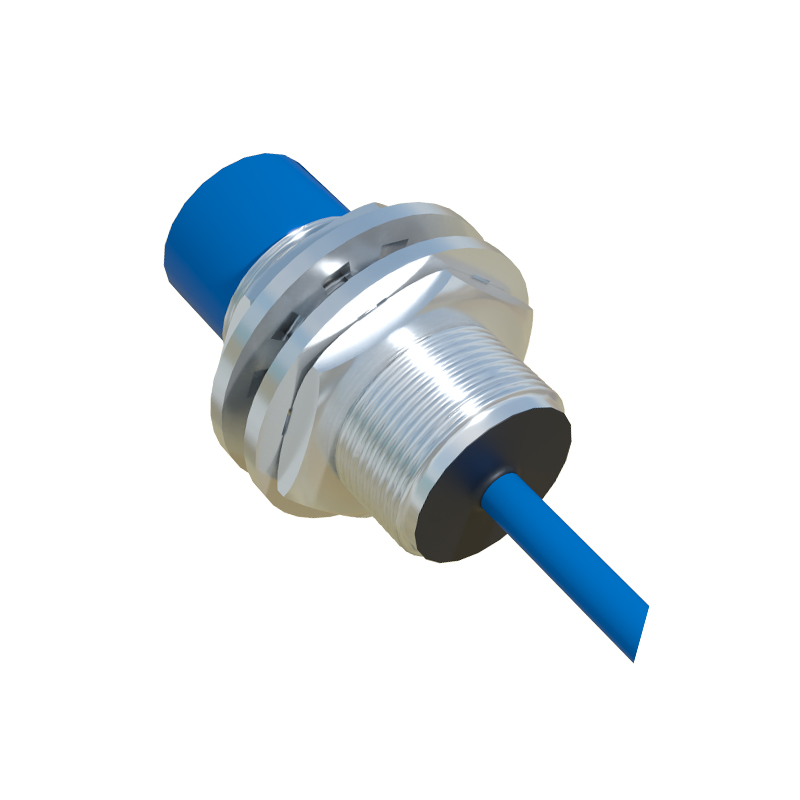
Shielded inductive proximity sensors, also known as flush-mountable types, feature a metal ring surrounding the sensing coil. This design confines the magnetic field close to the sensor face, allowing installation flush with metal surfaces without interference. Key characteristics include a shorter sensing range compared to unshielded versions, typically up to 20 mm depending on the model. They are ideal for tight spaces where side-by-side mounting is required, as the shielding prevents crosstalk between adjacent sensors. Common applications involve embedded setups in machinery or conveyor systems, where precise detection of small metallic parts is needed. Their compact form factor and resistance to mechanical damage make them suitable for high-density industrial layouts.
Unshielded (Non-Flush-Mountable) Type
Unshielded inductive proximity sensors lack the surrounding metal ring, resulting in an extended magnetic field that offers a longer sensing range—often up to 40 mm or more. However, they cannot be mounted flush with metal surfaces, as nearby metals could cause false triggers. These sensors are characterized by a larger detection area, making them effective for monitoring larger objects or when installation distance is limited. They are commonly used in open environments like material sorting or robotic arms, where flexibility in positioning is crucial. Despite sensitivity to external interference, their enhanced range provides cost-effective solutions for applications requiring broader coverage without direct contact.
Analog Output Type
Analog output inductive proximity sensors provide a continuous signal proportional to the distance between the sensor and target, unlike digital types that offer only on/off states. Typical outputs include 0-10 V or 4-20 mA signals, enabling precise measurement of position or displacement. Characteristics include high resolution and linearity, allowing for fine-tuned control in processes like thickness monitoring or fill level detection. These sensors are favored in dynamic systems where real-time feedback is essential, such as in CNC machining or packaging lines. Their ability to detect subtle variations enhances accuracy but may require calibration to minimize environmental effects like temperature fluctuations.
High-Temperature Resistant Type
High-temperature resistant inductive proximity sensors are engineered to operate in extreme thermal conditions, often withstanding temperatures up to 150°C or higher. They incorporate specialized materials, such as heat-resistant housings and stable electronic components, to maintain performance without degradation. Key features include reduced thermal drift and extended lifespan in hot environments like foundries, welding stations, or engine compartments. These sensors are critical for applications where standard models would fail, ensuring reliable detection in automotive testing or metal processing industries. Their design often includes enhanced sealing to resist contaminants like oil or coolant, adding to durability.
Factors Influencing Sensor Selection
Choosing the right inductive proximity sensor depends on several factors. Sensing range must align with application needs, considering target size and material—ferrous metals like iron yield longer ranges than non-ferrous ones like aluminum. Environmental conditions, such as exposure to chemicals, humidity, or electrical noise, dictate housing ratings like IP67 for dust and water resistance. Output type (e.g., NPN, PNP, or analog) should match control system requirements, while response time affects high-speed operations. Cost and mounting constraints also play a role; shielded sensors suit space-limited setups, whereas unshielded options offer budget-friendly range. Ultimately, a balance of precision, durability, and compatibility ensures optimal performance in diverse industrial scenarios.