Introduction to Color Sensing Technology
Photoelectric sensors, fundamental components in industrial automation, have evolved beyond simple presence detection to perform sophisticated tasks like color recognition. At its core, color sensing involves distinguishing objects based on the wavelengths of light they reflect. Unlike the human eye, which uses three types of cone cells, industrial photoelectric color sensors rely on precise electronic components to achieve reliable, high-speed discrimination. This capability is critical in applications ranging from packaging and sorting to quality control and robotic guidance, where color acts as a key identifier or quality metric. Understanding the underlying principles is essential for selecting and implementing the correct sensor for a given application.
Core Operating Principle: From Light to Signal
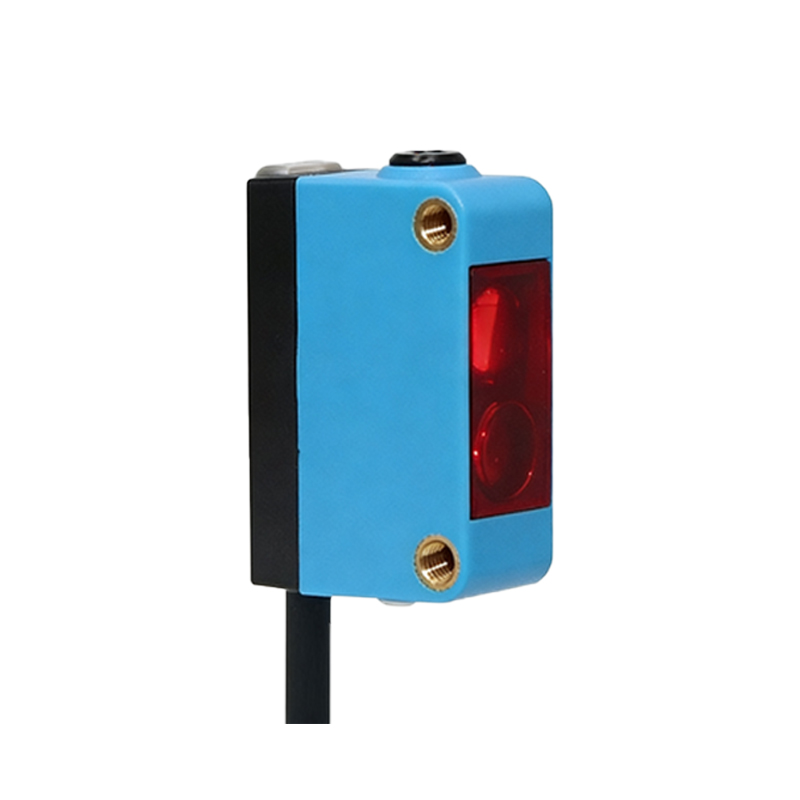
The fundamental operation hinges on the interaction between emitted light, the target object, and a photosensitive receiver. A typical color sensor contains a built-in white light source, often an LED, that illuminates the target. The object's surface absorbs certain wavelengths and reflects others. This reflected light is then captured by the sensor's receiver. The critical differentiator from standard diffuse sensors is what happens next. The received light is passed through internal red (R), green (G), and blue (B) filters—either physically or electronically—onto separate photodiodes. Each photodiode generates a current proportional to the intensity of the specific color wavelength it receives. These three analog signals (R, G, B) form the raw data for color analysis.
Key Sensor Types and Their Methodologies
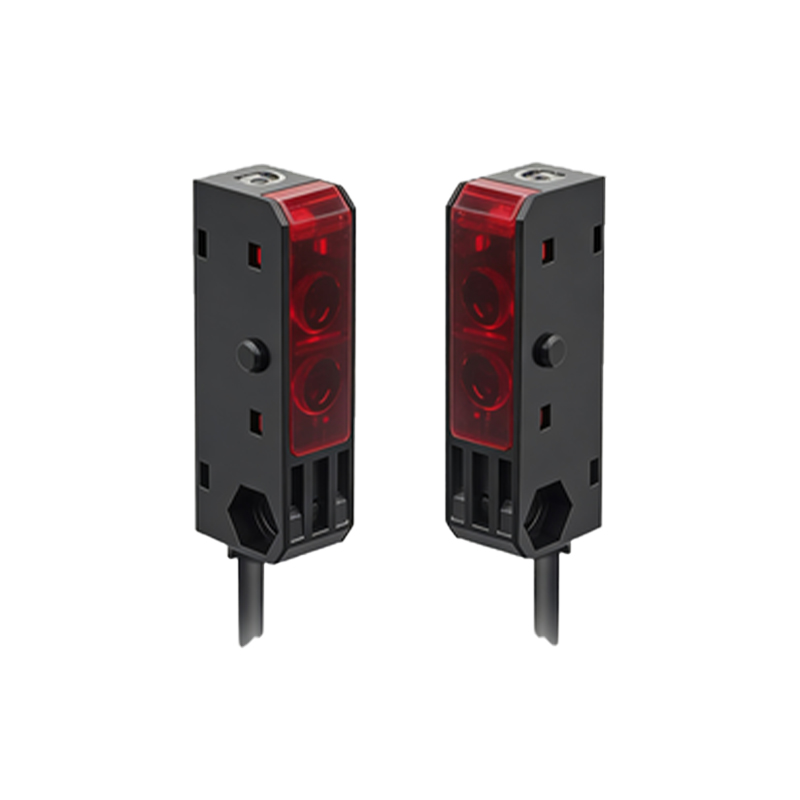
Several sensor architectures are employed for color detection, each with distinct advantages. The most common is the RGB Color Sensor. It uses the tri-stimulus method described above, measuring relative intensities in the red, green, and blue spectral regions. This data can be compared to pre-taught reference values. True Color Sensors are a more advanced subtype, often using a spectrometer or a high-resolution array to analyze the full spectral composition, providing extremely accurate color matching, crucial for industries like textiles or printing. Another type is the Contrast Sensor with Color Mode. These are essentially high-performance contrast sensors that can be tuned to recognize specific colors by evaluating the contrast ratio under red, green, and blue light emissions sequentially, offering a cost-effective solution for simpler tasks.
The Role of Teach-In and Signal Processing
Merely capturing RGB values is not enough; the sensor must be "taught" what color to recognize. This is typically done through a teach-in process. The sensor is presented with a sample object of the desired color, and it records the respective R, G, and B values or a calculated ratio (e.g., R/(R+G+B)). This becomes the reference setpoint. During operation, the sensor continuously measures the target's reflected light and compares the live values to the taught reference. Advanced sensors employ microprocessors to perform complex calculations, compensating for ambient light, surface texture, and distance variations to ensure stable detection. The output is usually a discrete switching signal or a serial data string containing the color information.
Critical Factors Influencing Detection Accuracy
Achieving reliable color recognition in an industrial environment presents several challenges. Lighting Consistency is paramount; variations in the sensor's own light source or strong ambient light can drastically alter readings. Sensors with modulated light sources help mitigate ambient light interference. Surface Characteristics such as gloss, texture, and material (metallic, matte, transparent) affect how light is reflected and scattered. Distance and Angle must remain within specified tolerances, as they influence light intensity and spectral distribution on the receiver. Sensor Resolution defines its ability to distinguish between similar shades. Engineers must carefully evaluate these factors during sensor selection and system design, often requiring testing with actual production samples.
Practical Application Examples in Industry
The practical uses of color sensors are vast and impactful. In packaging lines, they verify the correct lid or label color on pharmaceutical or food products, ensuring product integrity. In automotive assembly, sensors check for the presence and color of wiring harnesses, gaskets, or painted parts. Recycling systems utilize them to sort plastics, glass, or textiles based on color for material recovery. Printing and textile machinery employ high-precision color sensors for registration control and defect detection (e.g., color smears or misprints). In electronics manufacturing, they identify components by the color of their casing or markings, guiding placement robots.
Selection Criteria and Integration Tips
Selecting the right color sensor requires a systematic approach. First, define the color discrimination task: Is it distinguishing primary colors, detecting subtle shade variations, or rejecting off-color parts? Next, consider the operating environment (IP rating, temperature, exposure to chemicals). Evaluate the required sensing distance and spot size. Examine the output options needed: discrete NPN/PNP, analog (0-10V, 4-20mA), or serial communication (IO-Link, RS-232). IO-Link capable sensors are increasingly valuable for parameterization and diagnostics. Finally, ensure the sensor has a robust, user-friendly teach-in method suitable for the operators. Always request samples for on-site testing under real conditions before finalizing the specification.
Future Trends and Advancements
The future of photoelectric color sensing is tied to broader trends in industrial IoT and smart manufacturing. Sensors are becoming more intelligent, with embedded processing power to perform complex color space conversions (RGB to HSL, Lab*) directly within the device. Integration with artificial intelligence and machine vision systems allows for adaptive learning and recognition of complex, multi-colored patterns. Miniaturization continues, enabling their use in tighter spaces. Furthermore, enhanced connectivity via IO-Link and Ethernet-APL provides not only data but detailed health and diagnostic information, facilitating predictive maintenance. These advancements will further solidify the role of color sensors as critical enablers of automated, flexible, and quality-focused production.